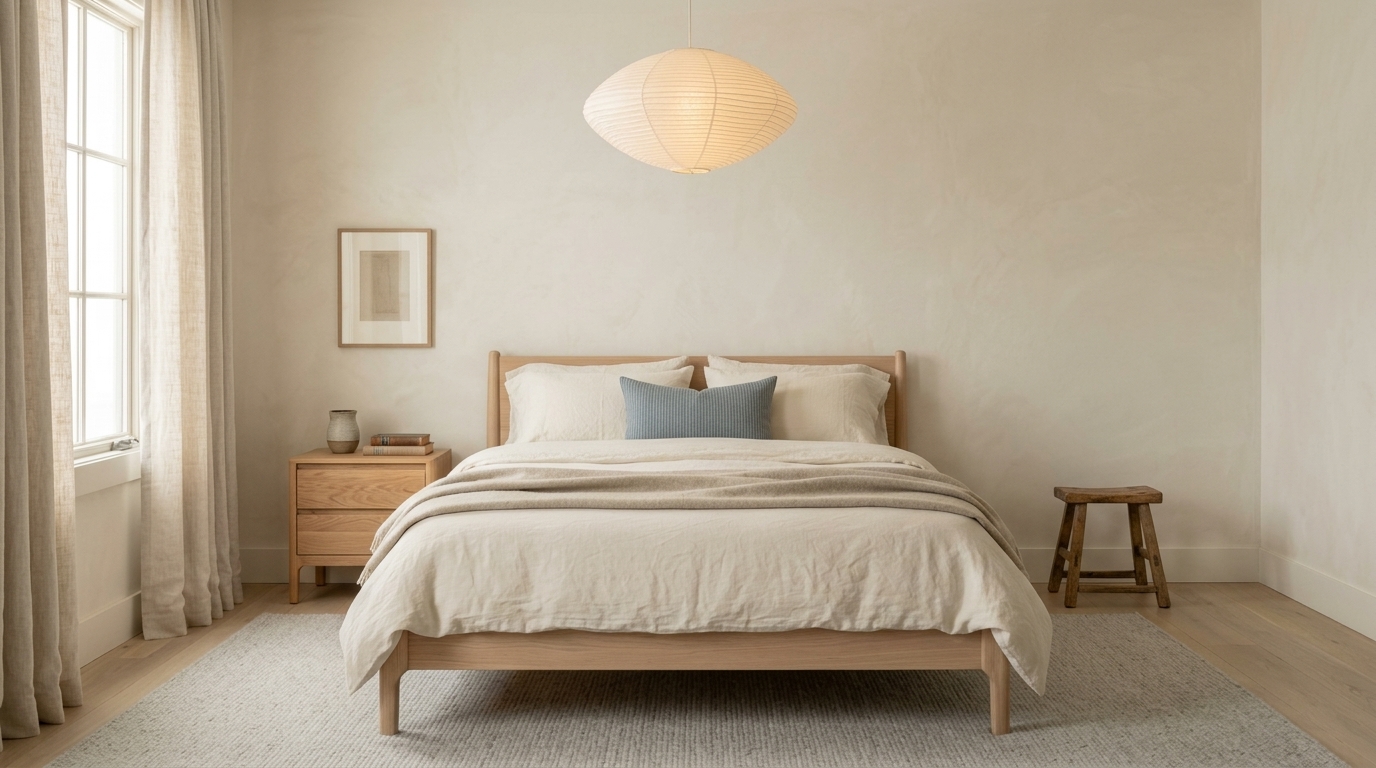
17 scandinavian bedroom tips That Make Minimalism Feel Warm
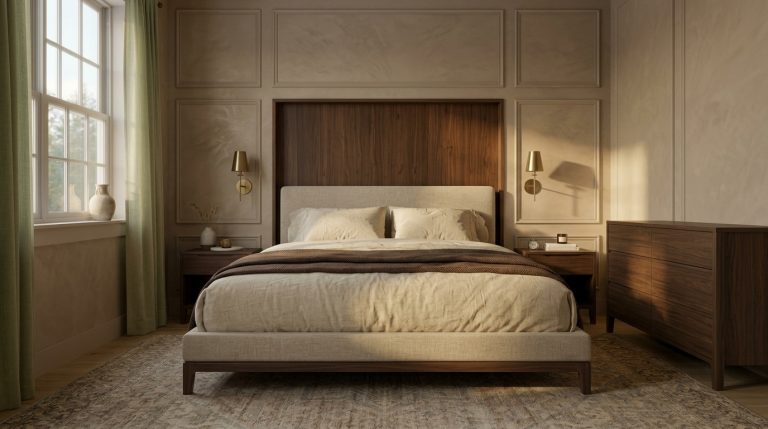
A Scandinavian bedroom should feel calm the second you walk into it—but calm does not have to mean empty, cold, or entirely without personality. Good Nordic design balances two ideas that might seem contradictory: visual simplicity and physical coziness. You might have a clean-lined wooden bed and almost no decorative clutter, yet the room still feels inviting because linen bedding, wool, warm lighting, natural timber, and a few thoughtfully chosen objects add softness.
That balance is especially relevant now. Scandinavian design in 2026 is becoming warmer and more personal, with designers leaning into layered texture, sculptural forms, muted patterns, visible craftsmanship, and vintage pieces rather than sterile minimalism.
If you want the look without making your bedroom resemble a furniture showroom, these 17 Scandinavian bedroom tips will help you create a room that feels restful, functional, and genuinely lived in.
What Scandinavian Really Means for a Bedroom
Scandinavian design grew around practicality, natural light, craftsmanship, and a close relationship with nature. In a bedroom, that translates into pale or natural wood, uncomplicated furniture, restrained colors, soft textiles, useful storage, and carefully controlled lighting.
But there is an important distinction between Scandinavian and plain minimalism.
Minimalism can sometimes focus on removing things. Scandinavian design is more interested in keeping the right things.
A good Nordic bedroom might contain only one bedside table, but it will probably be a beautiful wooden piece that works perfectly. The bedding may be neutral, but several subtle textures keep it from looking flat. You might own fewer decorative objects, yet the ones you display have meaning or craftsmanship behind them.
That is the mindset to carry through the room.
Build a Calm Scandinavian Foundation
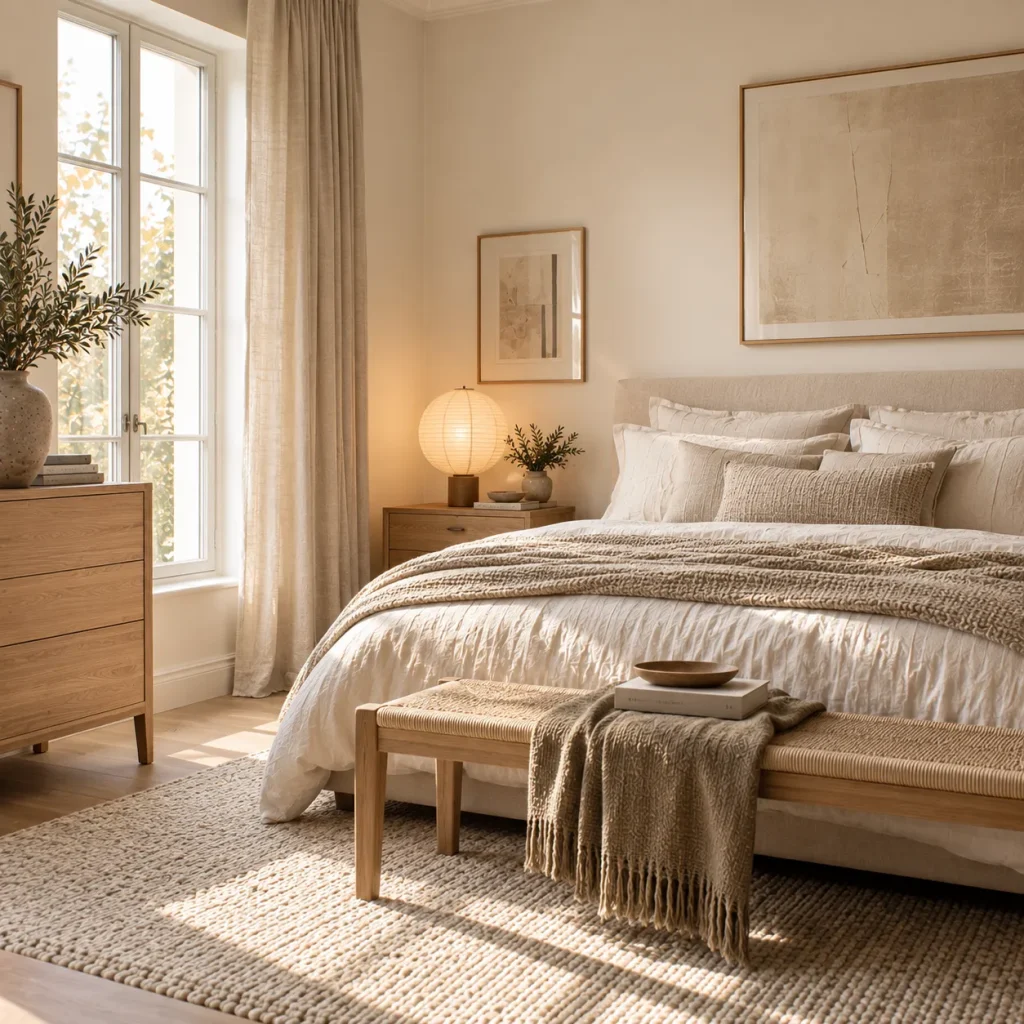
1. Choose a warm white instead of brilliant white
Pure, blue-toned white can make a bedroom feel clinical, particularly if the room receives limited sunlight.
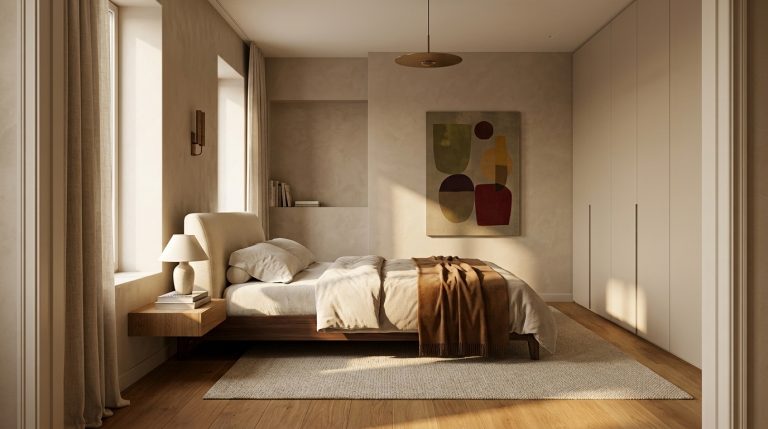
Try creamy white, soft ivory, pale oatmeal, warm greige, or a barely-there stone shade to reflect limited natural light while maintaining visual quiet.
If you love white, you do not need to abandon it. Just choose a warmer version.
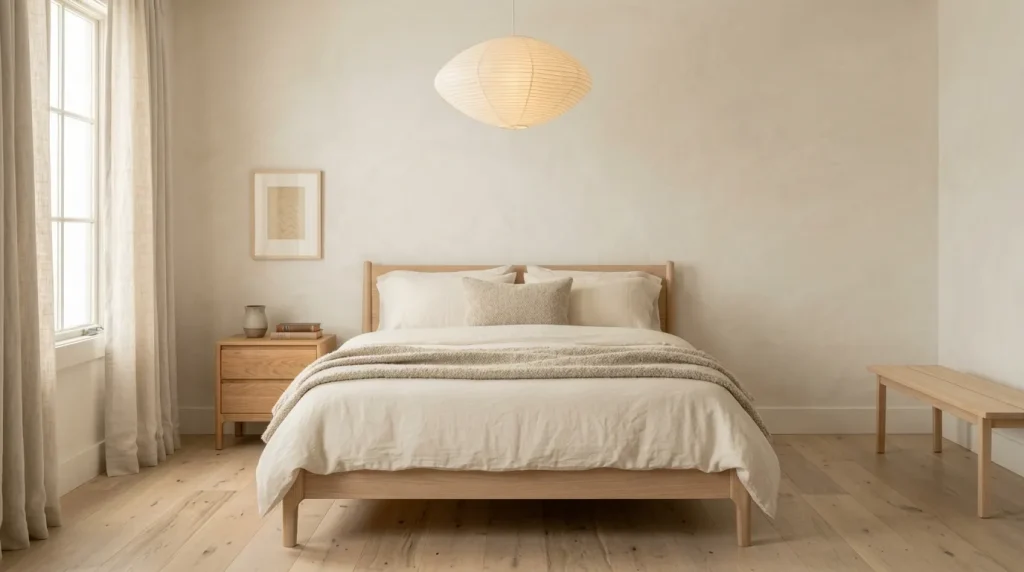
2. Let pale wood become your main accent color
Instead of asking, “What color should I add?” try allowing the wood itself to provide warmth.
Oak, ash, birch, beech, and other light or honey-toned woods work especially well against warm neutral walls. Use them for a bed frame, bedside table, flooring, bench, shelving, or simple headboard.
Warm, airy wood tones are particularly relevant in 2026 interiors, where they are being used to create brighter, calmer rooms without relying entirely on white.
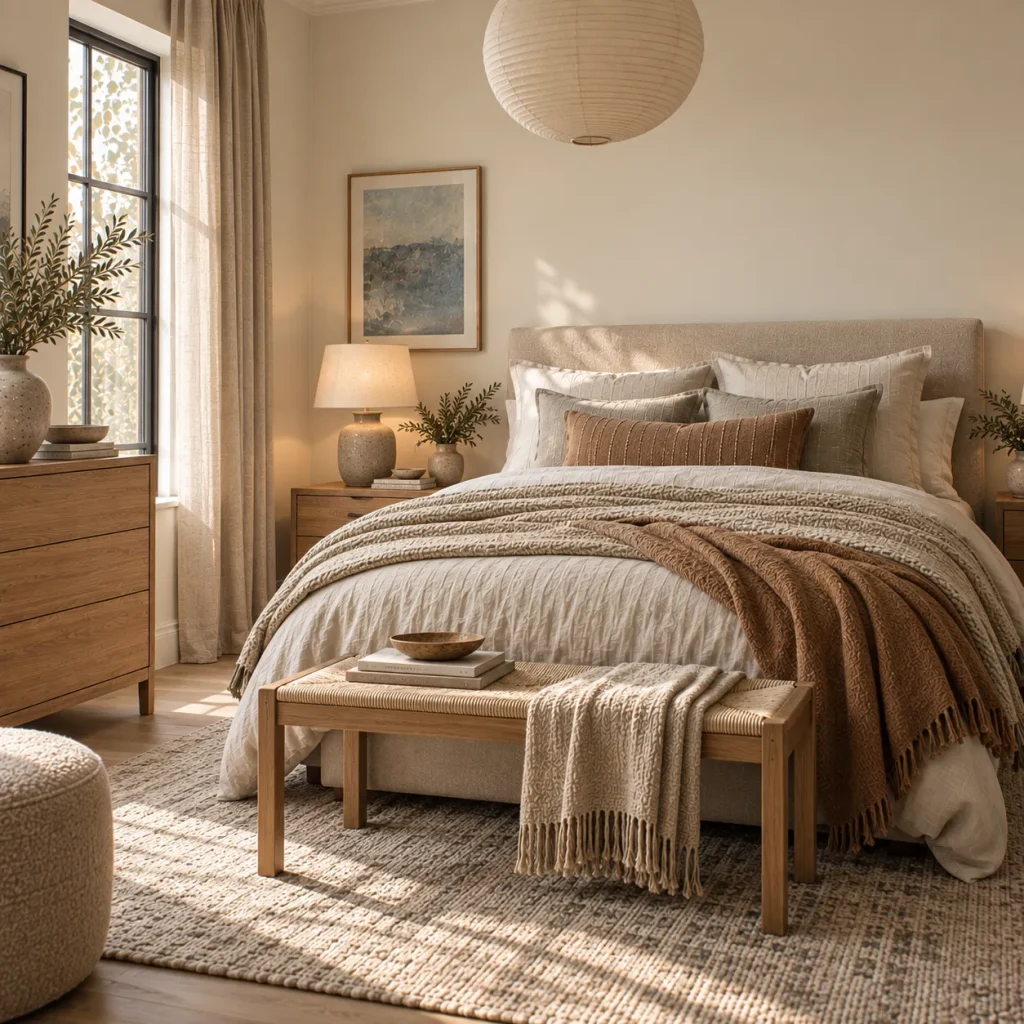
3. Keep your palette tonal rather than perfectly monochrome
A Scandinavian bedroom does not need to be beige from ceiling to floor.
A better approach is to layer several nearby shades: warm white, oatmeal, sand, mushroom, camel, pale gray, muted brown.
The subtle differences create depth without adding visual noise.
For a little more color, consider our neutral bedroom ideas — Scandinavian rooms can include color; they simply tend to use it selectively rather than everywhere.
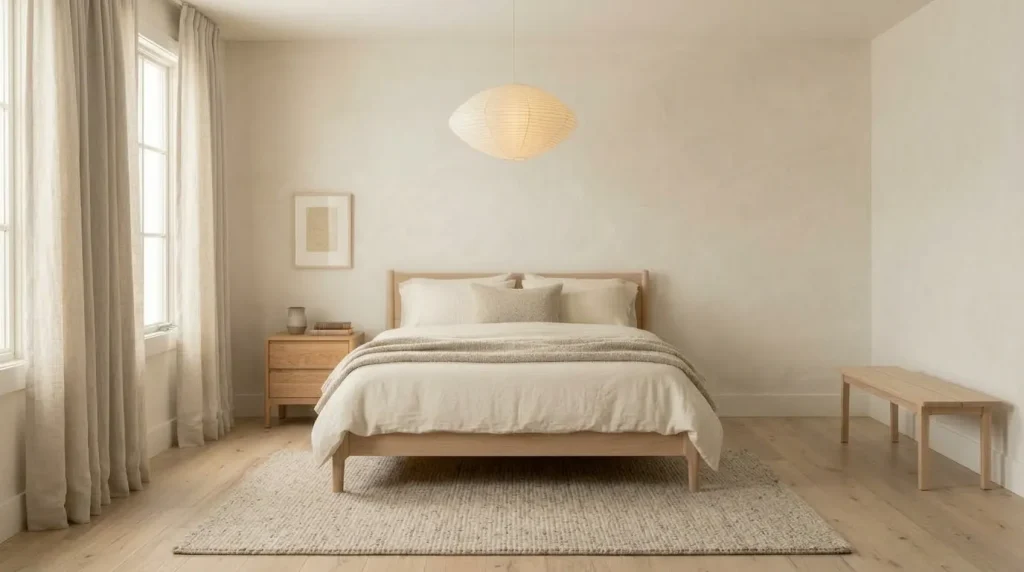
4. Give the furniture room to breathe
Avoid filling every corner simply because space exists.
Leave some visible floor around the bed and maintain easy walking routes. If a chair, chest, or decorative table is rarely used, ask whether the bedroom actually feels better without it.
Negative space is part of the design.
Layer Warmth Without Creating Clutter
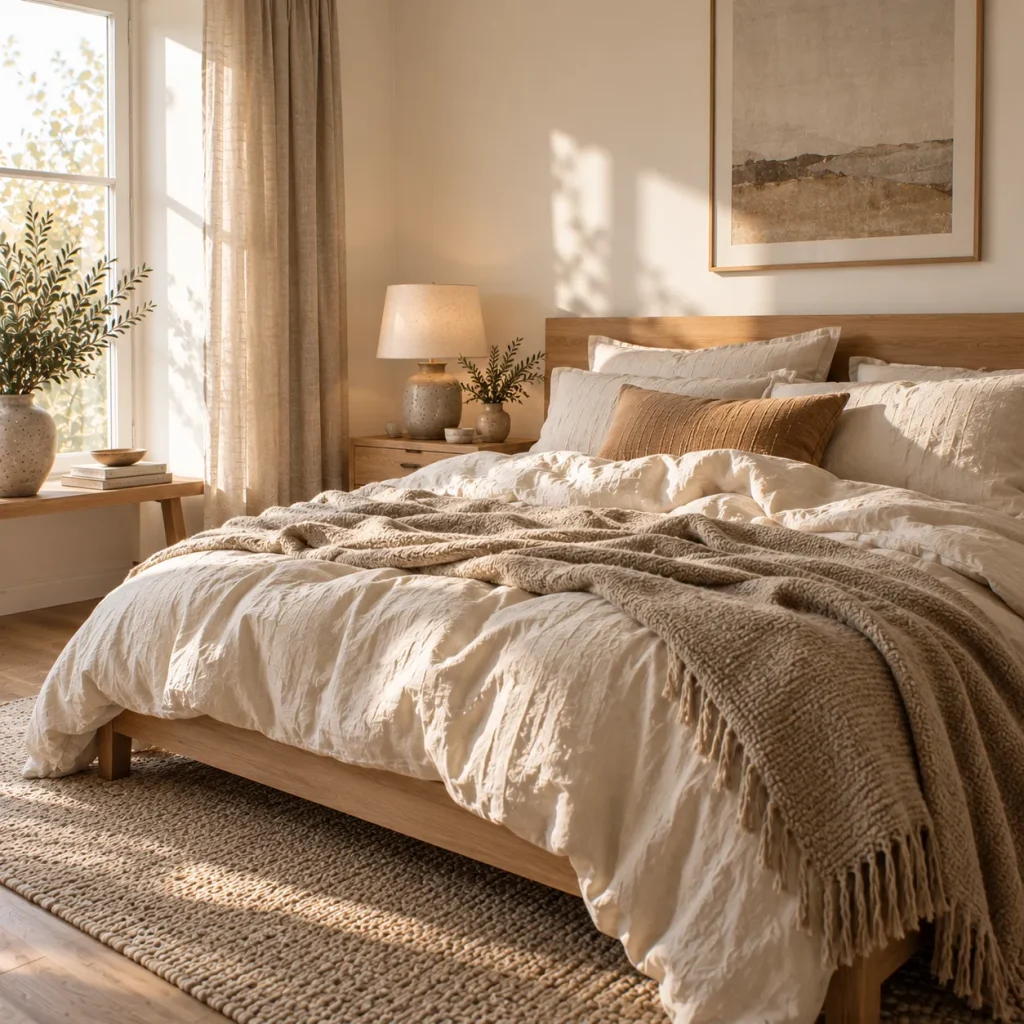
5. Make the bed intentionally imperfect
A tightly tucked hotel-style bed can actually work against the relaxed Nordic mood.
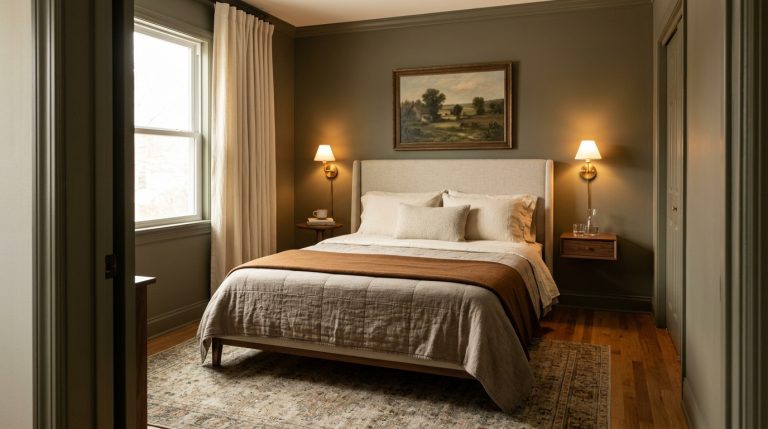
Instead, use breathable cotton or linen bedding, a soft duvet, and perhaps a casually folded blanket across the bottom. Allow a little natural rumpling.
The bed should look inviting enough that you want to climb into it—not so styled that touching it feels forbidden.
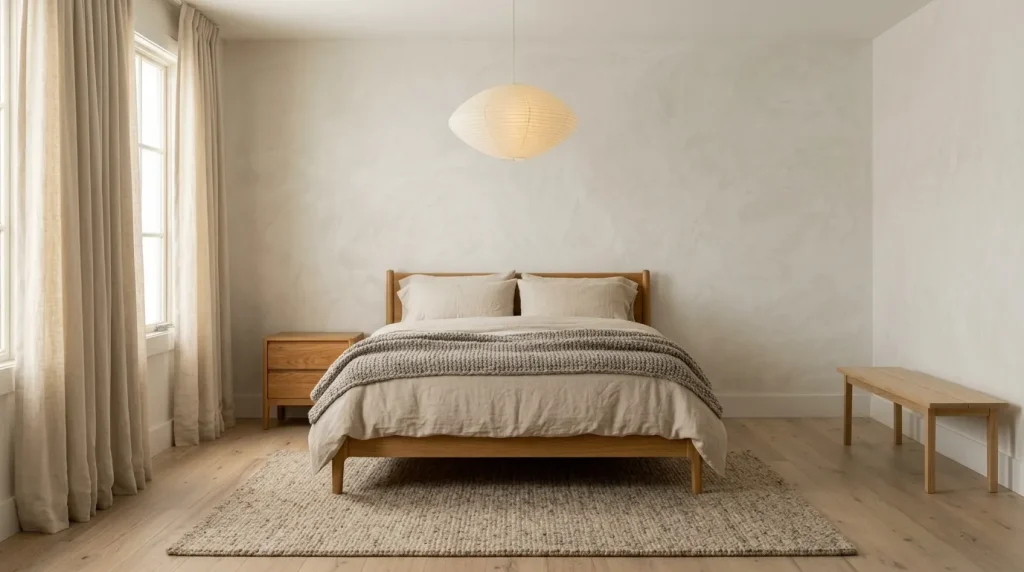
6. Layer texture before adding more decoration
This is one of the easiest ways to prevent a neutral Scandinavian room from looking flat.
Combine surfaces such as materials including wood, wool, linen, and cotton, which are repeatedly emphasized by Scandinavian designers because they bring softness and tactile depth to restrained rooms.
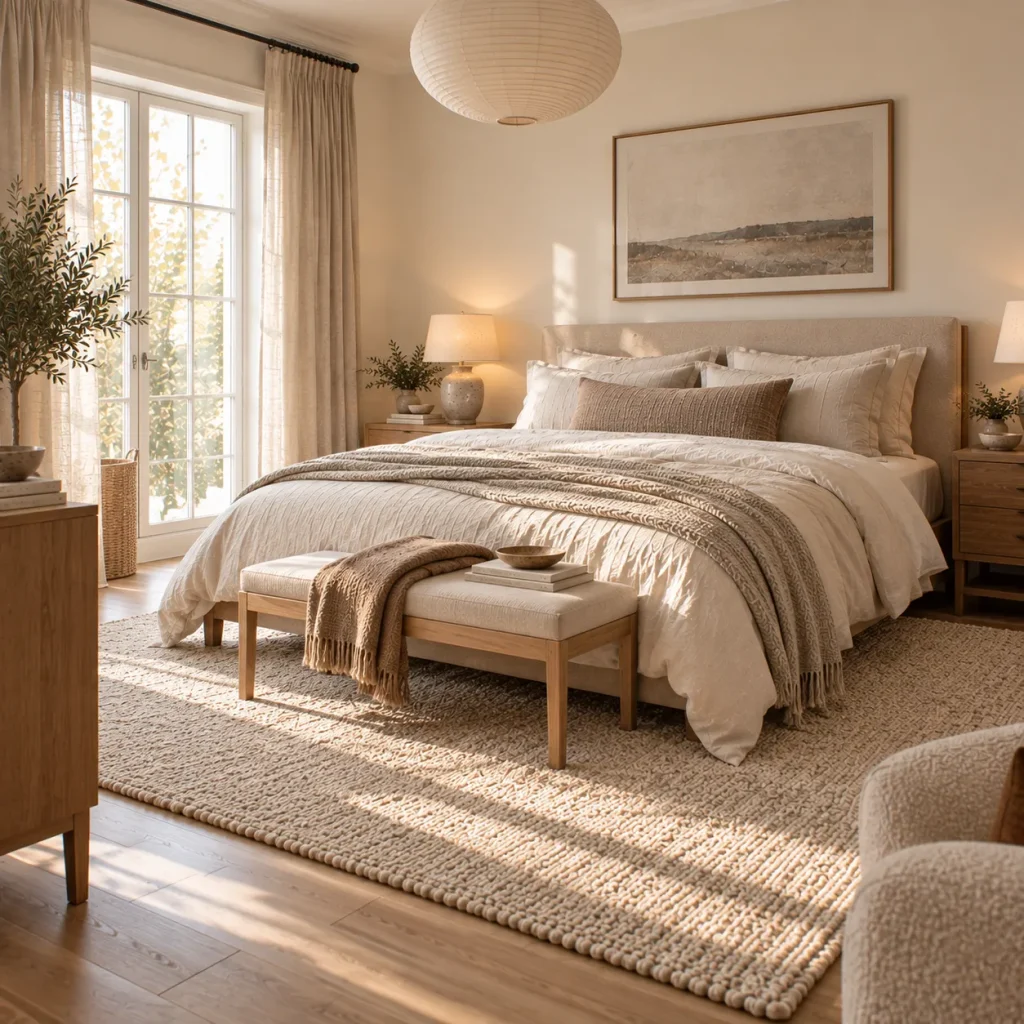
7. Put softness underfoot
Wood flooring feels naturally Scandinavian, but a bedroom still needs something soft.
Try a large wool rug that extends around the bed, a flatweave rug, or two narrow runners on either side.
If you already have carpet, you do not need to replace it just to achieve the look. Work with what you have and introduce Nordic character through furniture, lighting, bedding, and color instead.
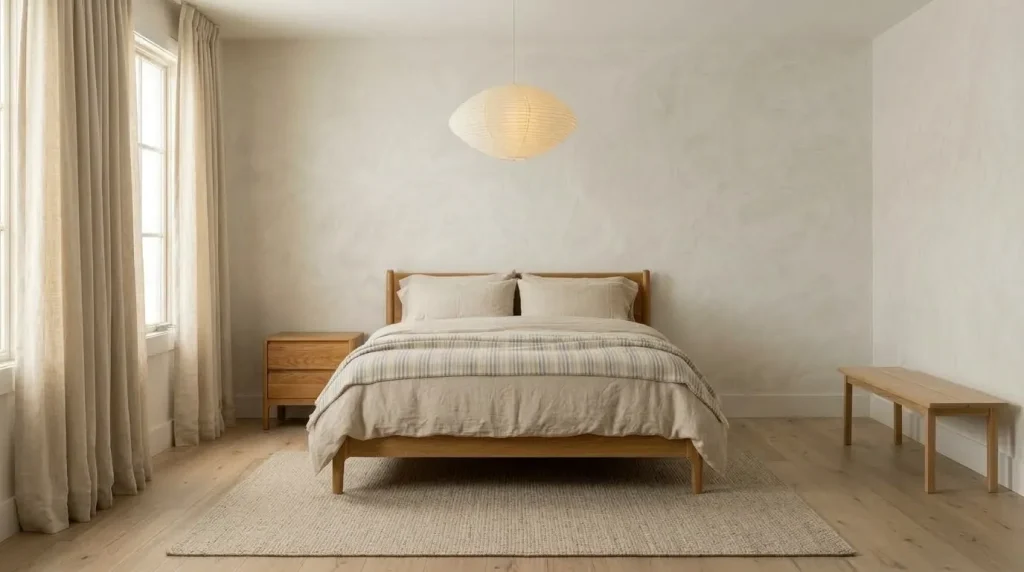
8. Introduce one quiet pattern
Pattern is not forbidden in Scandinavian interiors.
In fact, one of the more interesting 2026 directions is the return of muted prints—particularly restrained stripes and earthy, low-contrast motifs.
Try striped pillowcases, a subtle checked throw, or a small-scale botanical textile.
The key is choosing a pattern that whispers rather than dominates.
Make Every Piece of Furniture Earn Its Place
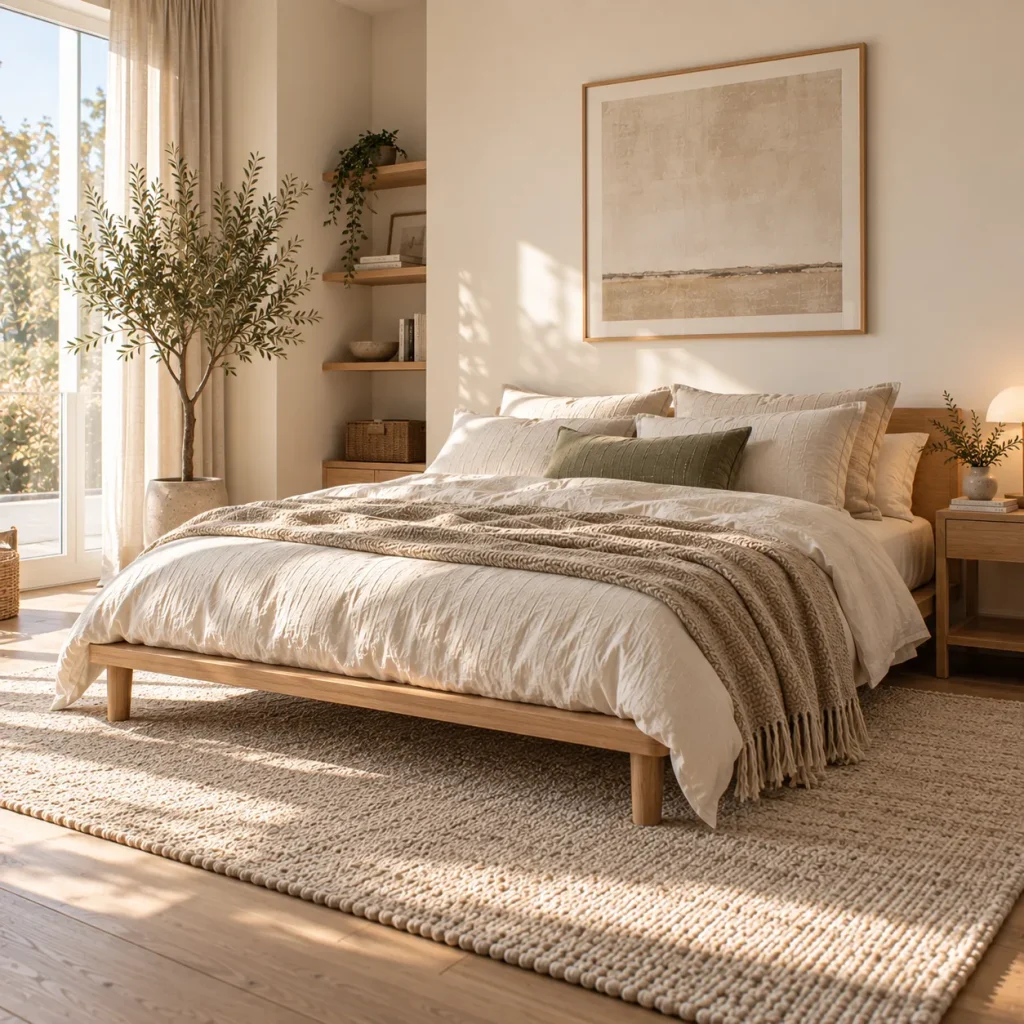
9. Choose a visually light bed
A low or medium-height wooden platform bed is an easy starting point.
Look for clean profiles, exposed legs, gently rounded corners, or simple slatted details rather than an oversized upholstered frame.
Low-profile natural-wood beds also work beautifully if you like the slightly more contemporary Japandi interpretation of Scandinavian style. Architectural Digest notes that current Japandi bedrooms continue to center simple forms and honest materials such as wood, wool, linen, and cotton.
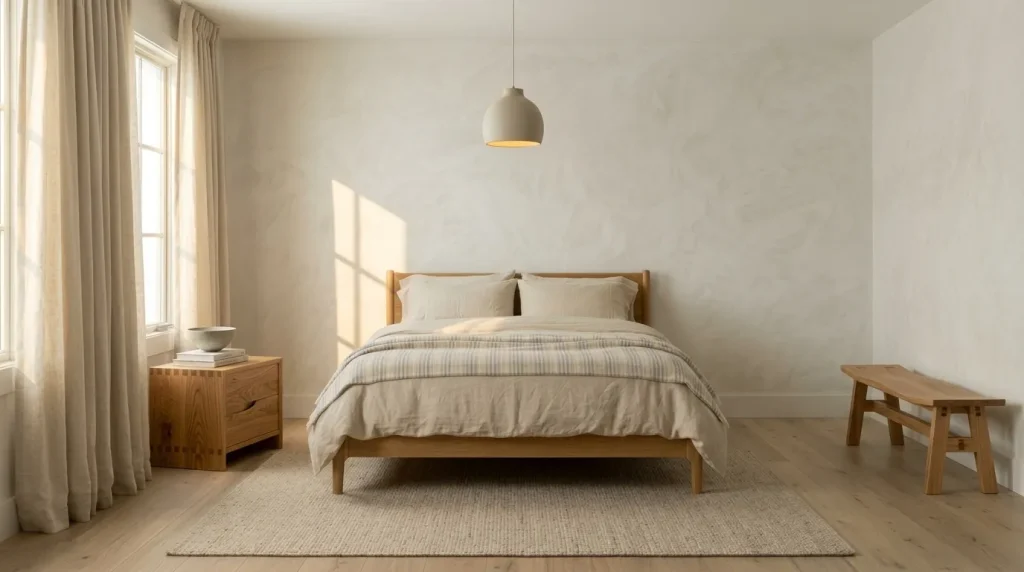
10. Use fewer but better pieces
This is where I would spend more before buying another basket, vase, or decorative cushion.
One beautifully made bedside table will influence the room more than five inexpensive accessories.
Scandinavian design has long valued functional furniture and durable craftsmanship, so vintage Nordic pieces, solid timber furniture, and objects designed to age well make sense here.
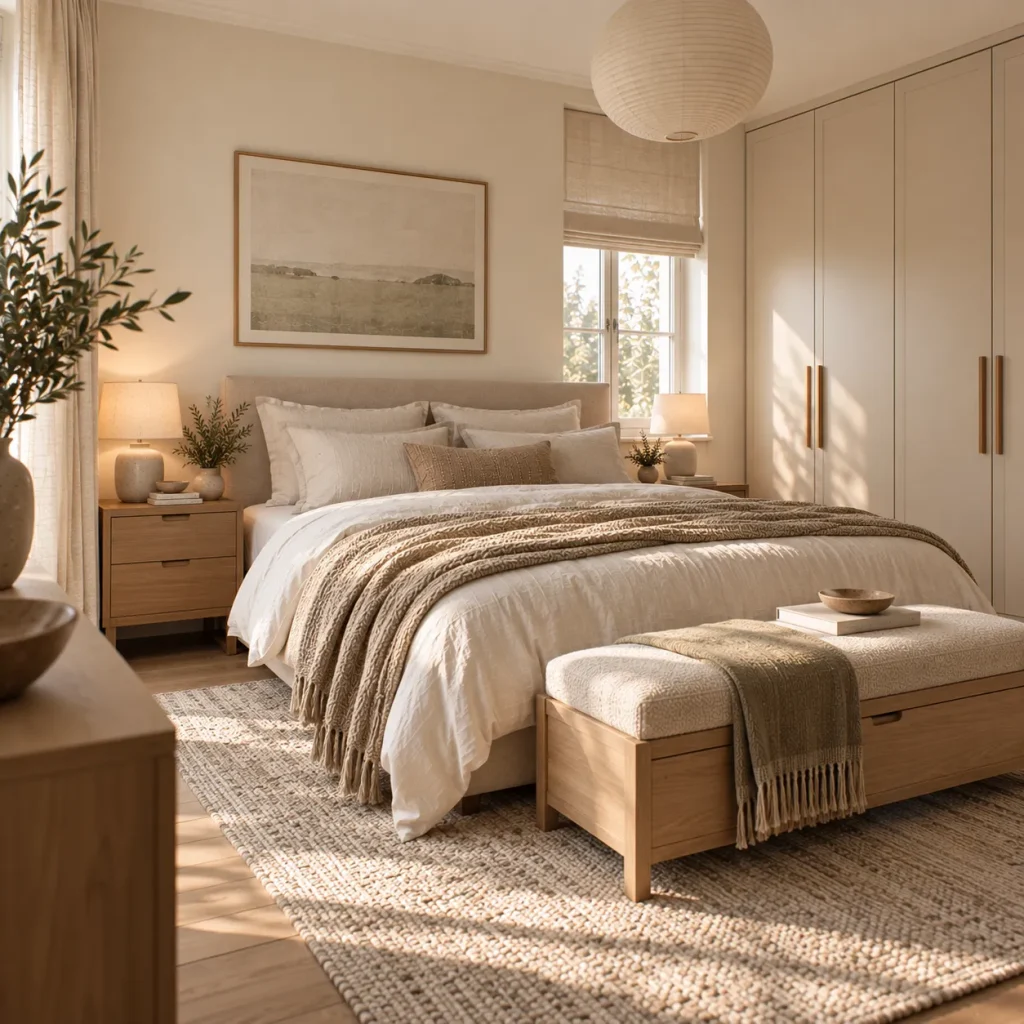
11. Hide the clutter you genuinely need
Minimalism works poorly when it ignores real life.
You still need chargers, medication, books, extra storage, fitted wardrobes, closed nightstands, or a storage bench to give everyday items a designated home.
The objective is not owning nothing. It is reducing visible friction.
Get the Scandinavian Lighting Right
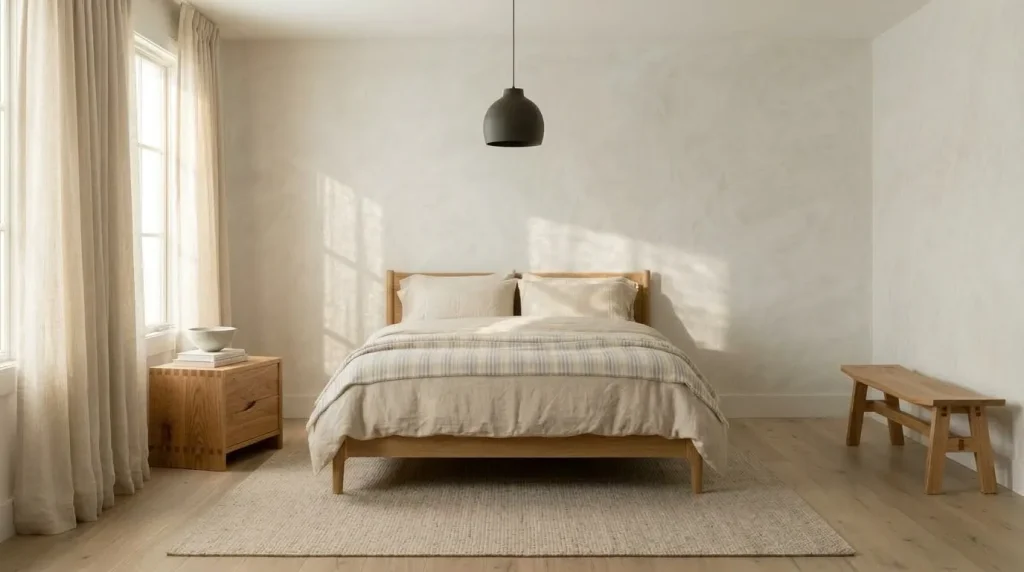
12. Protect natural daylight during the day
Avoid covering a good window with unnecessarily heavy treatments.
Sheer curtains can soften daylight while keeping a bedroom airy. If privacy allows, positioning furniture so it does not block the window can make even a small room feel considerably brighter.
Scandinavian interiors traditionally prioritize daylight because of the long darker seasons in Northern Europe.
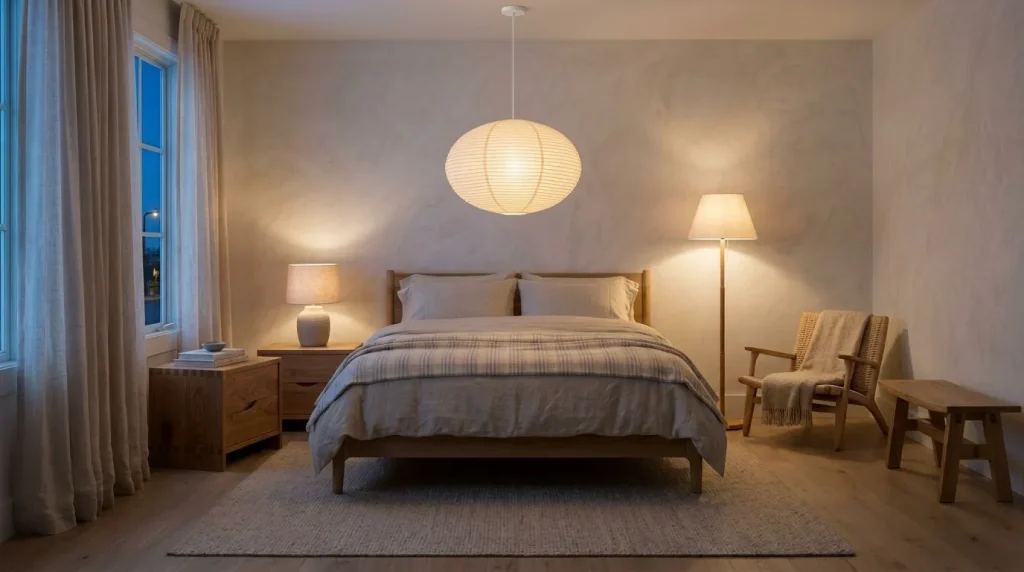
13. Layer several small sources of artificial light
One bright ceiling fixture rarely creates a cozy bedroom.
Instead, combine a ceiling pendant with bedside lamps, a floor lamp, or a small reading light.
This creates different lighting levels for dressing, reading, winding down, and sleeping.
Soft, diffused lighting is also a recurring feature of Nordic bedroom design rather than an afterthought.
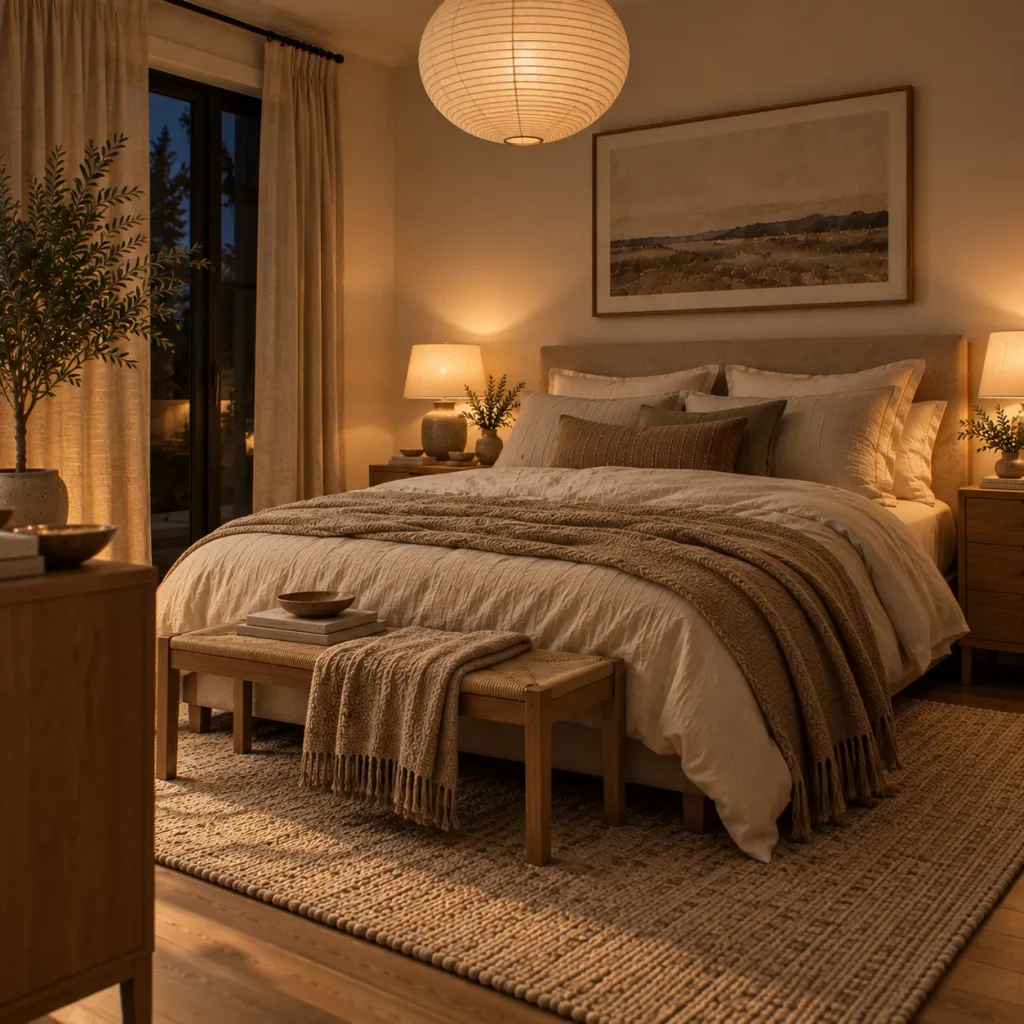
14. Make nighttime lighting genuinely warm
For the hour before sleep, use low-level, warm lighting rather than bright cool-white bulbs.
This is not only aesthetic. Light is a major cue for circadian rhythm, and current sleep guidance recommends reducing bright evening light; dimmer, warmer lighting can create a more sleep-friendly environment.
If your overhead fixture feels harsh, installing a dimmer may improve the room more than buying new decor.
Add Personality Without Losing the Calm

15. Add one sculptural object
A rounded paper pendant, curved wooden chair, unusual ceramic lamp, organic mirror, or softly shaped bedside table can break up all those straight minimalist lines.
Sculptural furniture and lighting are particularly strong in current Scandinavian interiors, bringing artistic character without requiring additional clutter.
One memorable shape is usually enough.
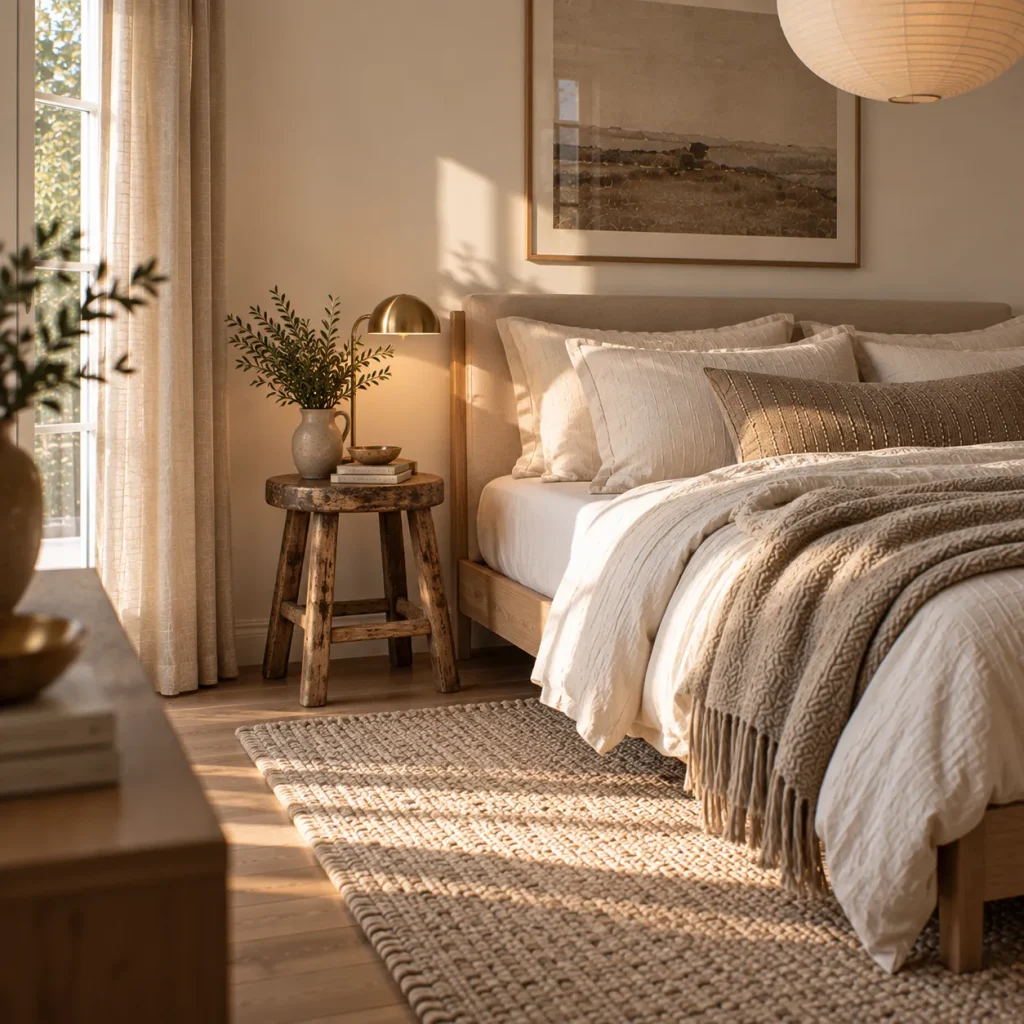
16. Mix in something old
This may be my favorite way to stop a Scandinavian room from looking staged.
Add a vintage stool beside the bed, an inherited wooden chair, or a flea-market frame, and pair those pieces with contemporary furniture instead of furnishing the entire room in one matching collection.
Imagine a simple pale-oak bed, fresh linen duvet, and tiny vintage table you found at a flea market. That slightly imperfect table may become the detail that makes the whole room feel personal.
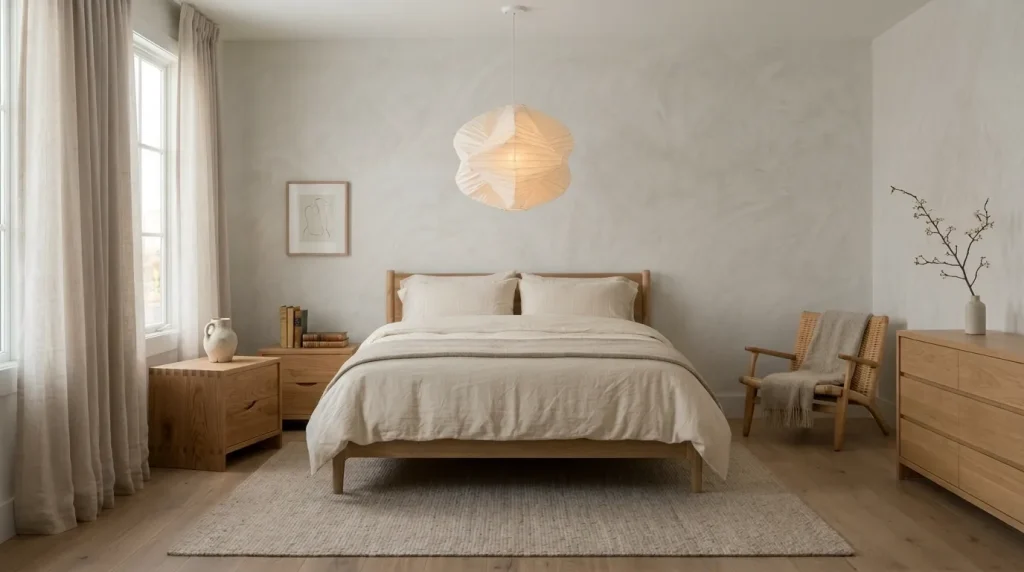
17. Finish with only a few meaningful objects
Resist the urge to “complete” every empty surface.
A stack of two books, one ceramic vessel, a framed print, and perhaps a branch clipped from the garden may be plenty.
Scandinavian styling works when empty space and objects support each other.
I would rather see one handmade vase with a beautiful silhouette than six generic accessories purchased because a nightstand looked bare.
Scandinavian Bedroom Mistakes to Skip
The biggest mistake is assuming Scandinavian means white, gray, and empty.
That interpretation can quickly become cold.
Also avoid buying a matching bedroom furniture set. A coordinated bed, dresser, wardrobe, and two identical nightstands may look neat, but Scandinavian rooms often feel richer when a few compatible pieces come from different periods or makers.
Another mistake is adding baskets everywhere. Natural woven baskets can absolutely work, but ten baskets do not automatically create “Scandi storage.” Good storage should solve an actual problem.
And do not sacrifice comfort in the name of minimalism. If you need blackout curtains to sleep well, use them. Scandinavian-inspired bedrooms can prioritize daylight during waking hours while still controlling nighttime light; blackout treatments are a practical option when outside light interferes with sleep.
Finally, avoid decorating the room entirely from trends. The current Scandinavian movement toward craftsmanship and individual character is useful precisely because it encourages rooms that feel collected rather than copied.
Try This If Your Bedroom Is…
| Your bedroom problem | Scandinavian solution |
|---|---|
| Small | Pale walls, raised furniture, fewer pieces, and closed storage |
| Dark | Warm off-white paint, pale timber, mirrors, and sheer daytime curtains |
| Too sterile | Linen, wool, warm wood, vintage furniture, and softer lighting |
| Too cluttered | Remove decorative extras before buying more storage |
| Too beige | Add muted sage, dusty blue, stripes, or one dark accent |
| Rental-friendly | Change bedding, lamps, rug, curtains, art, and small furniture |
| Modern but cold | Add handmade ceramics, irregular texture, and an older wooden piece |
The most important point is to diagnose what the room is missing before shopping.
If your bedroom already has excellent light and neutral walls, you may only need better textiles and lighting. If it feels cozy but chaotic, editing and storage may matter more than changing the color palette.
Frequently Asked Questions About Scandinavian Bedrooms
What colors are best for a Scandinavian bedroom?
Warm white, cream, oatmeal, beige, taupe, pale gray, and natural wood tones create an easy foundation. For color, try muted sage, dusty blue, soft pink, clay, or subdued yellow. The goal is not avoiding color—it is keeping the overall palette visually harmonious.
How do I make a Scandinavian bedroom cozy instead of cold?
Layer natural textures and soften the lighting. Linen bedding, wool rugs, cotton blankets, timber furniture, warm bulbs, curtains, and a few handmade or vintage objects can make a minimalist bedroom feel much more inviting, an approach also covered in our cozy bedroom ideas.
If your room feels cold, adding more white is rarely the solution.
Can Scandinavian bedrooms have dark colors?
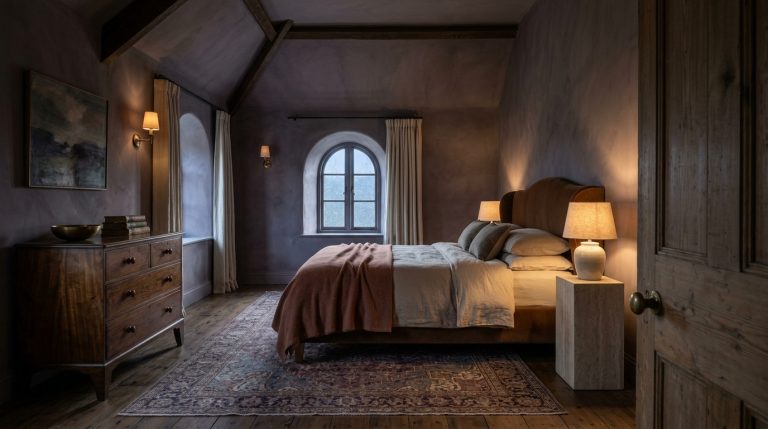
Absolutely. Charcoal, chocolate brown, deep green, black, and dark blue can work beautifully as smaller accents. You might use a dark bedside lamp, framed artwork, blanket, chair, or headboard to create contrast.
Just keep the darker elements controlled if you want to preserve the characteristic light, relaxed Scandinavian atmosphere. For a warmer, collected take on layered contrast, see our rustic bedroom ideas.
What to Do Next
You do not need to redesign the entire bedroom in one weekend.
Start by removing anything that makes the room feel visually noisy. Then look at the three elements with the biggest impact: wall color, bed, and lighting.
After that, add warmth through textiles, natural wood, and one or two objects with character. If your bedroom runs small, our small bedroom ideas for a bigger feel pair well with this approach.
The most convincing Scandinavian bedrooms rarely look as though someone bought every item on the same afternoon. They feel slowly assembled—practical enough for everyday life, comfortable enough for a long winter evening, and simple enough to help your mind settle at the end of the day.
That is the real lesson behind these 17 Scandinavian bedroom tips: create less visual noise, but give the things that remain more warmth, usefulness, texture, and meaning.