
10 Small Bedroom Ideas That Instantly Maximize Space Without Making the Room Feel Cramped
A small bedroom usually doesn’t feel cramped because it’s missing square footage. It feels cramped because the furniture is fighting the room.
I’ve seen 9-by-10-foot bedrooms work beautifully with a full-size bed, dresser, and proper storage. I’ve also seen larger rooms become frustrating because a deep nightstand blocks the closet and a bulky bed frame eats six inches on every side.
That’s why the best small bedroom ideas start with floor space, not decor.
Before buying another basket or wall shelf, look at how you actually move through the room. Can you open drawers fully? Can you walk around the bed without turning sideways? Can you reach the closet without moving a chair?
Those answers tell you more than any decorating trend ever will.
1. Put the bed where it creates the cleanest walking path
The bed is the biggest object in most bedrooms, so its placement should come first.
A common instinct is to center it on the longest wall. That looks balanced, but it isn’t always the smartest use of space.
In a narrow room, shifting the bed slightly toward one wall can free enough space for a better dresser or a usable desk. You might give up perfect symmetry, but gain a room that works.
I usually try to leave around 24 to 30 inches beside the bed where possible. Less can still work, especially in very small rooms, but the walkway should feel intentional rather than accidental.
When pushing the bed against a wall makes sense
For a solo sleeper, putting one long side of the bed against a wall can be a practical choice.
Design advice often treats this like a mistake. It isn’t.
If that move gives you space for a proper wardrobe, reading chair, or home office corner, the trade-off can be worth it. The downside is obvious, making the bed is more awkward, and two people may find access frustrating.
Sometimes function deserves to win over symmetry.
2. Choose a bed frame that gives space back to you
One of the most useful small bedroom ideas is choosing a bed that does more than hold a mattress.
A storage bed with deep drawers can replace a small dresser. A lift-up frame can hide luggage, winter bedding, or bulky sweaters. Even a simple frame with 10 to 12 inches of clearance underneath creates room for flat storage boxes.
The style of the frame matters too.
Chunky upholstered beds with thick side rails can add several inches to the mattress footprint. In a tight room, those inches matter.
A queen mattress is already about 60 by 80 inches. Add wide rails and an oversized headboard, and the bed quickly becomes much larger than expected.
I prefer slim wood frames, simple metal bases, or upholstered beds with narrow rails in small rooms.
For color, warm oak, walnut, soft beige, and mushroom fabric all add warmth without making the bed visually heavy.
Storage beds cost more than basic frames, but they can prevent you from buying another piece of furniture later.
That’s where the value usually comes from.
3. Replace bulky nightstands with narrow alternatives
Nightstands are sneaky space thieves.
A traditional bedside table can easily be 20 to 24 inches wide. Put one on each side of the bed, and you’ve used almost four feet of wall space.
Small bedroom idea number three is to rethink what a nightstand actually needs to do.
For most people, it holds a phone, water, glasses, and maybe a book. You don’t necessarily need three drawers for that.
Try a 10 to 14-inch-wide pedestal table, a floating shelf, or a narrow wall-mounted drawer.
A small oak shelf paired with a plug-in wall sconce can free nearly all the floor area beside the bed.
If you need storage, choose one proper nightstand and keep the other side lighter.
I’m a fan of asymmetry in small rooms because it lets each side solve a different problem.
One side might have a 16-inch drawer unit. The other gets a tiny round table and wall light.
You still have balance, just without forcing matching furniture into a room that doesn’t have matching amounts of space.
4. Use the wall above the bed for storage without making it heavy
The wall above a bed is valuable, but it needs restraint.
Adding three deep cabinets directly over your pillow can make a small bedroom feel boxed in.
Instead, think shallow.
A picture ledge, narrow shelf, or slim closed cabinet mounted higher on the wall can add storage without swallowing the room.
Keep heavy storage toward the edges
If you’re adding cabinets around the bed, place the deeper sections beside the mattress rather than directly overhead.
This creates a built-in look while keeping the sleeping area visually open.
For renters, freestanding shelving placed around the bed can mimic the effect without permanent construction. Look for units around 10 to 14 inches deep so they don’t overpower the room.
And don’t fill every shelf.
One framed print, a small lamp, two books, and a ceramic bowl usually looks better than a row of fifteen objects.
Storage should help the room feel calmer. If it creates more visual clutter, it’s working against you.
5. Pick a dresser based on depth, not just width
Most people look at dresser width first.
In a small bedroom, depth can matter even more.
A standard dresser may project 18 to 22 inches into the room. A shallower model around 14 to 16 inches deep can preserve several valuable inches of walking space.
That difference becomes obvious in a narrow bedroom.
Here’s a practical comparison:
| Storage option | Best for | Main drawback |
|---|---|---|
| Shallow dresser | Narrow rooms | Smaller drawers |
| Tall chest | Limited wall width | Harder to reach top drawers |
| Under-bed drawers | Hidden storage | Requires clear floor access |
| Wall-mounted cabinet | Keeping floor open | Installation may not suit renters |
| Storage bench | Bedding and blankets | Uses valuable floor area |
| Wardrobe with sliding doors | Tight clearance | Usually costs more |
Tall storage can also work well if you don’t mind reaching higher drawers.
But don’t automatically buy the tallest cabinet you can find. A six-foot unit beside a low bed can dominate the entire room.
The goal is storage that feels proportional.
Sometimes a low dresser under a mirror gives the bedroom more breathing room than a towering wardrobe, even if it stores slightly less.
6. Use curtains and color to make the room feel taller
A small room benefits from anything that stretches the eye vertically.
Curtains are one of the easiest tools.
Mount the rod several inches above the window frame, or closer to the ceiling if the room allows it. Let the panels fall almost to the floor.
That long vertical line makes the wall feel taller.
For fabric, I like warm white, oatmeal, pale taupe, dusty blue, or soft sage. They add enough color without chopping up the wall.
Dark curtains can look beautiful too, especially behind a light bed. Just remember that heavy fabric absorbs more light.
Paint can help in a similar way.
Low-contrast combinations usually make a small room feel calmer. Think creamy walls with warm greige curtains and medium oak furniture.
But pale colors aren’t mandatory.
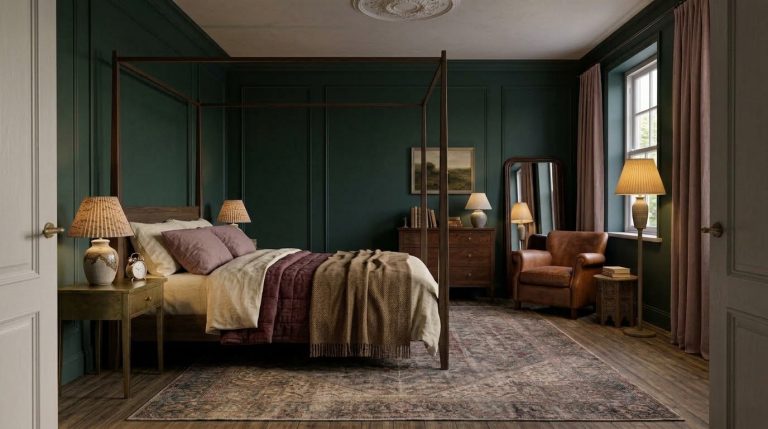
A deep olive, muted navy, or cocoa brown wall behind the bed can create depth, especially when the other walls stay lighter.
The mistake is changing color every few feet.
Small rooms already have lots of edges. You don’t need the paint scheme creating more.
7. Move lighting off tables and onto walls
Lighting often takes up more room than we realize.
A lamp with a 14-inch shade can consume most of a small nightstand.
Small bedroom idea number seven is to free your bedside surfaces by moving lighting upward.
Plug-in sconces are especially renter-friendly because they don’t require hardwiring. Mount one beside the bed and use a cord cover painted close to the wall color.
Swing-arm sconces work well if you read in bed.
Another option is a slim floor lamp placed behind a nightstand or chair.
Try layering at least two types of light in the room.
Your ceiling fixture provides general light. A bedside or wall light handles reading and creates a softer evening atmosphere.
Warm bulbs around 2700K usually feel comfortable in bedrooms.
And avoid oversized fixtures unless the ceiling is generous.
A huge pendant in a 9-foot-square bedroom can look dramatic in a photograph, but it may make daily life feel like you’re sleeping underneath a chandelier exhibition.
Scale matters.
8. Make the closet work harder before buying more storage
Here’s what nobody tells you about small-bedroom storage. The answer is often already behind the closet door.
Many closets waste a surprising amount of vertical space.
If there’s one hanging rail with three empty feet beneath your shirts, that’s usable storage.
Add a second rail for shorter clothing. Use shelf dividers for sweaters. Put shoes in slim boxes or on a low rack. Store seasonal items on the highest shelf.
Over-door organizers can work too, especially for scarves, belts, shoes, or small accessories.
For renters, these upgrades can be inexpensive and reversible.
I’d reorganize the closet before adding another dresser.
A new chest might cost $200 to $600 and occupy several square feet. A second rail, a few shelf baskets, and better hangers can cost far less.
The catch is discipline.
Closet systems only work if categories stay fairly consistent. If every shelf becomes a miscellaneous zone, you’ll be back where you started.
Give each area one clear job.
That rule works for the whole bedroom, actually.
9. Use mirrors and raised furniture to keep sightlines open
A mirror can make a small bedroom feel more spacious, but placement matters.
Put a full-length mirror where it can reflect daylight or an open part of the room.
Avoid positioning it directly opposite clutter.
A large mirror leaning near a window can work well, provided it’s safely anchored where needed. A wall-mounted mirror above a dresser also helps by reflecting light without using floor space.
Furniture with visible legs has a similar effect.
A dresser raised several inches off the floor feels lighter than a solid block sitting flush against it. The same goes for nightstands and benches.
That little band of visible flooring helps the room feel less crowded.
Just don’t take the idea too far.
Open-leg furniture also exposes cords, dust, and storage boxes. If you know you’ll shove random bags underneath, closed-base furniture may actually look neater.
The best small bedroom ideas account for how people really live, not how a room looks five minutes after styling.
10. Remove one piece of furniture before adding another organizer
This is the least exciting tip and probably the most effective.
Before buying storage products, ask whether every piece of furniture deserves its footprint.
That accent chair covered in clothes is technically functioning, just not as intended.
The bench at the foot of the bed may look nice, but if it reduces your walkway to 18 inches, it’s costing you more than it gives back.
Small rooms improve quickly when you remove redundant pieces.
Here’s the order I’d use:
- Keep the bed.
- Keep essential clothing storage.
- Keep one practical bedside surface.
- Add a desk only if you genuinely use it.
- Add seating only if there’s comfortable circulation left.
- Add decorative furniture last.
This approach sounds strict, but it makes decorating easier.
Once the unnecessary furniture disappears, you can see where the room actually needs storage, lighting, or personality.
And you may discover that the room doesn’t need another organizer at all.
It just needed fewer obstacles.
FAQ About Small Bedrooms
How can I make a small bedroom look bigger without renovating?
Keep the main walking path open, use appropriately scaled furniture, hang curtains higher, and move some storage onto the walls. A large mirror and consistent color palette can also make the room feel less fragmented.
Is a queen bed too big for a small bedroom?
Not always. A queen can work if you still have comfortable access to the closet and enough room to move around the bed. In very narrow rooms, a full-size bed may create noticeably better circulation.
Should small bedrooms use light colors only?
No. Light colors can help reflect daylight, but darker shades work well when used deliberately. A deep green or muted navy wall behind the bed can add depth without making the entire room feel heavy.
What furniture should I avoid in a small bedroom?
Be cautious with oversized upholstered beds, deep dressers, bulky matching nightstands, large benches, and decorative chairs that don’t serve a real purpose. Measure the footprint before buying anything.
Give the room back some breathing space
That cramped bedroom I mentioned earlier didn’t need a renovation.
We moved the bed six inches, replaced one bulky nightstand with a floating shelf, and removed a chair that mainly collected laundry. Those small changes opened the walking path immediately.
That’s where I’d start in your room too.
Choose the piece that causes the most frustration. Maybe it blocks a drawer, narrows the walkway, or occupies a corner you could use better.
Move that first.
The smartest small bedroom ideas aren’t about finding clever ways to pack more into the room. They’re about deciding what deserves space, then making everything else support it.
A bedroom should feel restful before it feels impressive.