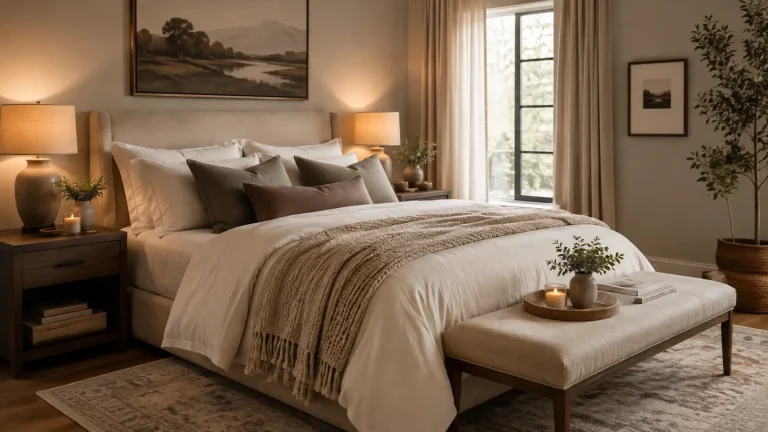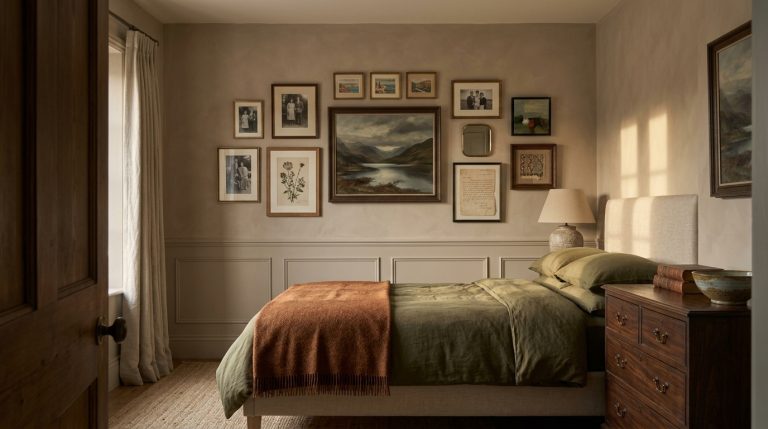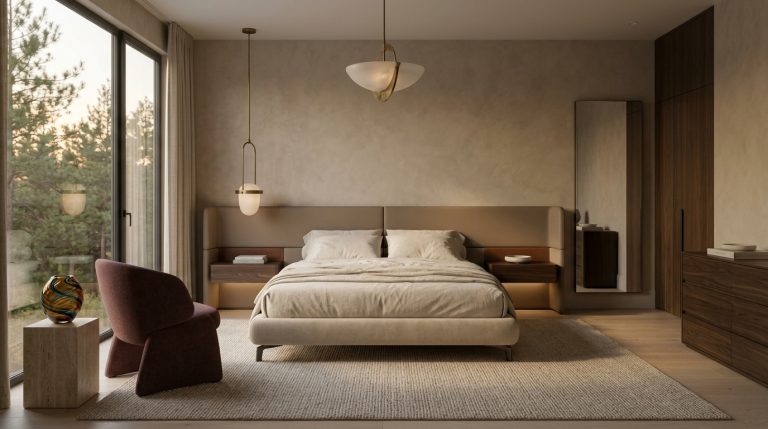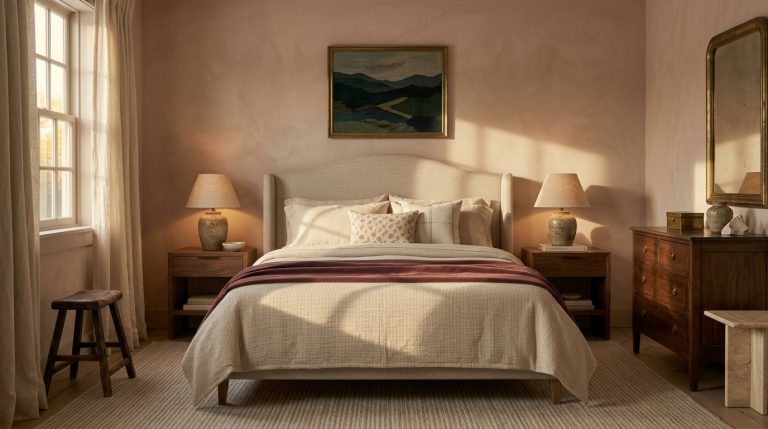
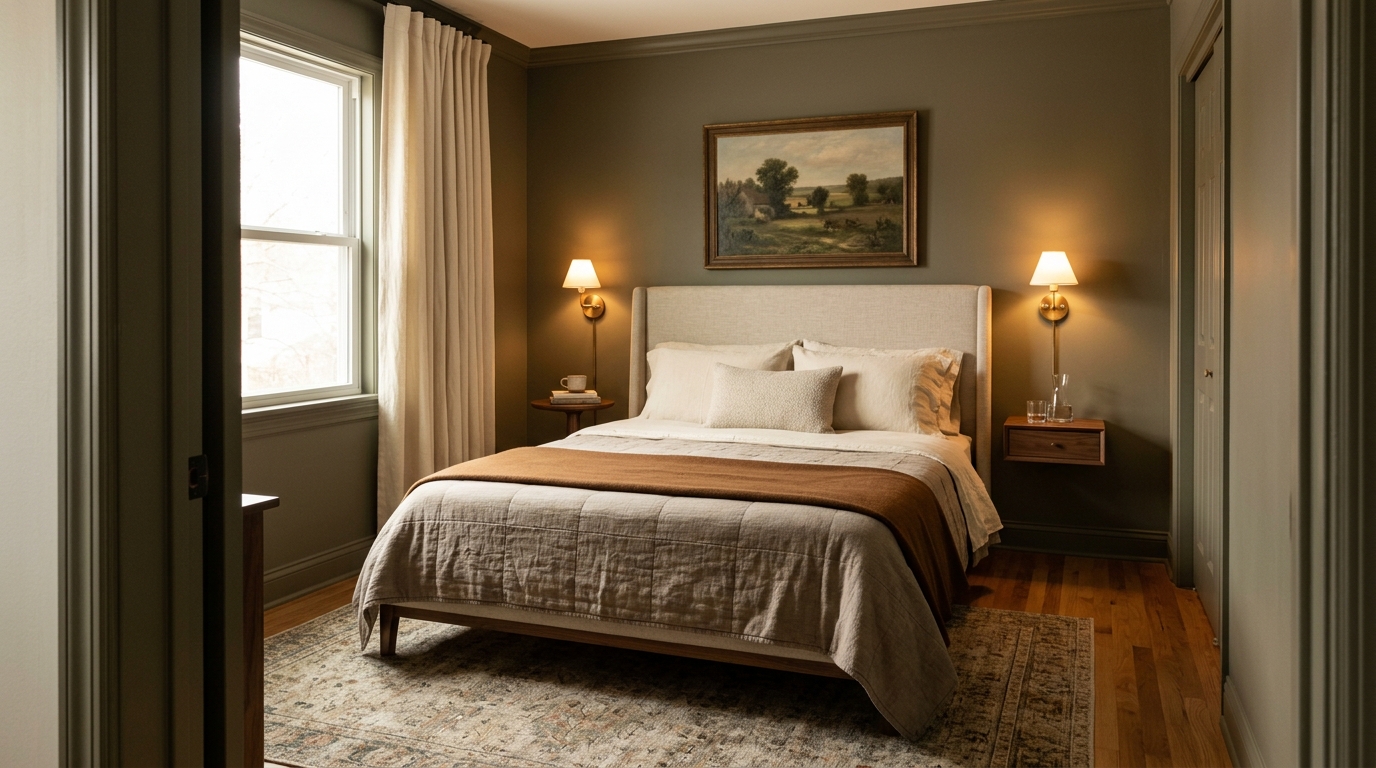
10 cozy small bedroom tips for a Warm, Restful Retreat
A small bedroom can feel cozy almost by accident, but there is a fine line between cocooning and cramped. A bed pushed against furniture, six decorative pillows, bulky nightstands, and baskets squeezed into every remaining corner rarely create the restful atmosphere you were hoping for.
These 10 cozy small bedroom tips focus on warmth without clutter. In 2026, designers are treating bedrooms as more personal, restorative spaces, with warmer color, tactile fabrics, layered lighting, smart storage, and fewer visual distractions. Elle Decor describes a growing interest in cocoon-like bedrooms with enveloping color and soft upholstery, while Architectural Digest is challenging the old rule that small rooms must stay pale and visually cautious.
The aim is simple: make the room feel intimate because it is comfortable, not because it is full.
Make the Room Feel Cocooning Before Adding Decor
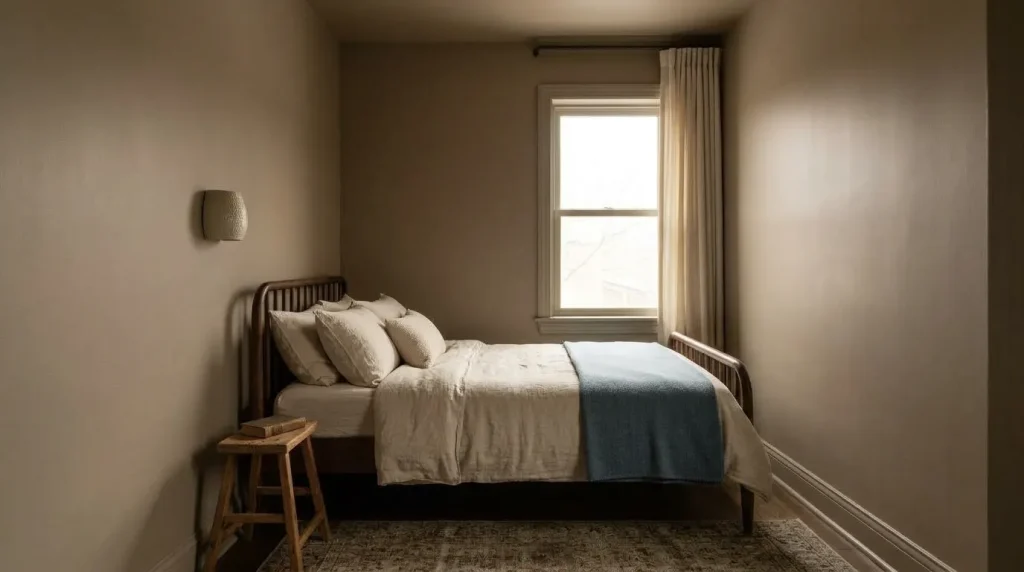
Tip 1: Choose a warm, enveloping wall color
Pale walls are not automatically the coziest or most spacious choice.
In 2026, designers are increasingly using color drenching in bedrooms, carrying one shade across walls, trim, and sometimes the ceiling. Fewer sharp color changes can make the room’s boundaries feel less obvious.
Try smoky olive, dusty blue, mushroom, muted clay, warm taupe, soft sage, or a gentle putty.
A north-facing bedroom may benefit from mushroom or clay rather than a cool gray-blue. A sunny room can often handle a more muted blue or green.
One contrarian point is worth remembering: small bedrooms do not have to look pale to feel spacious. A deeper continuous color can make a compact room feel more settled than one dark feature wall surrounded by bright white.
Always sample paint beside your flooring and bedding before committing. For more color-forward inspiration, these 10 neutral bedroom ideas show how a warm, layered palette can still feel calm and grounded.
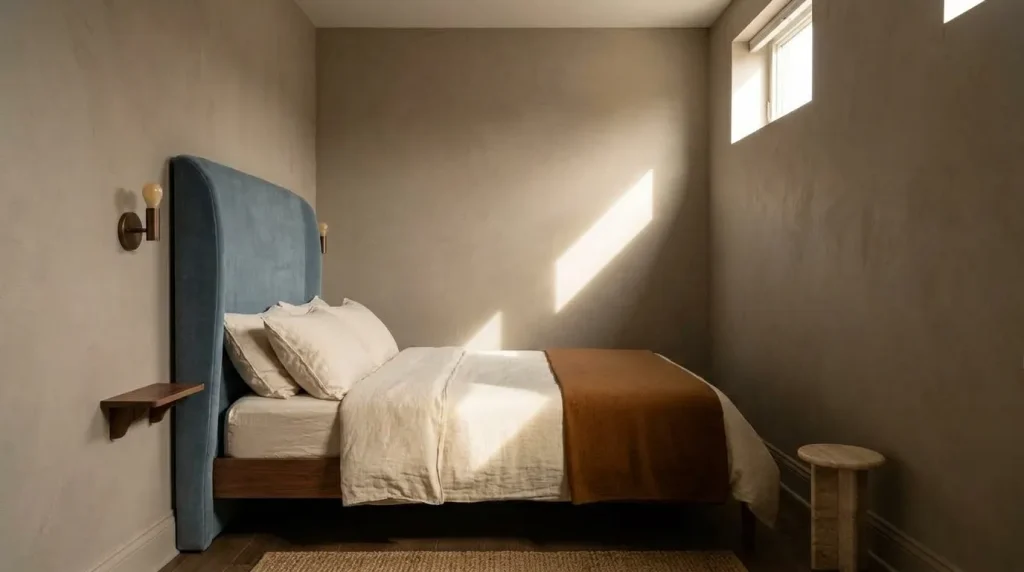
Tip 2: Let the bed create the cozy feeling
The bed takes up most of a small bedroom, so make that visual dominance useful.
Choose a headboard with enough presence to soften the wall. Upholstered surfaces feel more layered without using any additional floor space.
The “cocoon bedroom” is one of the notable 2026 directions identified by designers, with taller headboards, upholstered surfaces, washed linen, mohair, and other tactile fabrics being used to create quieter, more intimate rooms.
Avoid an excessively deep bed frame in a tiny room. A relatively slim base with a taller headboard gives you softness without consuming precious circulation space.
Layer the Bed Without Burying It

Tip 3: Build warmth through bedding weight, not pillow quantity
A cozy bed needs layers, but that does not mean covering half of it with cushions that end up on the floor every night.
Start with cotton or linen sheets. Add a duvet or quilt. Finish with one heavier wool, brushed cotton, or textured throw at the foot.
Use tonal variation rather than making every layer identical.
For example: warm white sheets, oatmeal duvet, tobacco throw. Or: dusty blue bedding, mushroom quilt, burgundy lumbar cushion.
Homes & Gardens highlights warm color, layered sensory comfort as key elements in creating more restorative spaces, the same approach used in these cozy bedroom ideas.
Two sleeping pillows and one or two decorative cushions are often enough for a small bed.
The bed should look inviting at 10 p.m., not like something that requires ten minutes of dismantling.
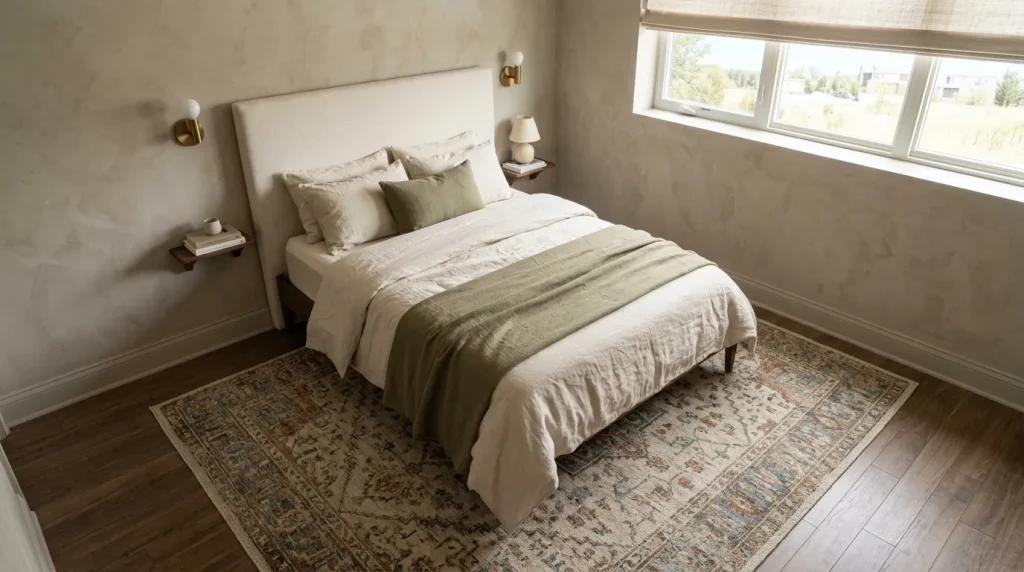
Tip 4: Use a rug large enough to soften the whole bed zone
A pair of tiny bedside rugs can make a small bedroom look even more chopped up.
Where the room allows, use one larger rug beneath the bed. For a queen bed, an 8-by-10-foot rug can be a useful starting point, although room dimensions and furniture placement should guide the final size.
You want enough rug extending beyond the sides that your feet reach something soft when you get out of bed.
Wool is excellent for physical warmth. A low-pile patterned rug can also work, especially if the rest of the room is plain.
Try oatmeal, tobacco, faded rust, dusty blue, moss, or a quiet vintage-style pattern rather than automatically choosing solid cream. A rug that reads slightly warmer than the walls tends to make the room feel calmer, similar to the grounding effect used in small bedroom ideas for bigger feel.
Give Bulky Furniture Fewer Jobs
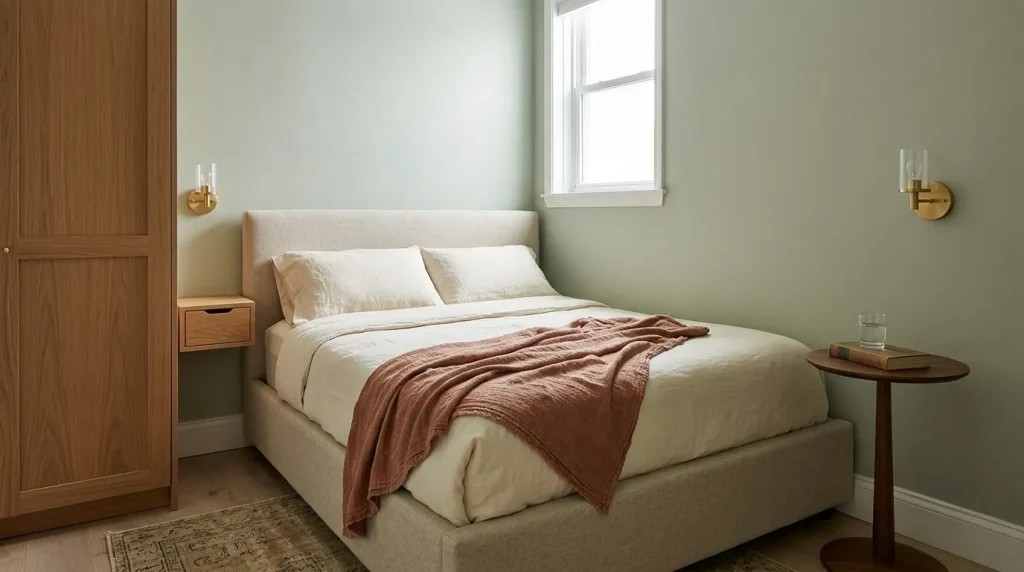
Tip 5: Replace oversized nightstands with narrower surfaces
A small bedroom does not necessarily need two conventional nightstands.
If each side only needs a phone, glass of water, and book, try floating drawers, narrow wall-mounted shelves, small stools, or compact pedestal tables.
A surface around 12 to 16 inches wide may be enough in a tight layout.
And the two sides do not have to match.
One illustrative bedroom layout had two matching nightstands technically fitted beside the bed, but one blocked the wardrobe door. Replacing that side with a tiny wall-mounted shelf made the room easier to use and did not make the bed look unfinished.
Matching furniture is not what creates coziness. Ease of use does.
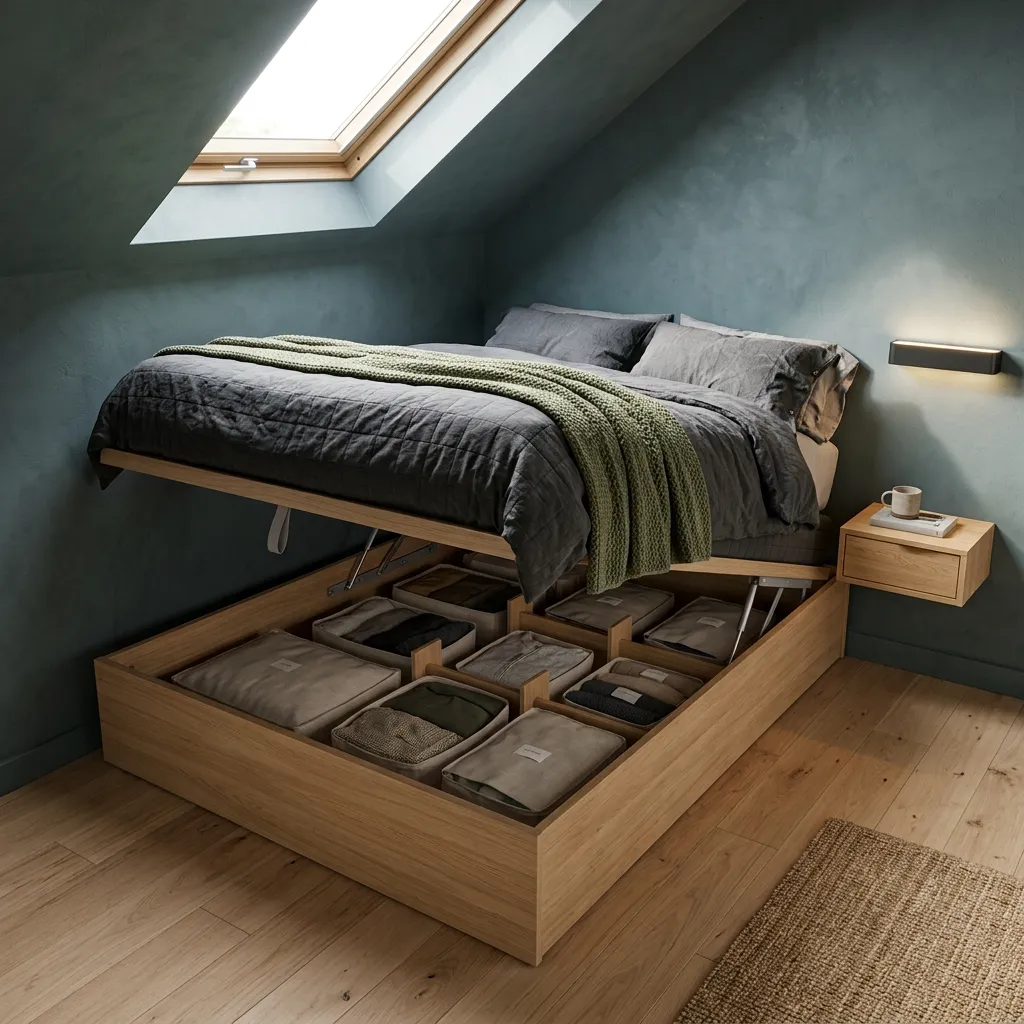
Tip 6: Make under-bed space proper storage
A small cozy bedroom quickly loses its calm if spare bedding, shoes, luggage, and clothing have nowhere to go.
Use the footprint beneath the bed. Lift-up storage frames or under-bed boxes work well, provided there is enough side clearance. If you already own a standard frame, use matching low boxes rather than pushing loose belongings underneath.
Architectural Digest’s 2026 small-bedroom guidance emphasizes stealthy storage and double-duty solutions because reducing visual noise is particularly important in compact bedrooms, an idea that also shows up in the layouts from 10 small bedroom ideas for women.
Keep frequently used items easy to reach and seasonal pieces farther back.
Closed storage is especially valuable here. Cozy does not mean seeing everything you own.
Use the Walls So the Floor Can Breathe
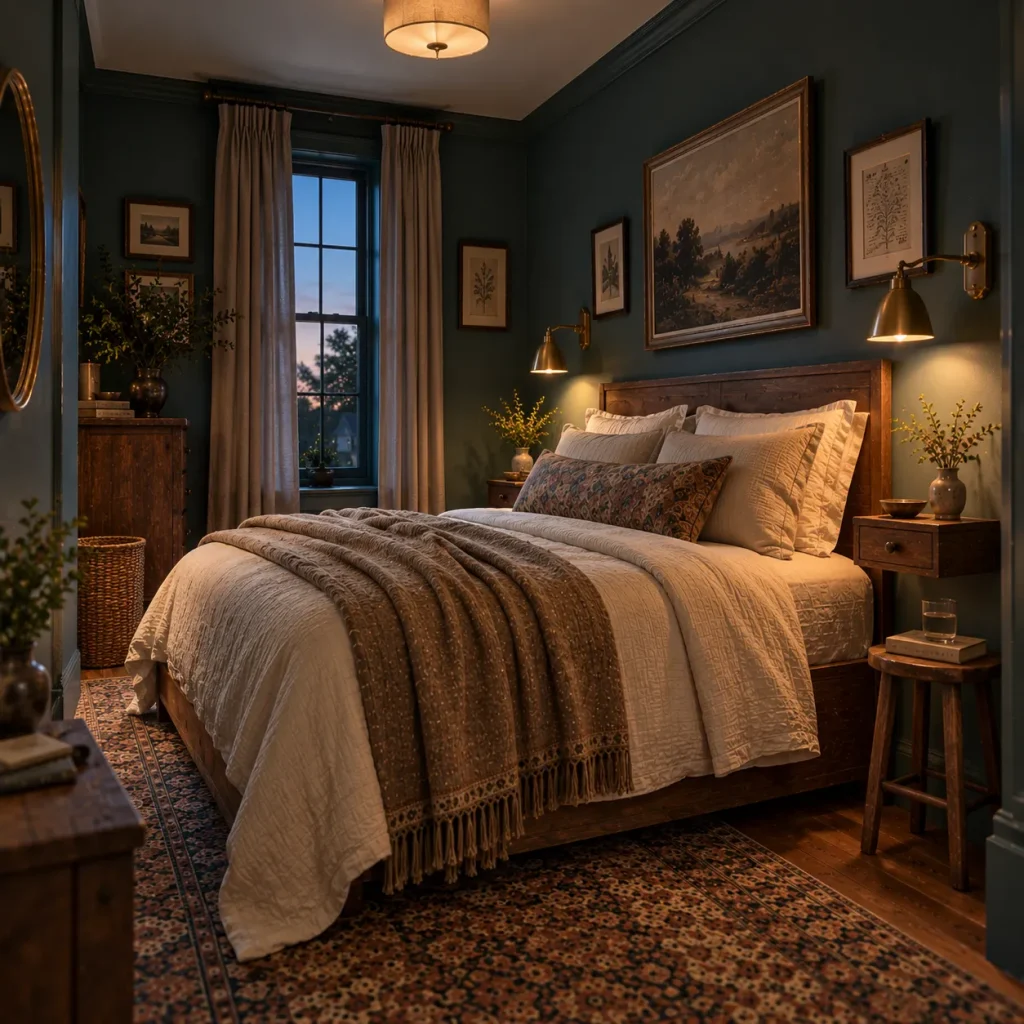
Tip 7: Move lighting off the nightstand
Wall-mounted sconces are one of the highest-value changes in a tiny bedroom.
They free space on the nightstand and create softer pools of light closer to the bed. Adjustable swing-arm versions are useful if you read at night.
Architectural Digest specifically recommends sconces and other vertical strategies in small bedrooms because they reduce pressure on limited surfaces while drawing attention upward.
Use warm, comfortable light for the room. A well-lit small bedroom might have: a ceiling fixture for general light, two bedside sconces or lamps, and one small task light near a dresser or desk.
That is usually more inviting than one very bright overhead fixture.
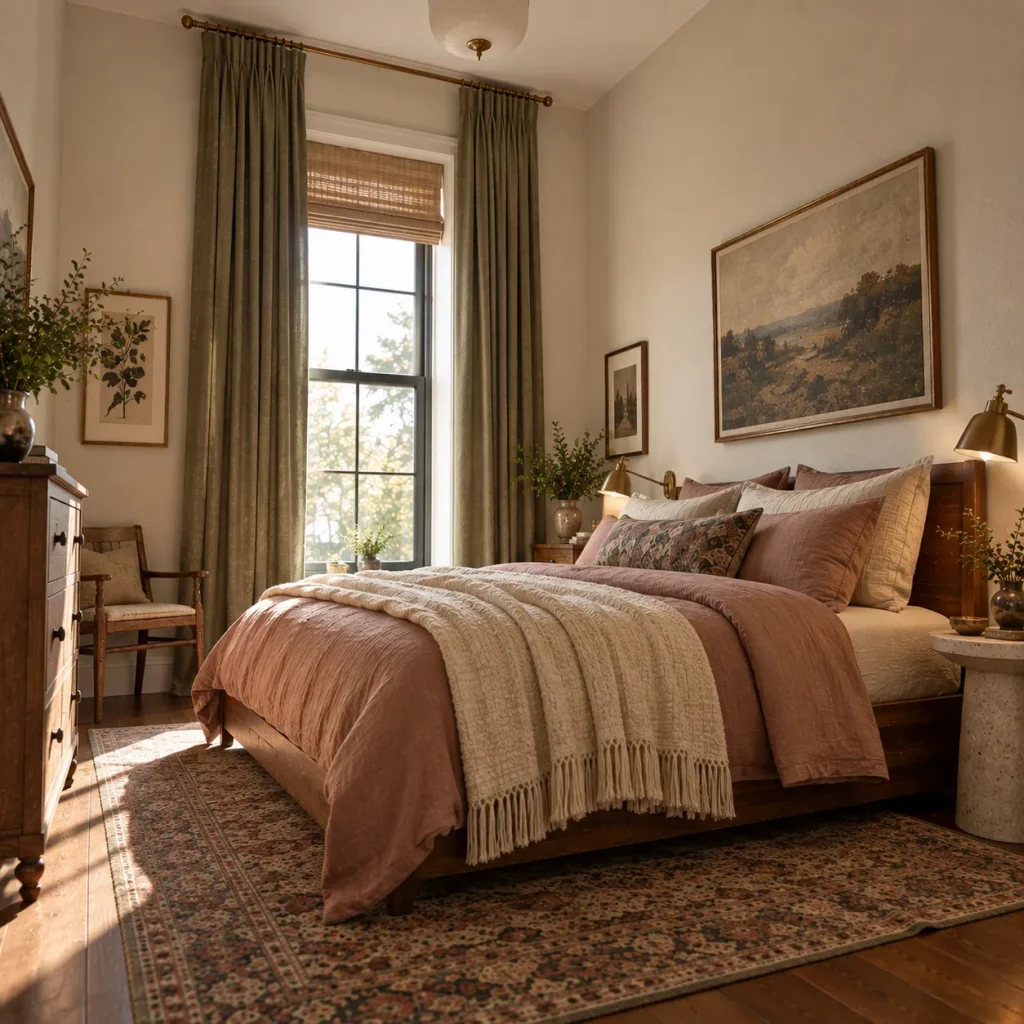
Tip 8: Hang curtains close to the ceiling
Short curtains mounted directly above the window can visually compress the wall.
Where the architecture permits, mount the rod higher and extend it beyond the window frame. Full-length curtains draw the eye vertically and allow more glass to remain exposed when the panels are open.
Architectural Digest’s current small-space advice highlights elongated drapery as a useful way to emphasize vertical dimension.
For coziness, consider linen, cotton, or a softly textured fabric rather than extremely thin sheers alone.
If privacy matters, layer a lighter inner treatment with fuller curtains.
Mushroom, dusty blue, muted rose, olive, or warm ivory can add subtle color without making a compact wall look busy.
Add Personality Without Filling Every Surface
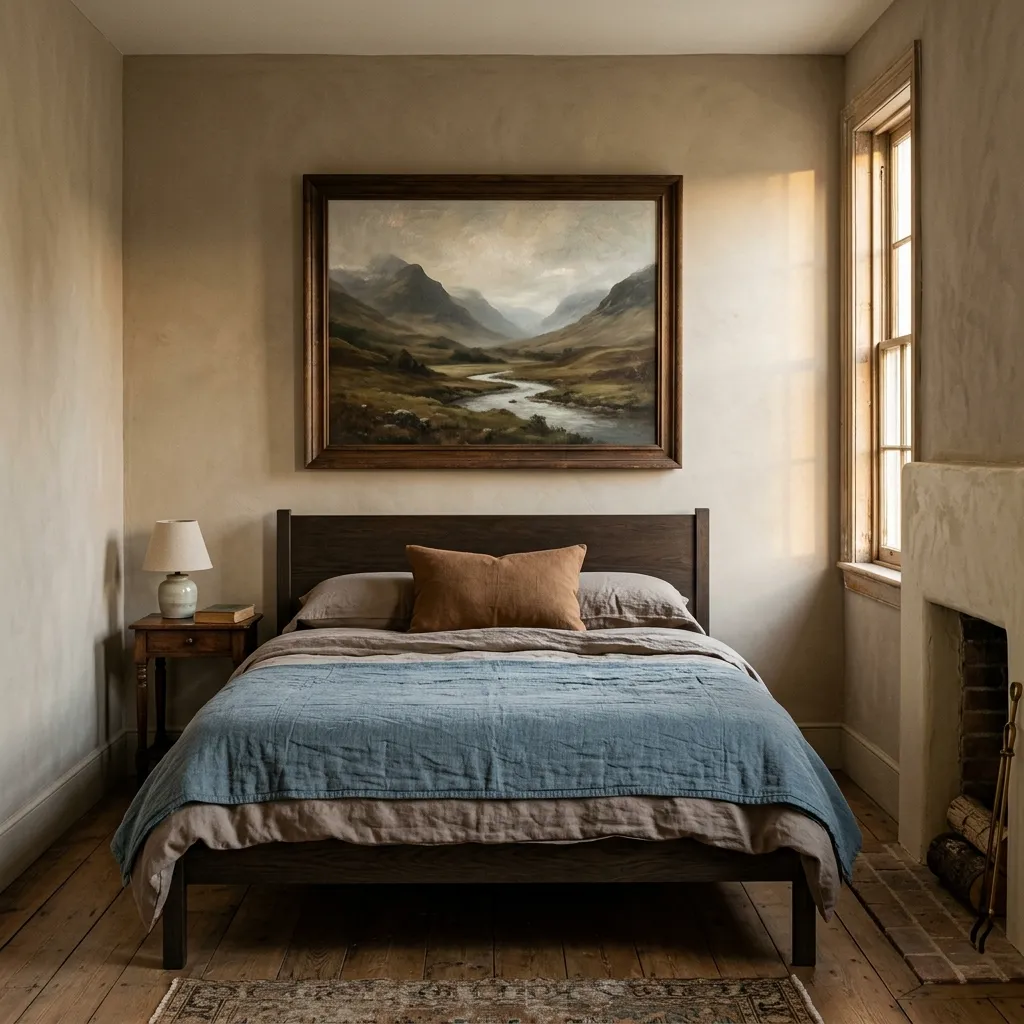
Tip 9: Choose one larger piece of art instead of lots of tiny decor
Small bedrooms often attract small decorations. Tiny frames, tiny plants, tiny shelves, tiny lamps.
That can produce what designers sometimes call a dollhouse effect, where undersized pieces make the room feel more fragmented. Current small-space guidance is increasingly challenging the idea that everything in a compact room must be miniature.
Try one substantial artwork above the bed or dresser instead.
A landscape, textile, photograph, vintage print, or abstract piece can introduce color and personality without requiring another piece of furniture.
If the bed is 60 inches wide, artwork around 36 to 44 inches wide might be a useful starting range, depending on the wall and frame.
Keep the bedside surfaces simpler afterward.
One large visual gesture often makes a small room feel more confident.
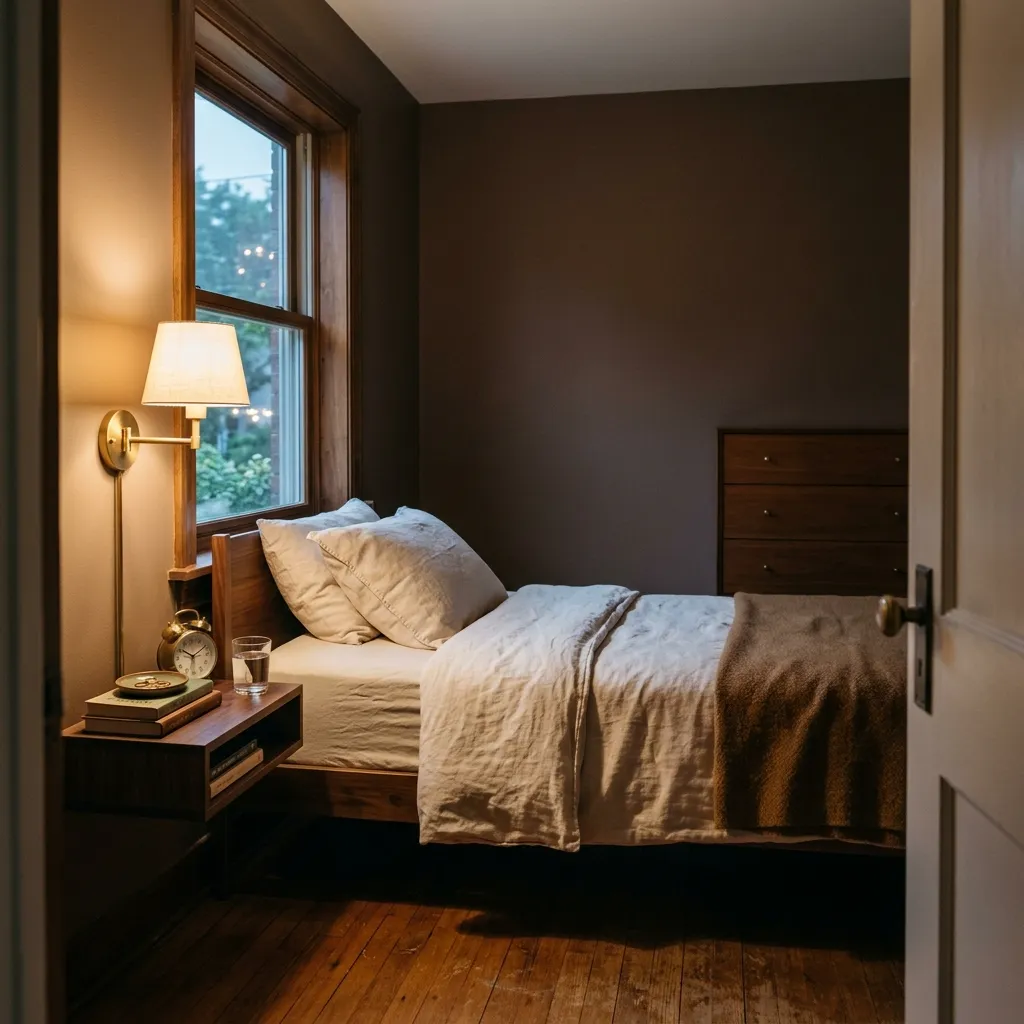
Tip 10: Create one screen-free comfort ritual
A cozy bedroom should feel different from the room where you answer emails.
The “analog bedroom” is gaining attention in 2026 as designers respond to screen fatigue and the desire for a room that does not need a dedicated reading nook.
Keep two books on the nightstand. Add a small speaker rather than leaving the television running. Use a ceramic dish for jewelry. Put a comfortable throw within reach.
If possible, move the television out or make it visually quieter.
This is less about following a trend than asking what actually helps the room feel restful.
A bedroom filled with cozy-looking objects but dominated by glowing screens may not feel particularly calming once you are in it.
A Practical Cozy Small Bedroom Formula
| Problem | Better approach | What to limit |
|---|---|---|
| Room feels cold | Warm paint plus tactile bedding | Adding random decor |
| Bed dominates | Make the headboard intentional | Fighting its size |
| No bedside space | Floating shelf and sconces | Bulky nightstands |
| Too much clutter | Under-bed and closed storage | Open baskets everywhere |
| Low ceiling feeling | High, full-length curtains | Short curtain panels |
| Room feels bland | One large artwork | Many tiny accessories |
| Harsh at night | Several low light sources | One bright overhead light |
Mistakes to Skip in a Cozy Small Bedroom
Too much furniture. An armchair is not cozy if you have to squeeze around it to reach the wardrobe.
Too many beige textures. Cream bouclé, cream rug, cream cushions, and cream bedding can still look flat. Add wood, wool, ceramic, color, or a smoother surface.
Tiny furniture everywhere. Correctly scaled pieces can make a compact room look more settled than several undersized ones.
Open storage on every wall. Shelves are useful, but visible clothes, toiletries, books, bags, and baskets can quickly create visual noise.
One harsh ceiling light. Cozy rooms depend on softer light arriving from lower heights.
Try This If Your Bedroom Is Under 100 Square Feet
Prioritize four things first: a comfortable bed, closed storage for clothing, one useful bedside surface, and good evening lighting.
Then stop.
Do not automatically add a bench, chair, vanity, bookcase, or second dresser because larger-bedroom inspiration includes them.
Use under-bed storage. Mount lights on the wall. Hang curtains high. Choose one large piece of art rather than a collection of small decorations. Coziness often comes from better materials and light rather than having more things.
Frequently Asked Questions
How can I make a small bedroom feel cozy without making it cluttered?
Use tactile bedding, warm or enveloping wall color, a properly sized rug, and layered lighting. Keep most storage closed and use fewer decorative objects with greater visual impact.
What colors make a small bedroom feel cozy?
Mushroom, warm taupe, dusty blue, muted olive, clay, soft sage, warm ivory, and deeper chocolate can all work. Current 2026 bedroom design is favoring muted greens, warm clays, soft blues, and other enveloping tones rather than relying only on white.
Do dark colors make a small bedroom look smaller?
Not necessarily. Designers are increasingly challenging that rule. Using one deep color continuously across several surfaces can reduce visual breaks and make a compact bedroom feel more immersive and cohesive.
How do I make a tiny bedroom cozy on a budget?
Start with lighting and bedding rather than furniture. A warmer bulb, a textured throw, and one larger piece of art can shift the mood of the whole room before you invest in any major pieces.
Make Comfort Earn Every Inch
The most useful 10 cozy small bedroom tips are not about squeezing more cozy-looking objects into the room.
Start with what your body notices first. A comfortable bed, soft floor underfoot, easy movement, warm evening light, and somewhere to put everyday belongings matter more than decorative baskets and extra cushions.
Then add personality through one or two stronger decisions. Paint the room olive. Hang a piece of art you genuinely like. Bring in walnut, linen, wool, or a vintage bedside table.
If you make one change today, remove the least useful piece of furniture and live without it for a few days.
A small bedroom often feels warmer once it has a little more room to breathe.