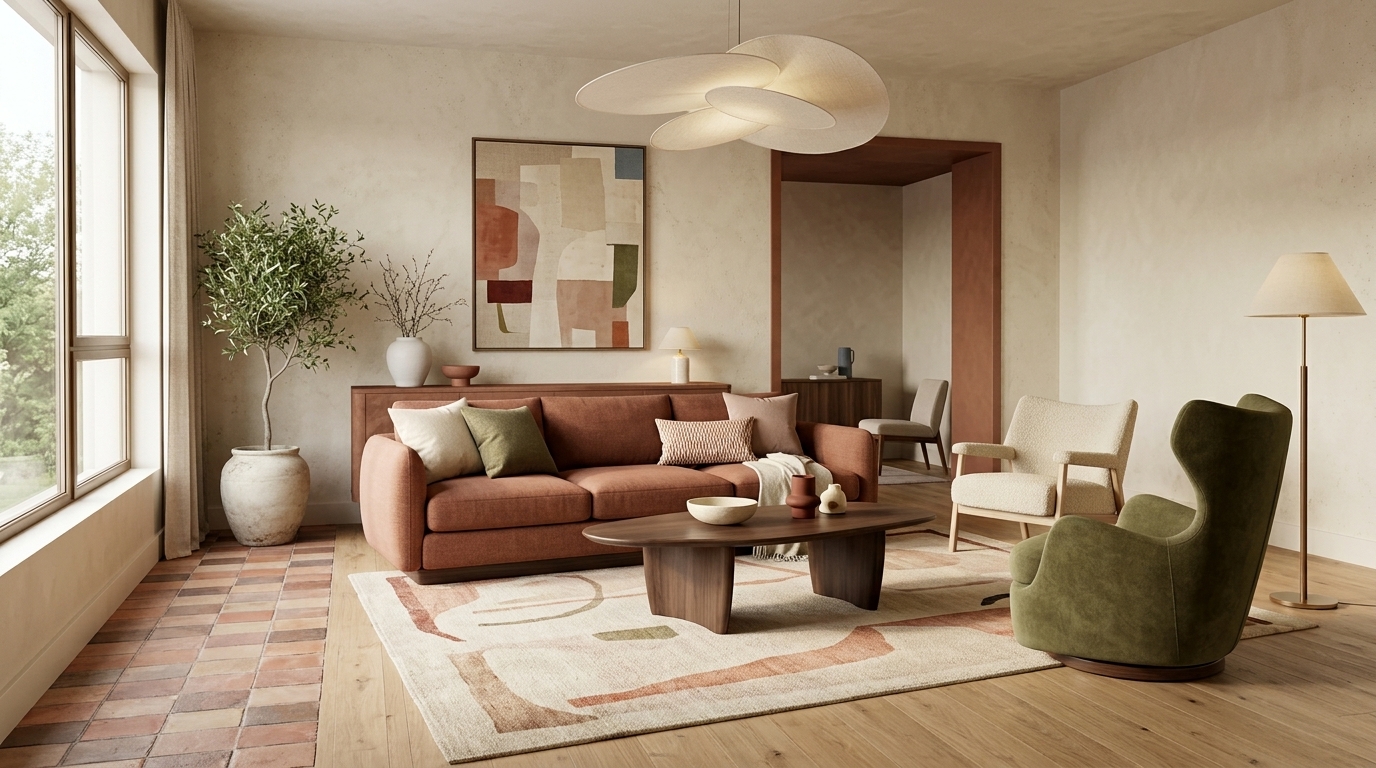
35 Terracotta Living Room Ideas for Warm, Earthy and Stylish Spaces
Terracotta can do far more than add an orange accent to a living room. Depending on its depth and undertone, it can behave like a warm neutral, create a dramatic wall colour, become the main statement through upholstery, or introduce architectural character through clay flooring and tiles.
The most important thing to understand is that terracotta is not one fixed shade. Pale dusty clay feels softer and more contemporary. Classic terracotta is earthy and balanced. Rust feels deeper and browner, while brick red and deep clay can create much moodier rooms. Burnt orange sits closer to the brighter side of the palette and often feels more energetic.
That range is what makes Terracotta Living Room Ideas so versatile. Terracotta can work with cream, beige, sage, olive, navy, dusty blue, black, grey, walnut, pale oak, travertine and brass. It can feel Mediterranean, minimalist, bohemian, modern, rustic or even dark and sophisticated depending on how the room is built around it.
The key is deciding how much terracotta you want. A few pillows or curtains are low commitment. A sofa or accent wall makes it a major design element. Full walls or terracotta flooring turn the colour into part of the architecture.
These 35 ideas show how to use terracotta intentionally without making the room feel overwhelmingly orange.
Use Terracotta on the Walls

1. Paint One Terracotta Accent Wall
A single terracotta wall is one of the easiest ways to introduce the colour without committing the entire room to it.
Use the clay tone behind the sofa, fireplace or media area, then keep the other walls cream or warm white. Add pale oak, linen and a neutral rug to balance the warmth.
This approach works particularly well in small rooms because the terracotta creates depth without enclosing the whole space.
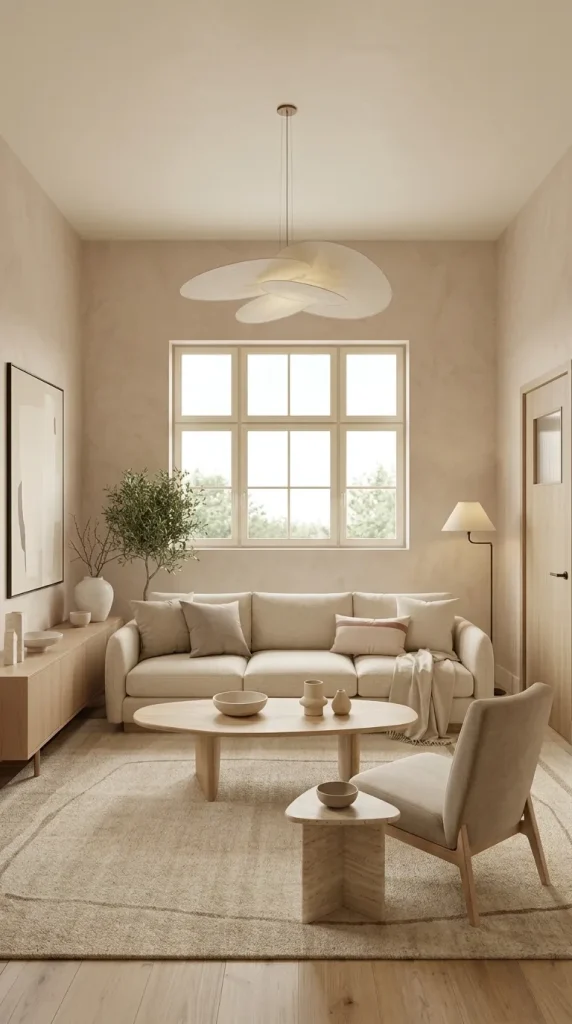
2. Use Pale Terracotta Walls With Cream Furniture
Dusty, muted terracotta can behave almost like a warm neutral.
Pair pale clay walls with a cream sofa, pale oak furniture and an oatmeal rug. Use black sparingly through lighting or frames to add definition.
The result feels contemporary and soft rather than overtly Mediterranean.
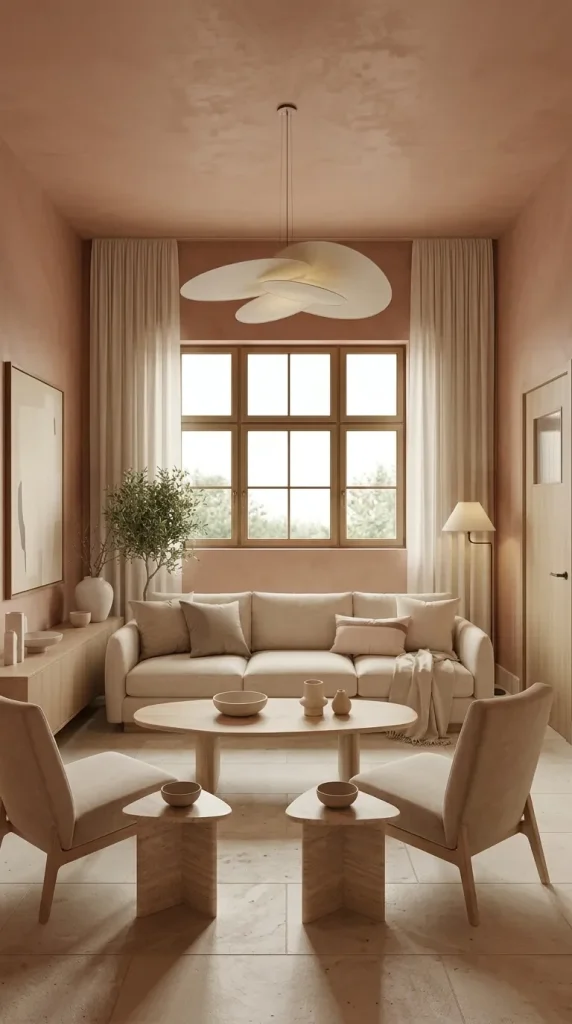
3. Paint the Whole Room in Classic Terracotta
Full terracotta walls can create a much more immersive living room.
Use cream upholstery, light curtains and pale flooring so the wall colour does not dominate every surface. Natural wood and woven textiles can reinforce the warmth.
This works best when the room has good natural light or enough pale furniture to keep the space visually balanced.
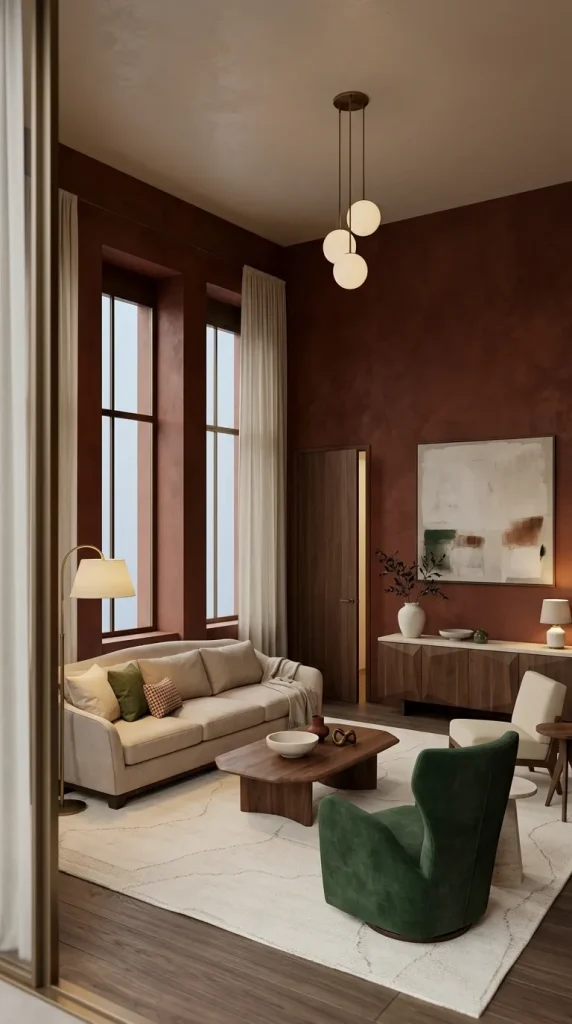
4. Create a Deep Terracotta Moody Room
For a richer look, move toward deep clay, rust or brick-red walls.
Use walnut, forest green, brass and a cream rug. Layer table and floor lamps so the room retains depth after dark.
The deeper colour makes the space feel more atmospheric and enveloping.
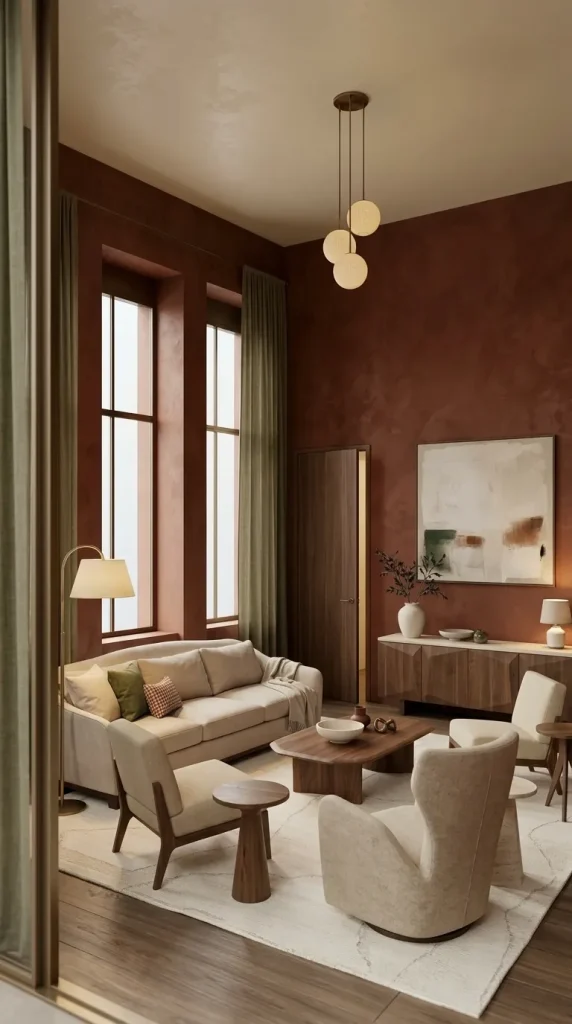
5. Use Rust Walls With Walnut and Olive
Rust is browner and darker than classic terracotta.
Pair rust walls with cream seating, walnut furniture and olive cushions or curtains. The green cools the warm palette and prevents the room from becoming overly orange.
This combination feels especially cozy and sophisticated.
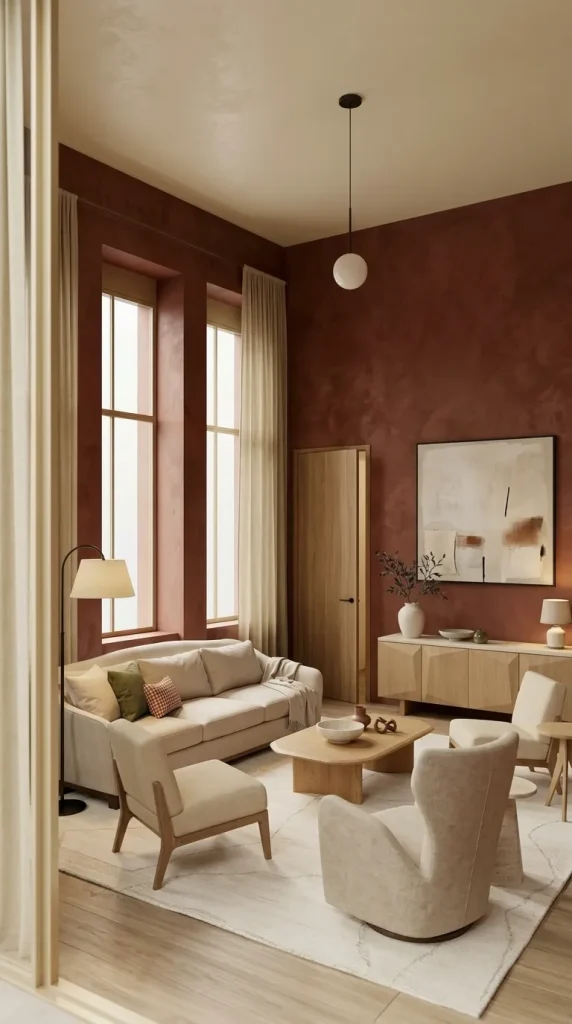
6. Pair Brick-Red Walls With Cream and Black
Brick red brings more red into the palette and feels heavier than soft clay.
Use cream upholstery and a light rug, then add black lighting or frames for stronger structure.
This creates a traditional, rustic or contemporary room depending on the furniture forms.
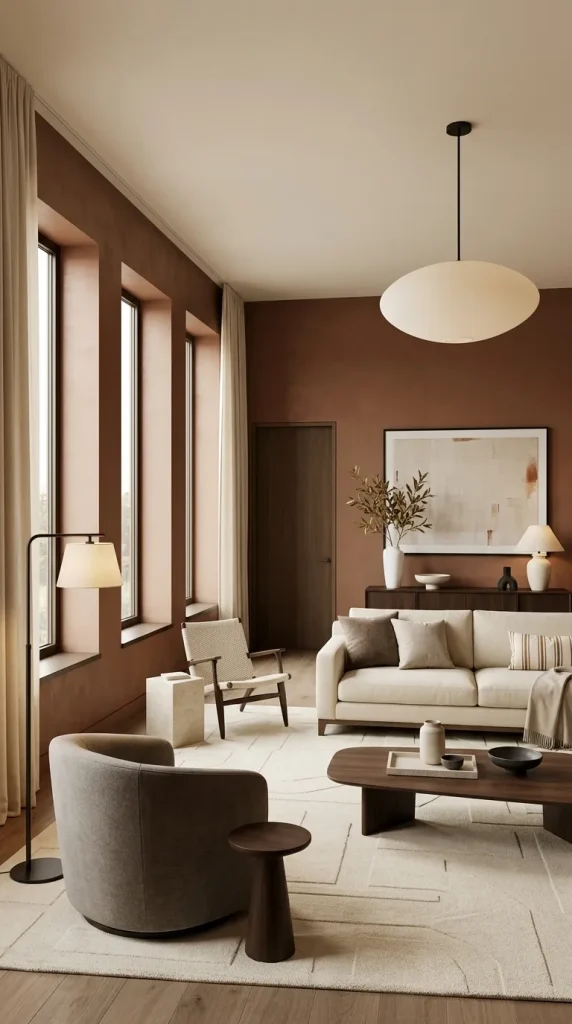
7. Create a Copper-Toned Living Room
Copper-toned paint can sit between terracotta and warm brown.
Use it with cream, black and dark wood for a room that feels earthy but slightly more polished.
Keep metallic copper finishes minimal unless you deliberately want a reflective look; the colour itself can do most of the work.
Use Terracotta Around the TV and Fireplace
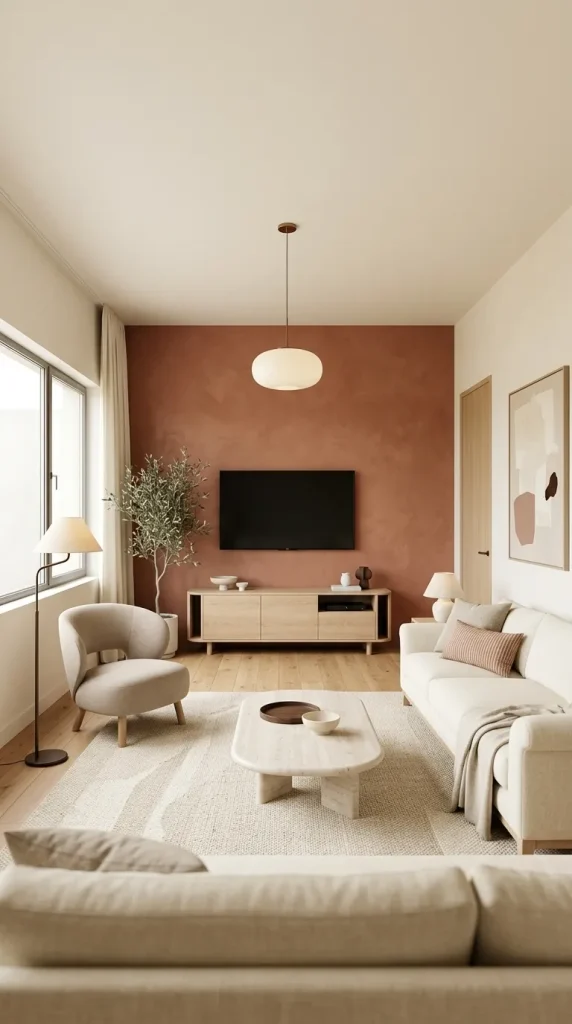
8. Paint a Terracotta TV Wall
Terracotta can work particularly well behind a television because the warm tone reduces the starkness of the black screen.
Use a pale oak media unit for a lighter modern look, or walnut for something richer.
Keep the surrounding walls warm white so the media area feels intentional rather than heavy.
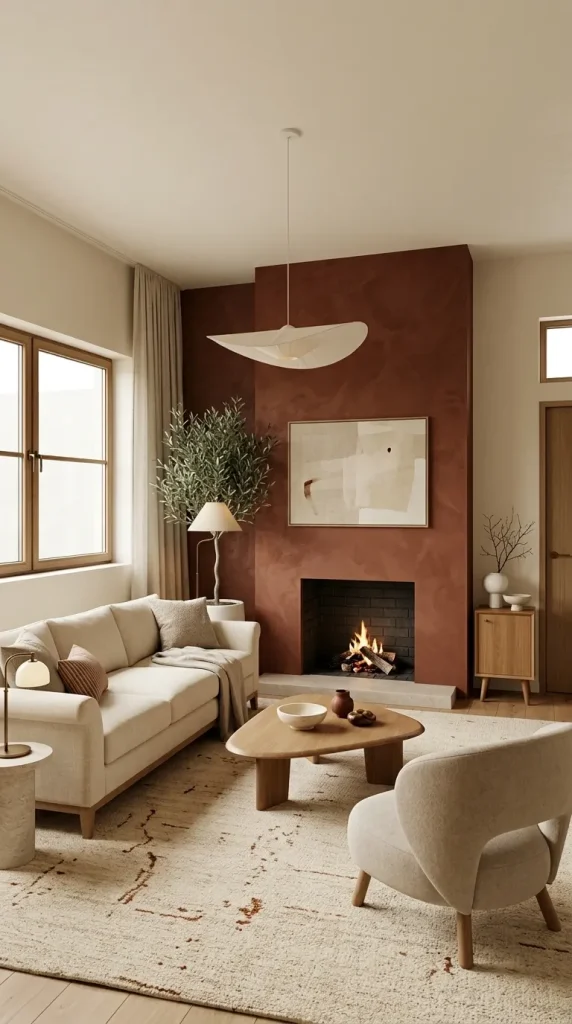
9. Use Deep Rust Around a Fireplace
A fireplace wall is another strong place for terracotta.
Use deep rust around the fireplace, then add a cream sofa, medium wood and soft lighting.
The warm colour reinforces the fireplace as the room’s focal point without requiring terracotta on every wall.
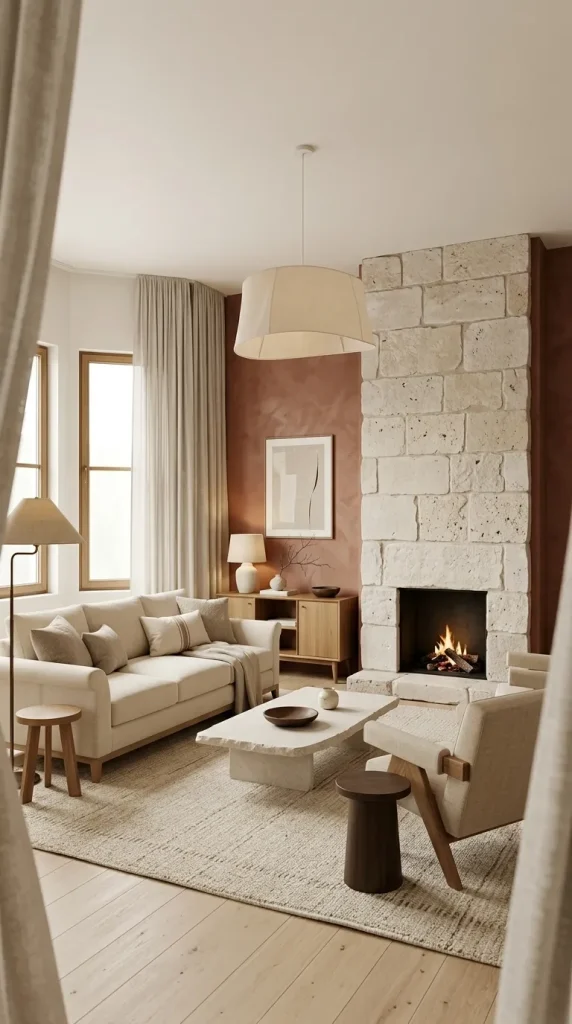
10. Combine Terracotta Plaster With Stone
Terracotta does not have to appear as flat paint.
A plaster-like clay wall beside a stone fireplace can create a more tactile room. Pair it with cream upholstery, linen curtains and simple furniture.
The material contrast makes the palette feel architectural rather than decorative.
Make Terracotta the Main Furniture Colour
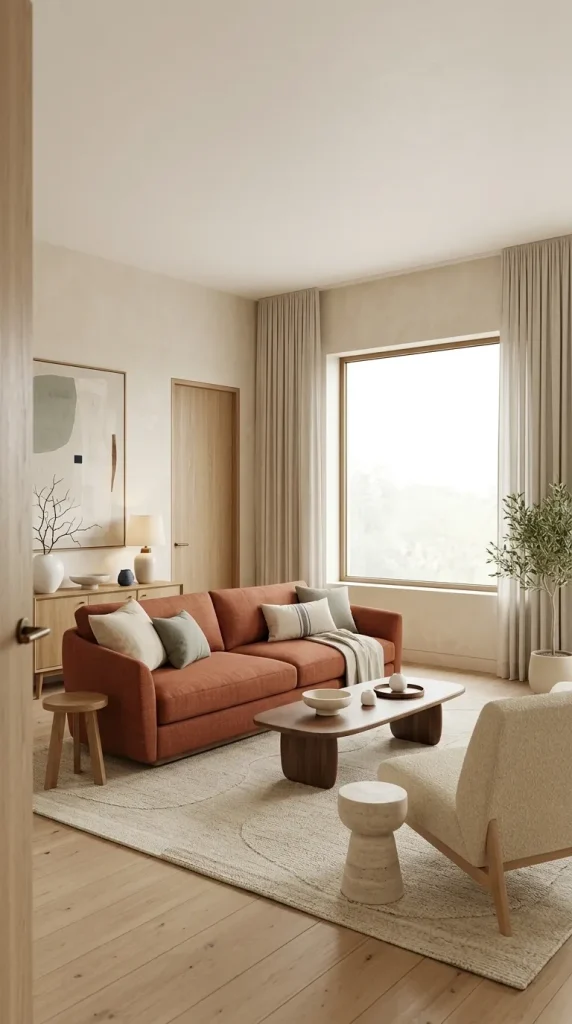
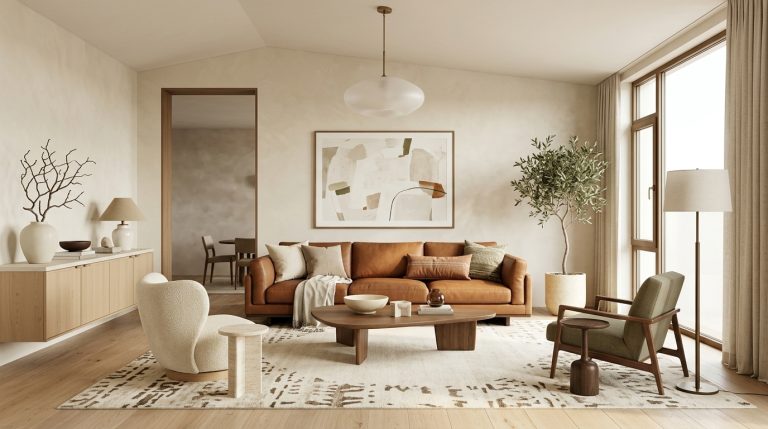
11. Use a Terracotta Sofa With Cream Walls
A terracotta sofa can become the main colour statement while the rest of the room stays quiet.
Pair it with cream walls, a neutral rug and natural wood. Add sage or navy in small amounts.
This is one of the easiest ways to use terracotta in a modern room.
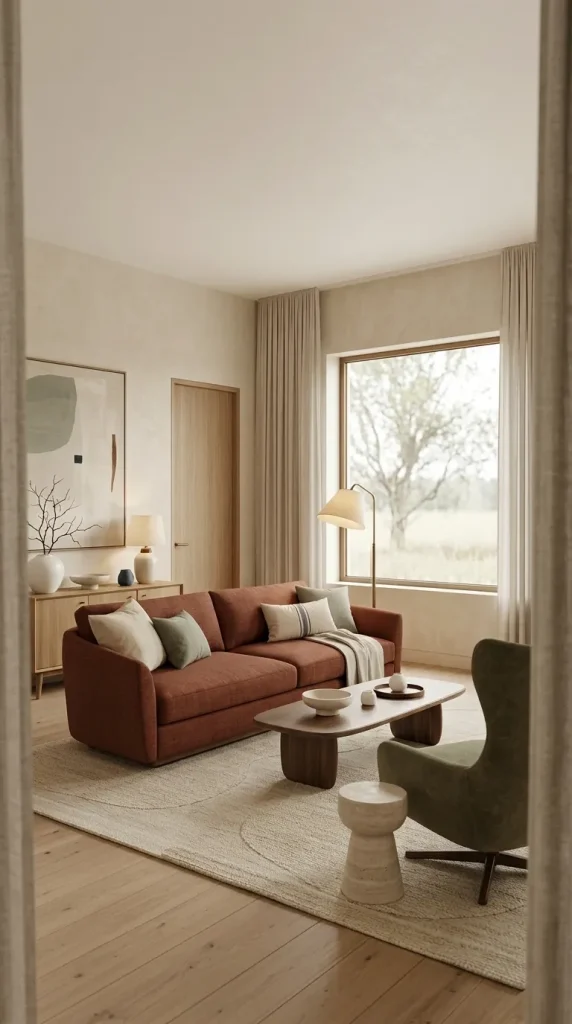
12. Style a Rust Sofa With Beige and Olive
Rust upholstery feels deeper and slightly more muted than classic terracotta.
Use beige walls, an olive chair or cushions and a cream rug. Walnut can provide more richness.
This palette works beautifully in earthy contemporary interiors.

13. Pair a Terracotta Velvet Sofa With Brass
Velvet makes terracotta feel richer and more dramatic.
Use brass lighting, dark wood and a patterned rug. Keep the walls cream or warm white so the upholstery remains the main focal point.
This can feel retro, eclectic or glam depending on the furniture.
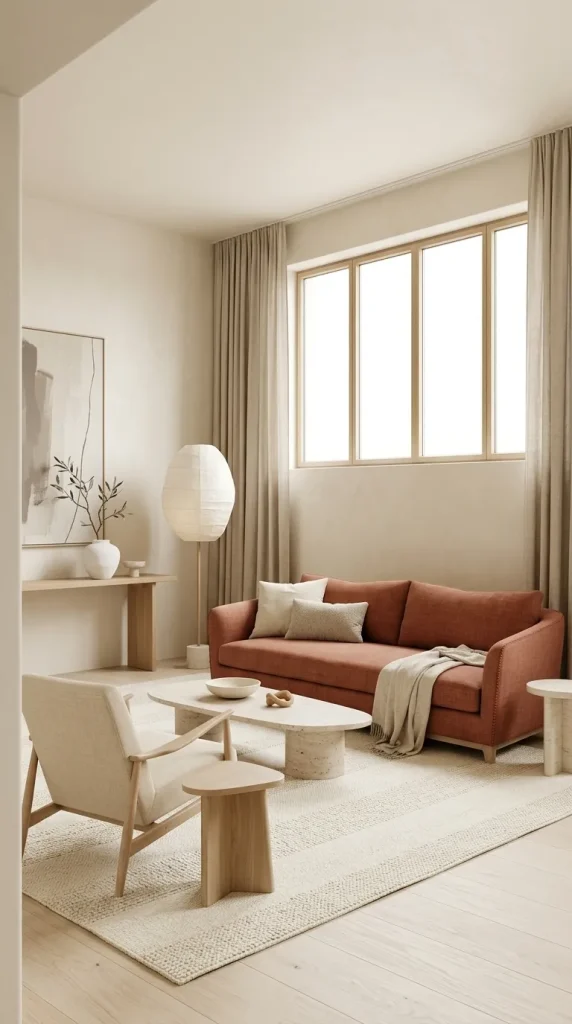
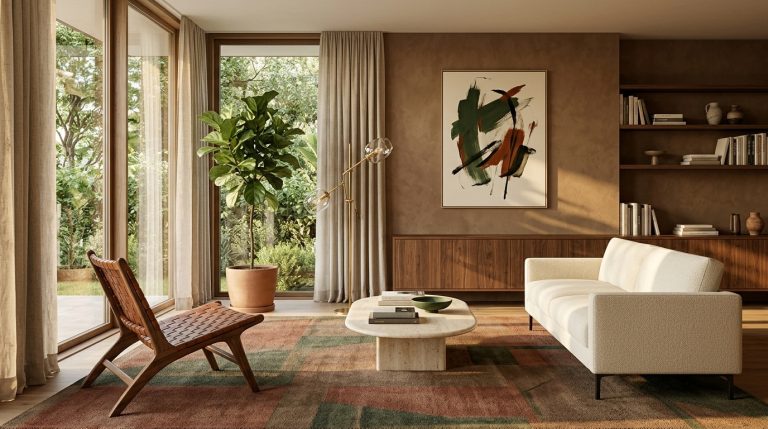
14. Use a Matte Terracotta Sofa for Organic Modern Style
A woven or linen-like terracotta sofa feels much more natural than velvet.
Pair it with travertine, pale oak and cream. Keep accessories restrained and use one sculptural lamp.
The result feels warm and contemporary without becoming rustic.
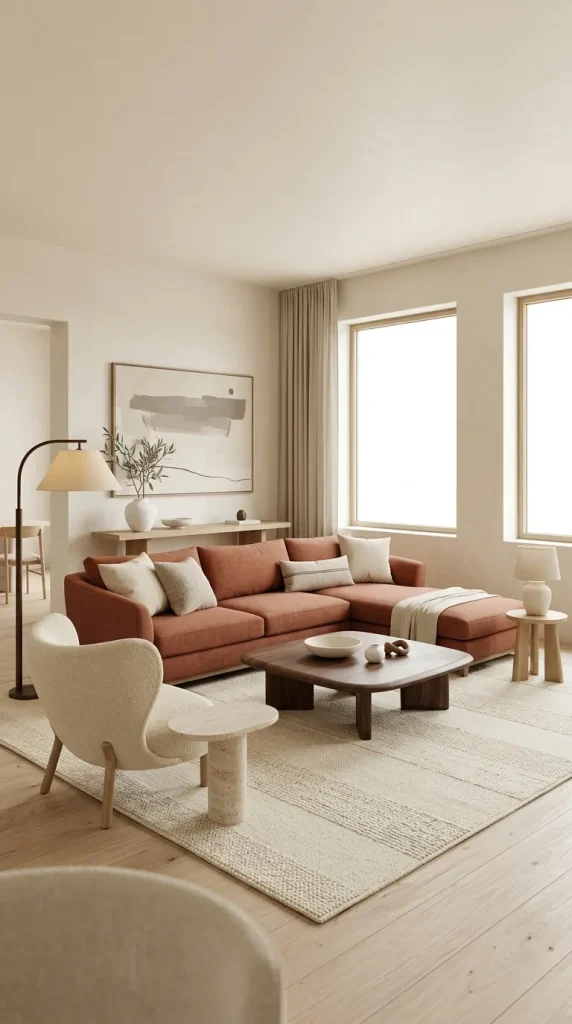
15. Style a Terracotta Sectional With a Large Neutral Rug
A sectional introduces a large amount of terracotta into the room.
Use a cream or oatmeal rug beneath it, keep the walls pale and choose a coffee table with enough visual weight.
Avoid repeating terracotta heavily through the curtains, rug and walls unless you deliberately want a monochromatic room.

16. Use a Terracotta Sofa to Zone an Open-Plan Room
A large warm-coloured sofa can define the living zone inside an open-plan space.
Float the sofa between the living area and dining space, then repeat terracotta lightly through one artwork or ceramic object elsewhere.
The adjacent zones do not need to become terracotta-themed.
Work With Terracotta Floors and Tiles
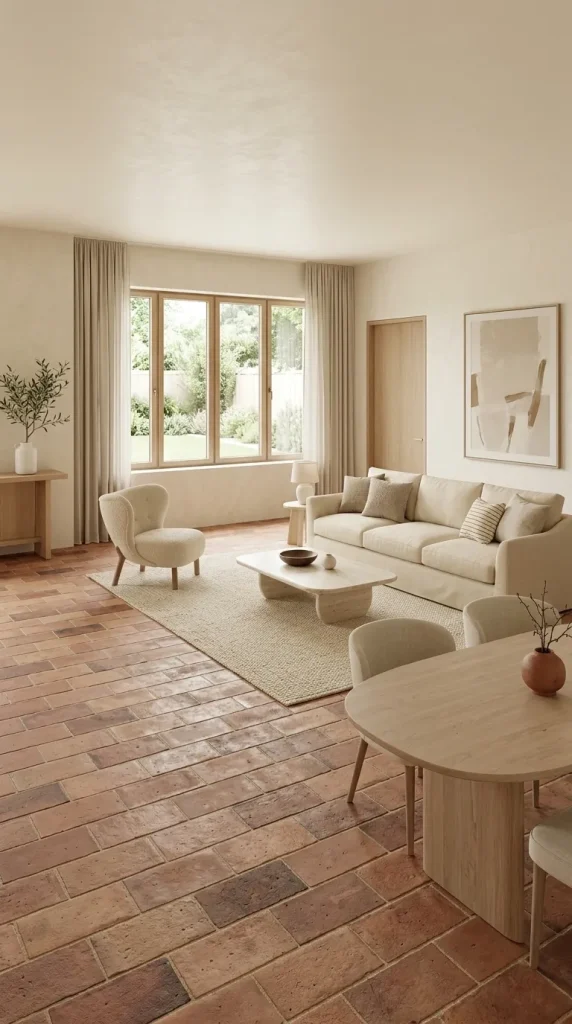
17. Pair Terracotta Tile Floors With a Cream Sofa
Terracotta flooring already brings a large amount of warm colour into the room.
Use a cream sofa, pale walls and simple wood furniture so the floor remains the architectural feature.
An oatmeal rug can add softness without hiding too much of the tile.

18. Add Sage Green to Terracotta Floors
Sage is one of the strongest colours for balancing warm clay flooring.
Use sage through upholstery, curtains or walls, then add cream and natural wood.
The result feels fresh and natural rather than overly warm.
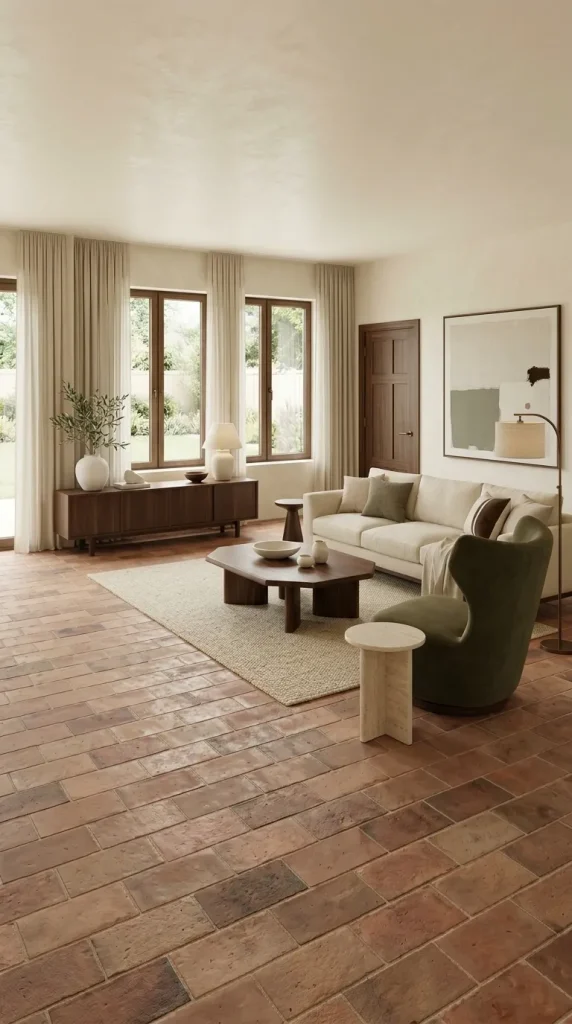
19. Pair Terracotta Tiles With Olive and Dark Wood
For a richer interpretation, combine clay flooring with olive and walnut.
Use cream walls so the deeper colours remain balanced.
This works particularly well in Mediterranean, rustic and earthy interiors.
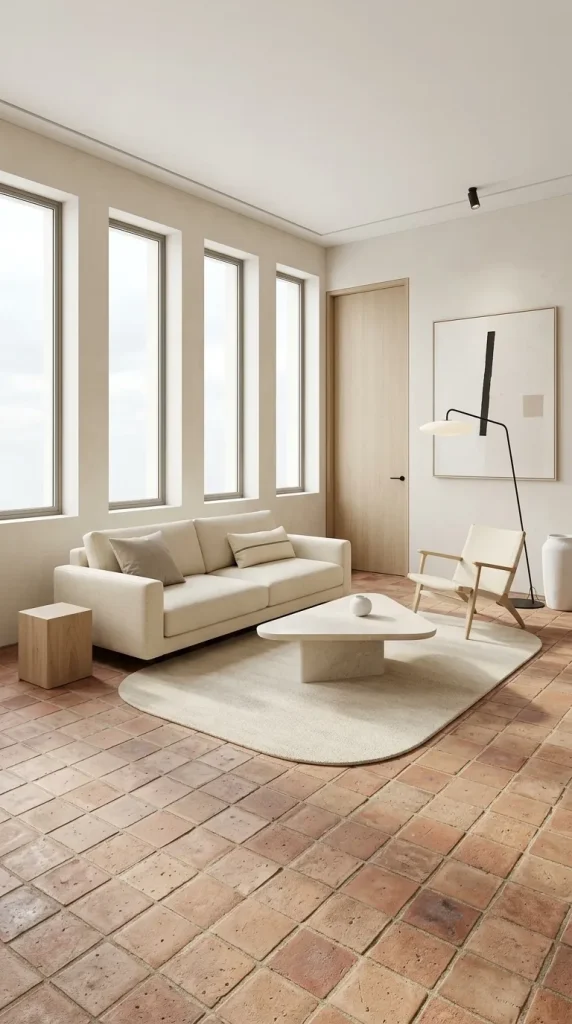
20. Modernize Traditional Terracotta Floors
Traditional terracotta tiles can feel surprisingly modern when the furniture is simplified.
Use a clean cream sofa, black lighting, pale walls and one sculptural table. Avoid overly rustic accessories.
The contrast between old-world flooring and contemporary furniture can be especially striking.
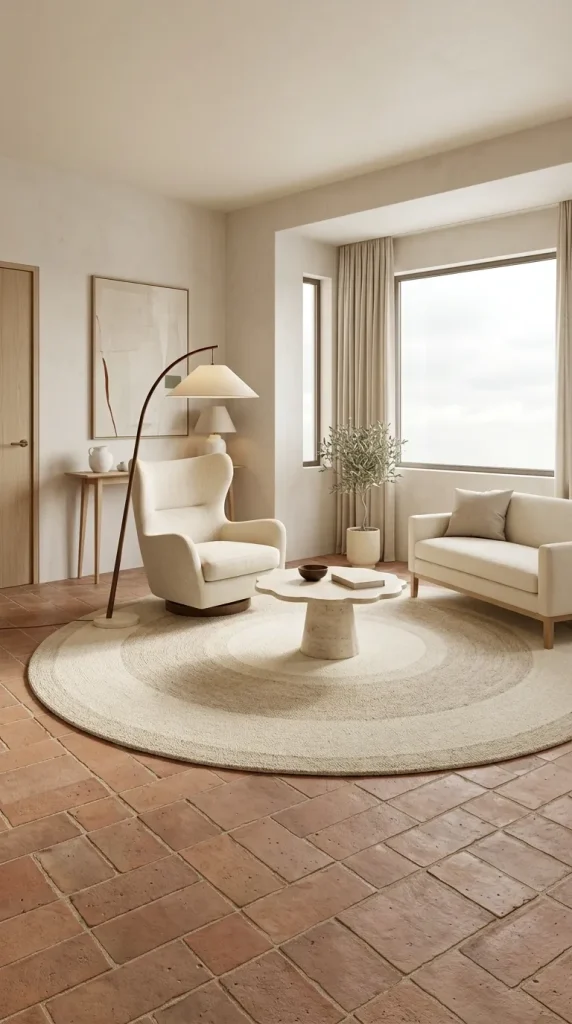
21. Soften Terracotta Floors With a Round Wool Rug
A round rug can introduce softness without covering the whole floor.
Use cream or oatmeal wool and position it beneath a reading chair or central table.
Leaving a visible border of terracotta tile helps preserve the character of the floor.
Pair Terracotta With Cream, Beige and Stone
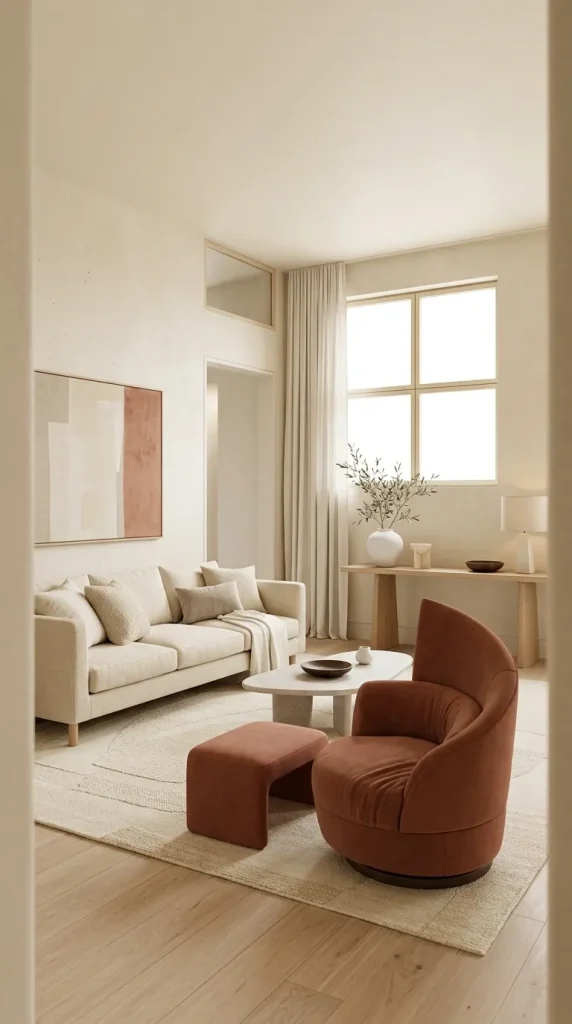
22. Build a Cream-and-Terracotta Living Room
Cream is one of the strongest partners for terracotta because it creates lightness without making the room feel cold.
Use cream upholstery, ivory curtains and a pale rug with terracotta walls or furniture.
Vary the textures so the cream side of the palette still feels layered.
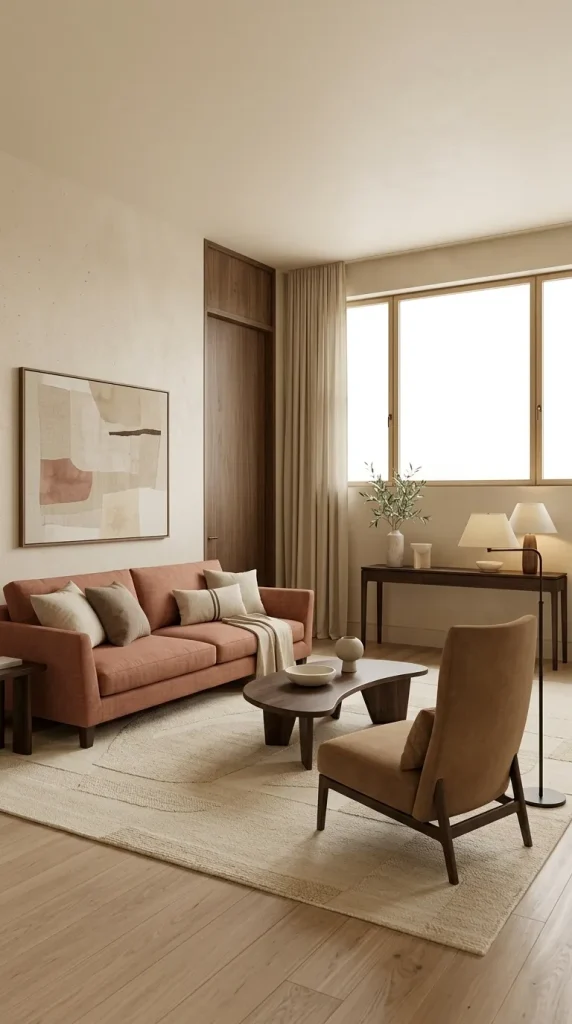
23. Pair Terracotta With Beige for a Softer Earthy Room
Beige creates a more tonal relationship.
Use sand, camel and warm taupe around terracotta, then add black or dark wood for enough contrast.
This palette feels warm and understated rather than bright.
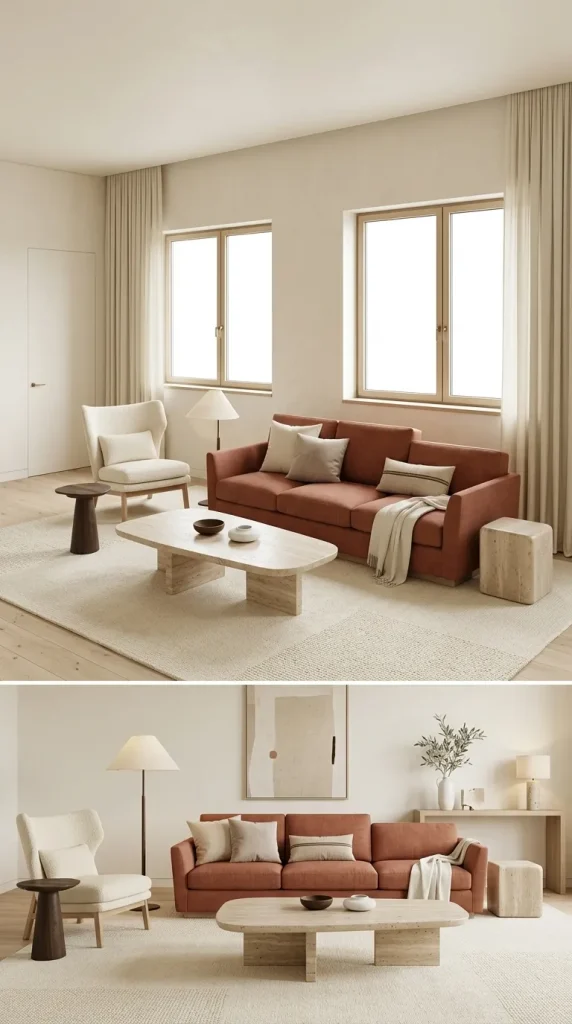
24. Use Terracotta With Travertine
Travertine is one of the best material partners for terracotta.
Pair a terracotta sofa with a travertine coffee table, cream rug and pale walls.
The warm beige stone complements the clay tone without simply repeating it.
Bring in Green
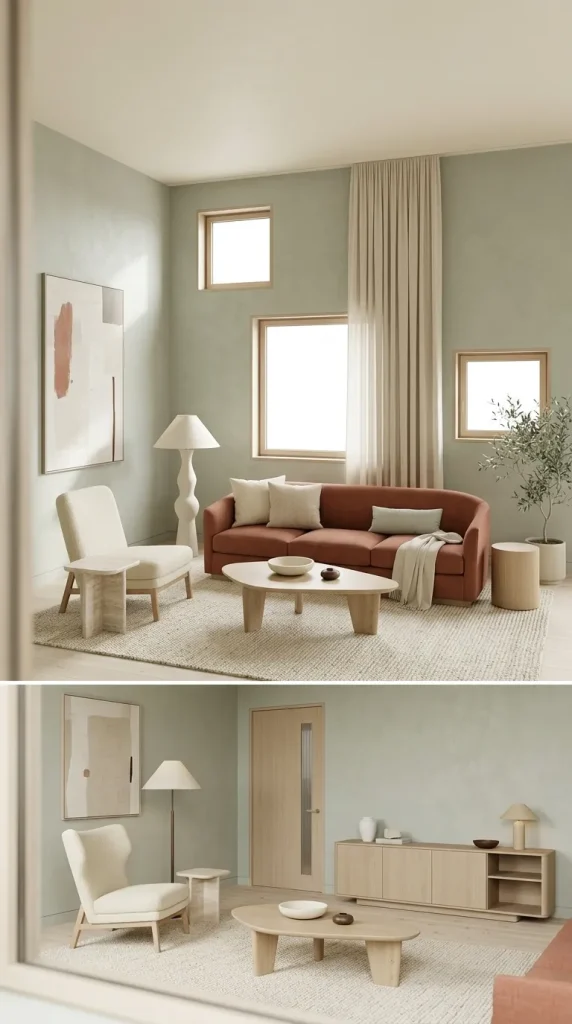
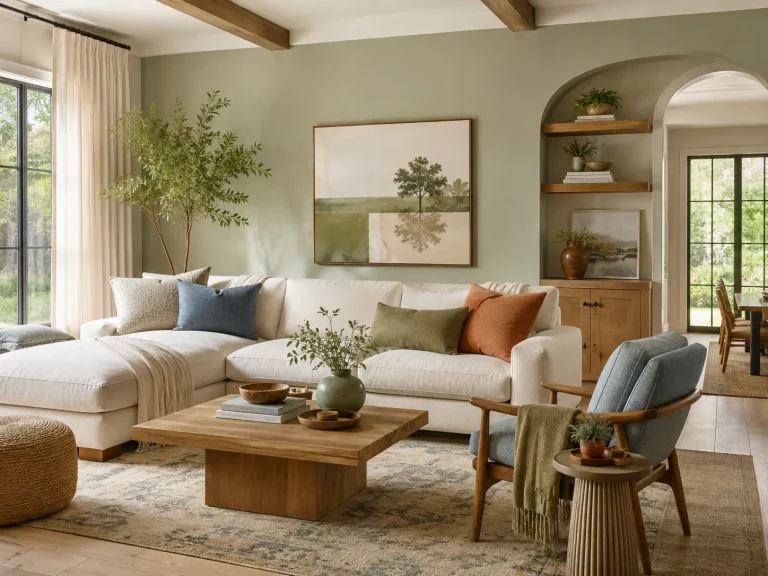
25. Pair Terracotta With Sage Green
Sage and terracotta create one of the softest and most balanced earthy combinations.
Use a terracotta sofa with sage walls, or terracotta walls with sage upholstery or curtains.
Add cream and pale oak for a calm contemporary room.
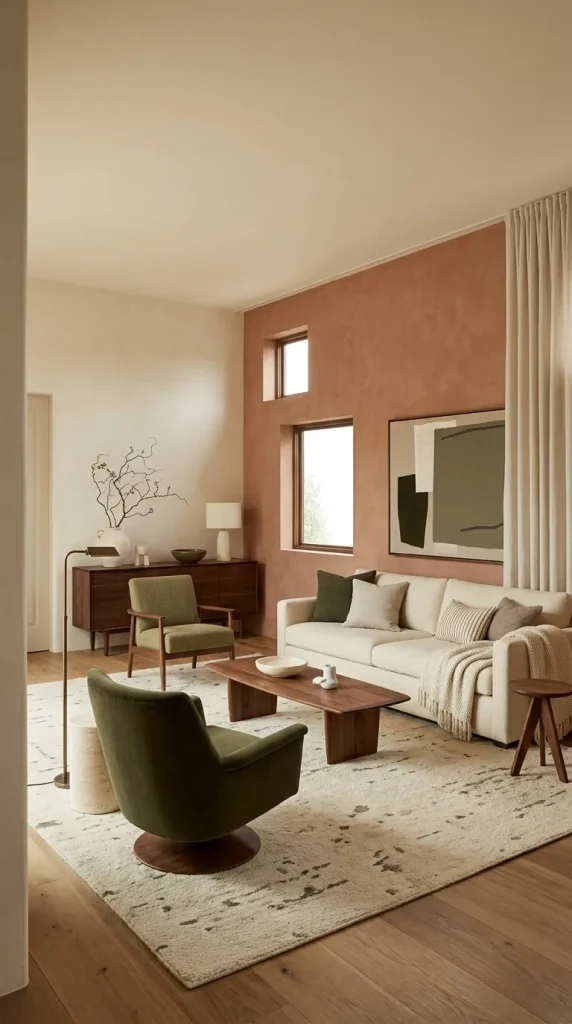
26. Use Olive Green for a Richer Earthy Palette
Olive is deeper and warmer than sage.
Pair olive chairs, cushions or rugs with terracotta walls or furniture. Add walnut and cream.
This works beautifully in boho, Mediterranean and rustic interiors.
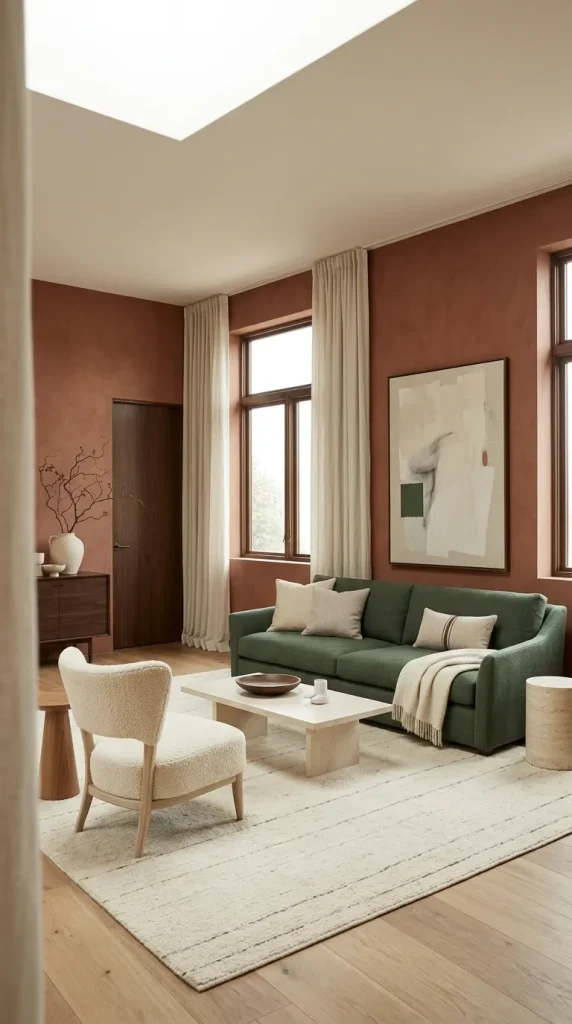
27. Add Forest Green for Dramatic Contrast
Forest green gives terracotta more depth.
Use it through a sofa, curtains or substantial accent chair while keeping cream visible elsewhere.
This is particularly effective with deep terracotta walls or rust upholstery.
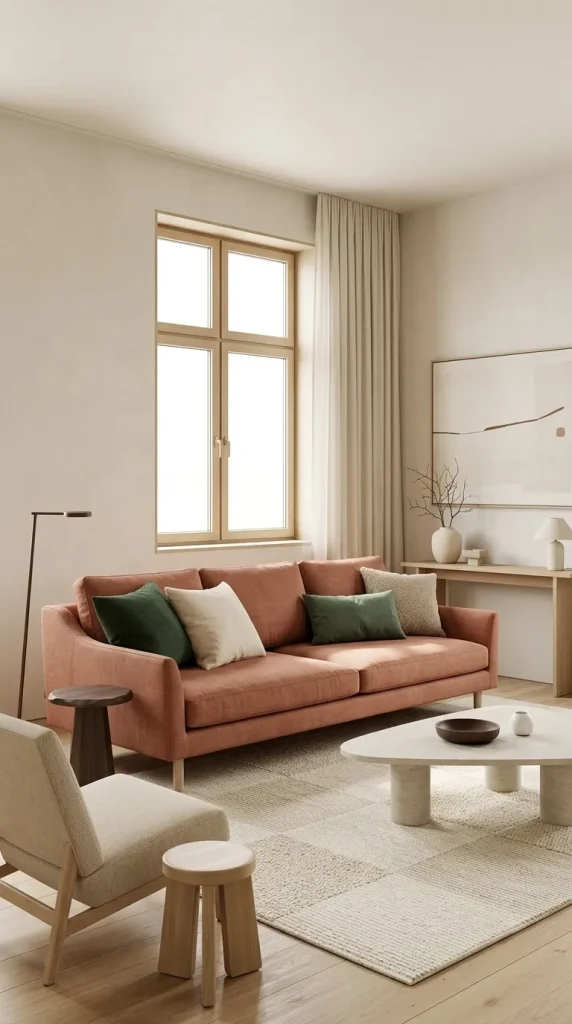
28. Use Forest-Green Pillows on a Terracotta Sofa
For a lower-commitment approach, use deep green only through textiles.
Forest-green pillows can cool a warm terracotta sofa and create stronger visual contrast without changing the room’s main palette.
Add cream or beige pillows as well so the seating does not become too dark.
Pair Terracotta With Blue and Black
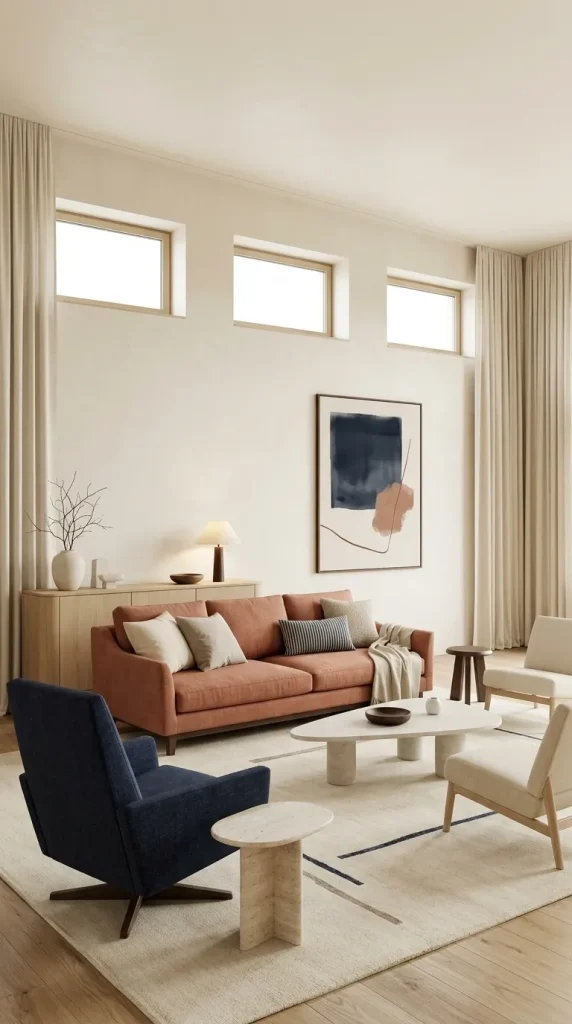
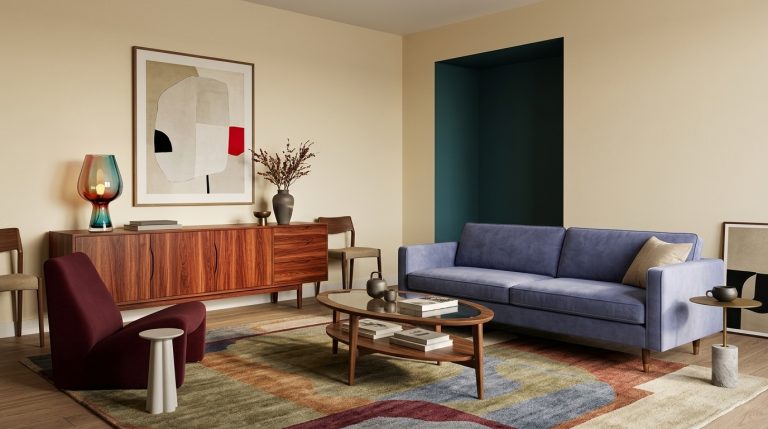
29. Combine Terracotta With Navy
Navy gives terracotta a much stronger temperature contrast.
Use a navy chair, curtains or rug with a terracotta sofa and cream walls.
This combination feels more tailored and contemporary than the usual earthy palette.
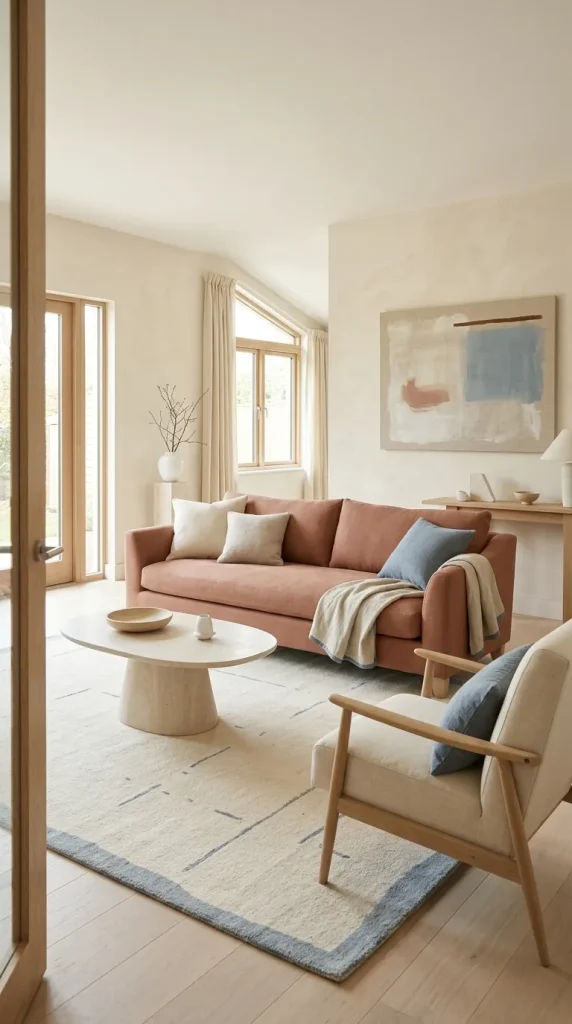
30. Use Dusty Blue for a Softer Contrast
Dusty blue creates a gentler relationship with terracotta.
Pair a clay sofa or wall with muted blue textiles, pale wood and cream.
This can feel relaxed, Mediterranean or coastal-adjacent depending on the surrounding materials.
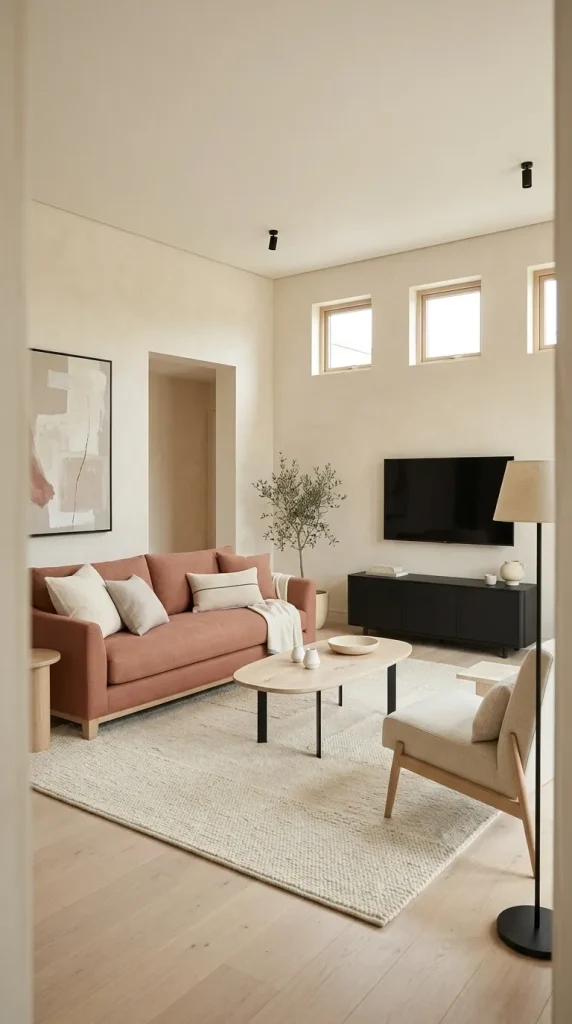
31. Add Black for a Sharper Modern Look
Black can make terracotta feel much more contemporary.
Use black lighting, frames, table legs or a media unit in a terracotta room. Keep the amount controlled.
The dark accents provide structure without taking away the warmth of the clay colour.
Explore Distinct Terracotta Styles

32. Create a Minimalist Terracotta Living Room
Terracotta is especially useful in minimalist interiors because one warm colour can provide enough character on its own.
Use a single clay wall or a terracotta sofa with cream, oak and one sculptural lamp.
Keep the room edited and avoid scattering many small terracotta accessories.
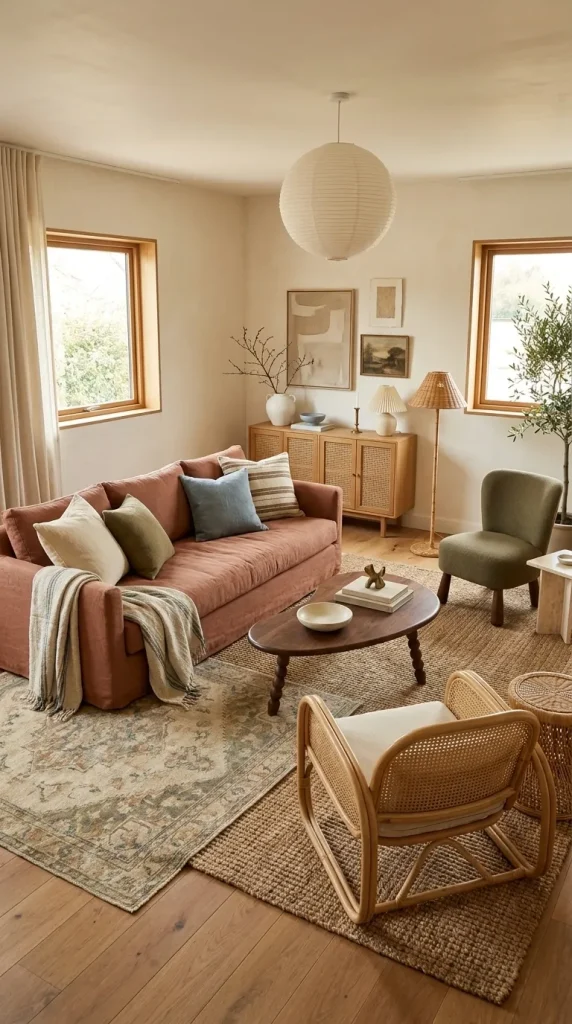
33. Build a Boho Terracotta Living Room
Use terracotta with rattan, jute, warm wood, woven textiles and patterned rugs.
Bring in olive, cream and blue so the room does not become dominated by orange-brown.
The result should feel layered and collected rather than matched.
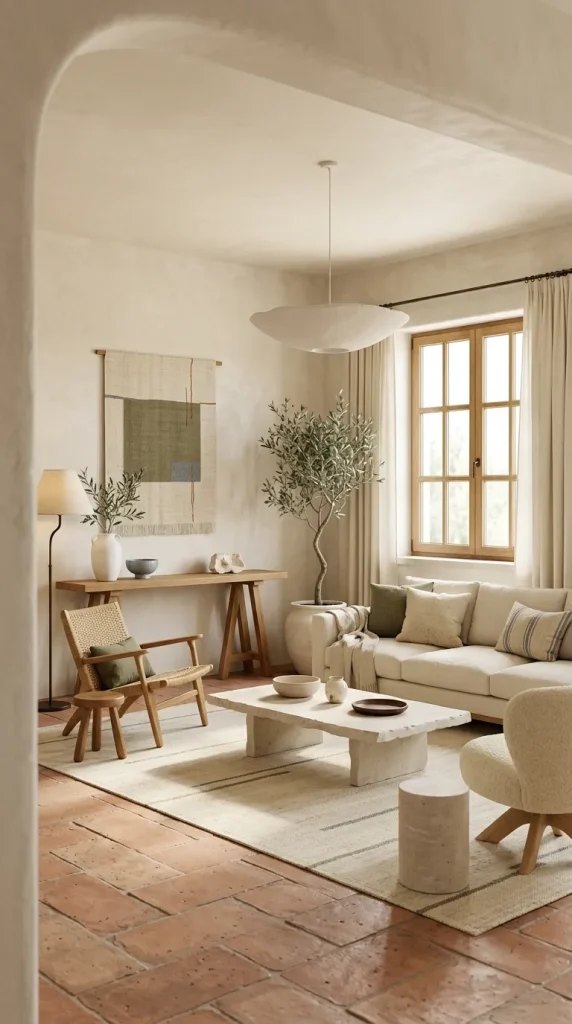
34. Create a Mediterranean Terracotta Living Room
Terracotta naturally suits Mediterranean-inspired interiors, but the room should rely on more than colour.
Use plaster-like walls, clay flooring, linen, warm wood, stone and handmade ceramics. Add cream and olive or muted blue for balance.
Architectural texture should carry as much of the style as the terracotta itself.
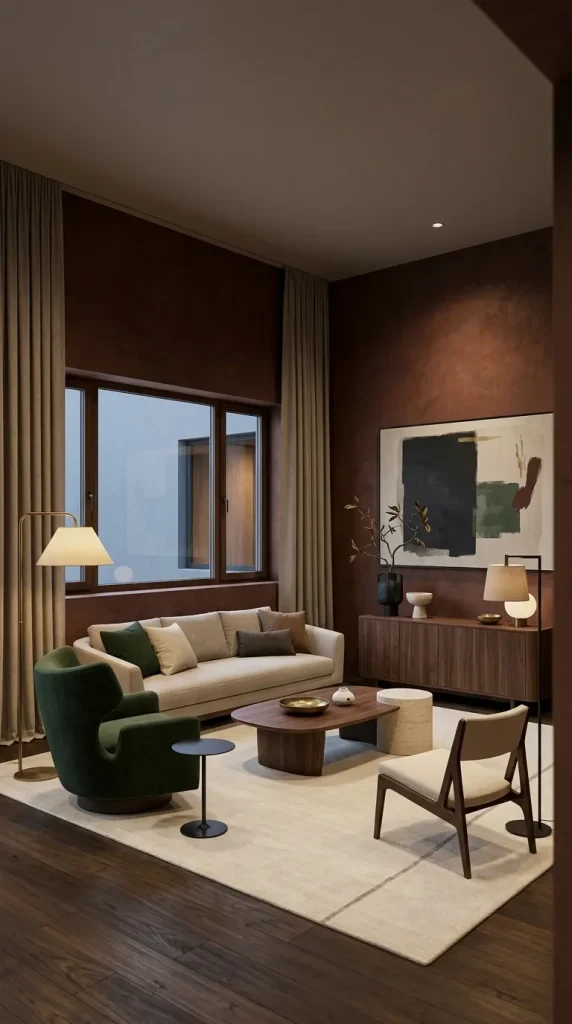
35. Build a Modern Moody Terracotta Room
For the darkest interpretation, combine deep clay walls with walnut, black, forest green and brass.
Use a lighter rug and warm layered lighting to keep the room from becoming visually dense.
This direction shows that terracotta can feel sophisticated and atmospheric rather than simply earthy or rustic.
How to Choose the Right Terracotta Shade
Terracotta sits on a wide spectrum.
| Terracotta tone | Best supporting colours | Overall effect |
|---|---|---|
| Pale dusty terracotta | Cream, sage, pale oak | Soft and contemporary |
| Classic clay | Cream, olive, beige, wood | Earthy and balanced |
| Rust | Cream, walnut, olive, navy | Cozy and sophisticated |
| Burnt orange | Black, cream, blue, walnut | Energetic and modern |
| Brick red | Cream, black, olive, aged wood | Rich and grounded |
| Deep terracotta | Forest green, walnut, brass, cream | Moody and dramatic |
Always test wall colours in the actual room. Terracotta can appear much redder or darker in artificial light than it does in daylight.
How Much Terracotta Should You Use?
Think about terracotta in three levels.
Low commitment: pillows, art, curtains or ceramics.
Medium commitment: a sofa, rug or single accent wall.
High commitment: full walls, a sectional or terracotta flooring.
If terracotta is already dominant through the walls or floor, let the furniture introduce more contrast.
If the sofa is terracotta, the walls can usually stay quieter.
This simple proportion rule prevents the room from becoming too orange.
Best Wall Colours With Terracotta
Cream and warm white are the most flexible.
Beige creates a softer tonal palette. Sage and olive reinforce earthy styling, while navy introduces strong cool contrast.
Warm grey or greige can modernize terracotta. Black can create sharper contemporary definition.
If terracotta already covers the main walls, use secondary wall colours sparingly so the room retains visual hierarchy.
Best Rugs for Terracotta Living Rooms
Cream wool rugs soften terracotta sofas and walls.
Jute works well in boho, Mediterranean and coastal-adjacent rooms. Vintage rugs can bring in navy, green, burgundy and beige.
On terracotta tile floors, use rugs to add softness while allowing enough tile to remain visible.
The rug should contrast enough with the terracotta element to remain visually distinct.
Best Curtains With Terracotta
Cream, warm white and linen curtains are the safest choices.
Sage and olive strengthen earthy palettes, while navy creates stronger contrast.
Terracotta curtains work best when the colour is not already dominant elsewhere.
Avoid matching terracotta curtains exactly to terracotta walls and furniture unless you intentionally want a highly tonal room.
Best Accent Colours for Terracotta
Sage creates a soft natural look.
Olive feels richer and earthier. Forest green adds drama. Navy creates strong sophisticated contrast, while dusty blue is more relaxed.
Black gives the room structure, and cream prevents the palette from becoming overly warm.
Use accent colours according to the depth of the terracotta rather than treating every clay tone the same.
How to Make a Terracotta Living Room Feel Modern
Use cleaner furniture forms and stronger material contrast.
Pair terracotta with cream, black, pale oak, travertine or other natural stone. Keep artwork larger and accessories more restrained.
Avoid automatically pairing terracotta with distressed wood, jute and large numbers of plants. Those materials can work, but they are not required.
A clay-painted wall with a cream modular sofa and black lighting can feel just as convincing as a rustic terracotta room.
How to Make Terracotta Feel Cozy Without Becoming Too Orange
Cozy rooms need more than warm colour.
Use soft rugs, full curtains, comfortable upholstery and layered lamps. Cream, beige and green can give the eye somewhere to rest.
Be careful with strongly yellow lighting because it can exaggerate red-orange undertones. Balanced warm-white lighting usually keeps terracotta looking richer and more natural.
Common Terracotta Living Room Mistakes
Using the same warm colour everywhere. Terracotta walls, orange-toned wood, rust upholstery and terracotta rugs can merge into one warm block.
Treating terracotta like bright orange. Clay, rust and brick-red shades behave differently from vivid orange.
Ignoring room lighting. Terracotta can look dramatically different in daylight and evening light.
Using overly yellow bulbs. They can intensify orange-red walls too much.
Matching every accent to the terracotta. Green, blue, cream and black usually create stronger rooms.
Assuming every terracotta room needs jute and plants. Contemporary furniture, stone, black metal and navy can work just as well.
Covering architectural terracotta flooring completely. Leave some tile visible when possible so the material retains its character.
Frequently Asked Questions
What colours go best with terracotta in a living room?
Cream, beige, sage, olive, forest green, navy, dusty blue, warm grey, black, walnut and pale oak all work well. The best combination depends on whether the terracotta is pale, classic clay, rust or deep brick.
Is terracotta too dark for a small living room?
Not necessarily. A small room can use one terracotta accent wall or a compact terracotta sofa with lighter surroundings. Deep clay walls can also work when a cocooning effect is intentional and the lighting is strong enough.
What colour sofa goes with terracotta walls?
Cream, beige, sage, olive, navy and warm grey are strong options. The sofa should usually provide enough contrast to stay visually separate from the wall.
What rug works with a terracotta sofa?
Cream, oatmeal, jute, vintage patterned, navy and muted green rugs can all work. A neutral rug is particularly useful beneath a large terracotta sectional.
Does navy go with terracotta?
Yes. Navy is one of the strongest cool contrasts for terracotta and can make the palette feel sophisticated and contemporary.
How do I make terracotta look modern instead of rustic?
Use clean furniture lines, cream, black, pale oak, travertine or polished stone. Keep accessories restrained and avoid relying exclusively on rustic textures.
Let Terracotta Be More Than an Accent Colour
The strongest Terracotta Living Room Ideas treat terracotta as a flexible design tool rather than one fixed orange shade.
It can become a soft warm neutral on pale walls, a statement sofa, a dramatic deep-clay backdrop or a permanent architectural feature through traditional flooring.
Cream can lighten it. Sage and olive can make it earthy. Navy and blue can create stronger contrast. Black can sharpen it, while stone and pale wood can make it feel clean and contemporary.
The most successful rooms also control how much terracotta appears. When the colour is dominant on the walls or floor, the furniture can provide contrast. When the sofa carries the terracotta, the walls can remain calmer.
Used with the right proportions, materials and lighting, terracotta can create living rooms that feel modern, cozy, Mediterranean, minimalist, bohemian, eclectic, rustic or deeply atmospheric without ever becoming overwhelmingly orange.