10 Small Living Room Decor Ideas With an Earthy Feel for a Warm, Grounded Space
A compact living room does not need to be pale, sparse, and filled with miniature furniture. In fact, trying too hard to make a small room appear larger can strip away the warmth that makes it enjoyable to spend time there.
The better 10 Small Living Room Decor Ideas With an Earthy Feel use richer color and natural materials strategically. Think olive, mushroom, chocolate brown, terracotta, warm oak, walnut, wool, linen, stone, and aged metal, but with enough breathing room that the space never feels overloaded. This same instinct toward richer, more personal color runs through earthy living room ideas, where designers are leaning toward warm, nuanced colors and more personal rooms rather than safe gray-beige schemes. Earthy greens, browns, clay tones, vintage furniture, and sculptural lighting are all part of that shift.
The trick is not using less personality. It is concentrating that personality in fewer, stronger decisions.

Start with color that actually grounds the room
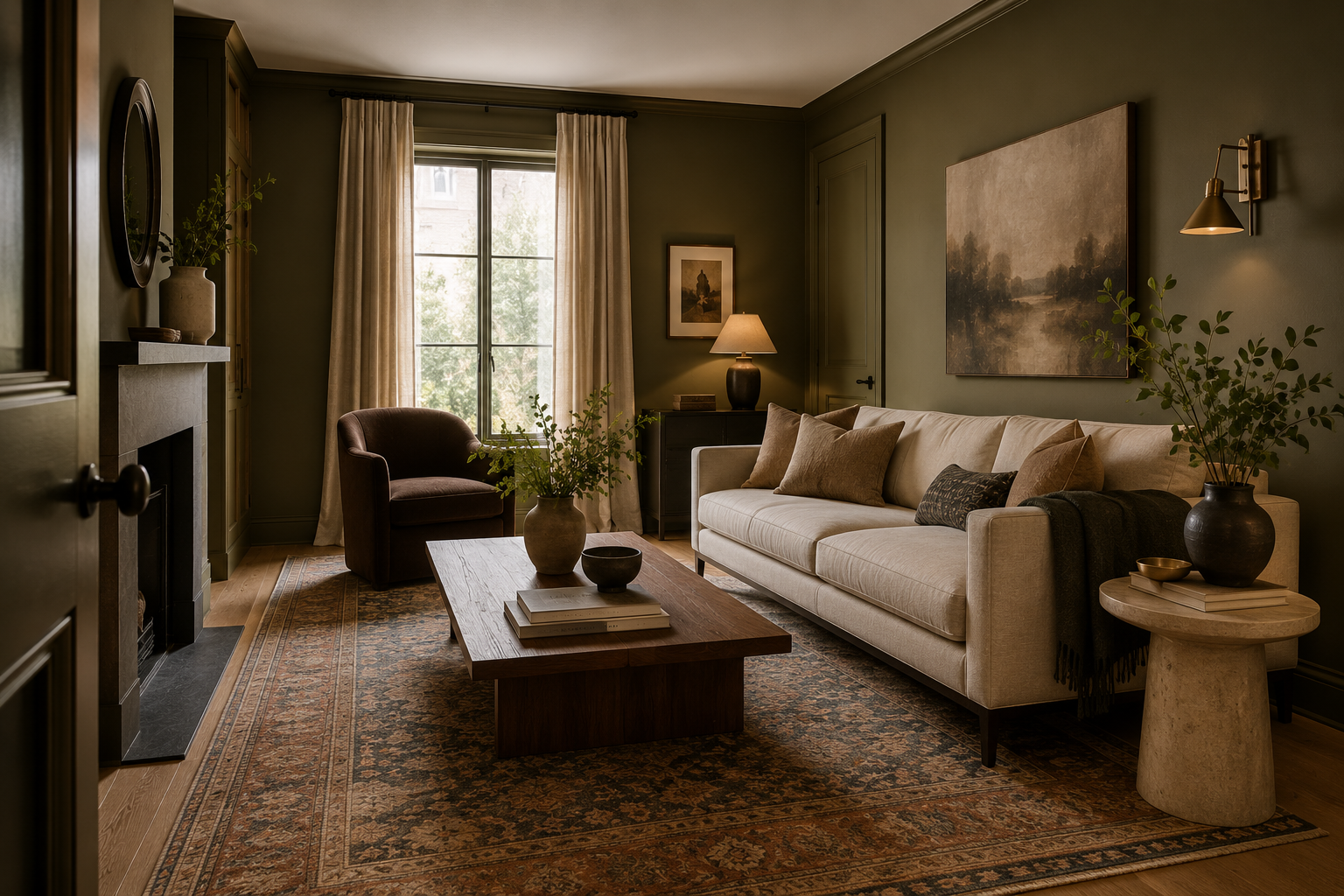
Idea 1: Use olive or muddy green as your main neutral. Small rooms do not automatically need white walls. A muted olive, moss, khaki-green, or green-toned neutral can actually simplify a compact room because the architecture begins to read as one continuous envelope rather than several contrasting surfaces. Try olive walls with cream upholstery, walnut furniture, oatmeal curtains, a warm wool rug, and aged brass lighting. If the room has limited natural light, sample the paint first, since an olive that looks muted in daylight can become much deeper after sunset. You can also keep the walls warm ivory and use olive on a sofa or built-in shelving instead. One substantial green surface is usually stronger than scattering the color through several small cushions.
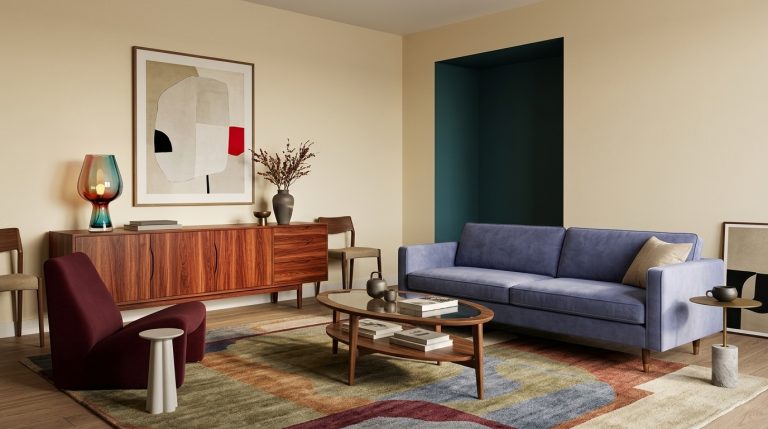
Idea 2: Add one deep brown anchor rather than several small ones. A single walnut cabinet, chocolate armchair, or dark wood console gives a small earthy room a clear visual weight without crowding the floor.
Choose furniture at a confident scale
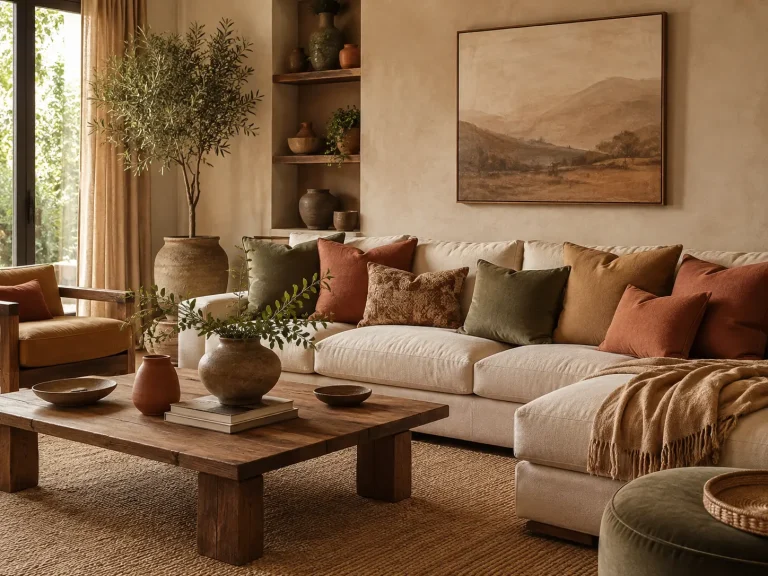
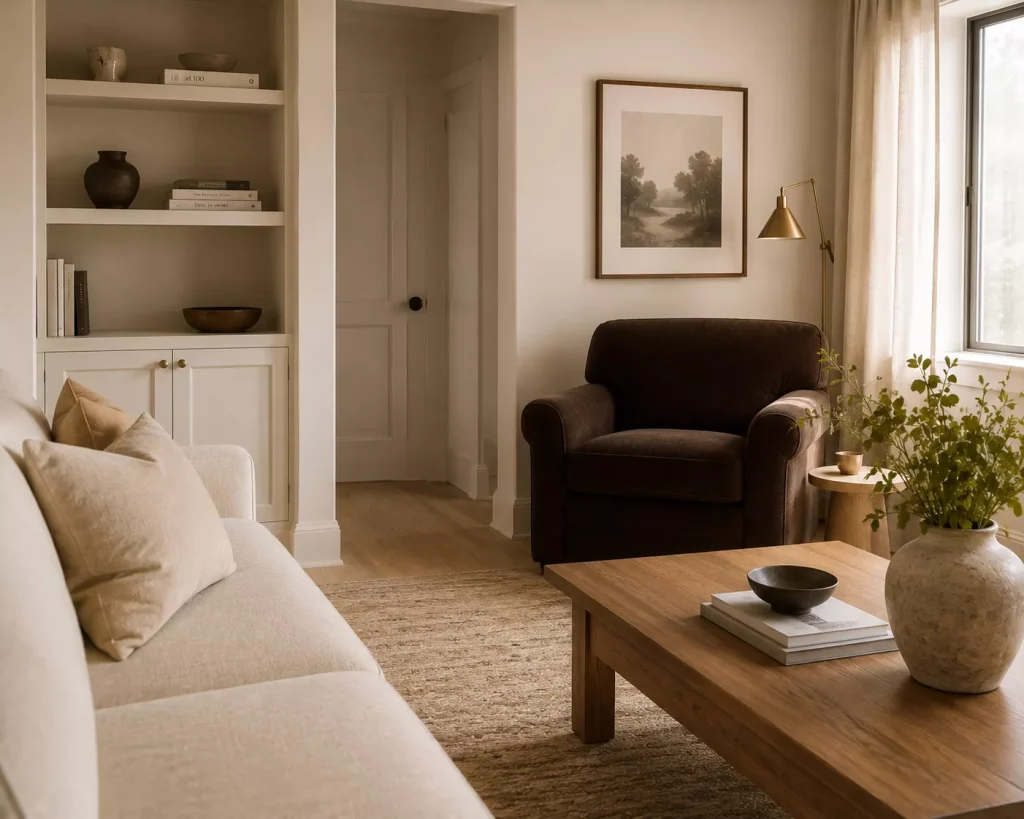
Idea 3: Choose one comfortable sofa instead of several tiny seats. There is a persistent idea that every piece of furniture in a small living room should be small, but that can backfire. A tiny loveseat, two little accent chairs, multiple stools, and narrow tables create many separate visual outlines. The room may fit more objects but feel more crowded. Instead, prioritize one proper sofa with reasonably slim arms and a clean back, without sacrificing comfortable seat depth purely to save a few inches. For an earthy look, good upholstery colors include oatmeal, mushroom, olive, tobacco, warm taupe, and chocolate. Furniture on visible legs can also help because seeing more floor beneath the sofa gives the room visual continuity. Fewer furniture outlines mattered more than smaller dimensions.

Ground the seating with the right rug
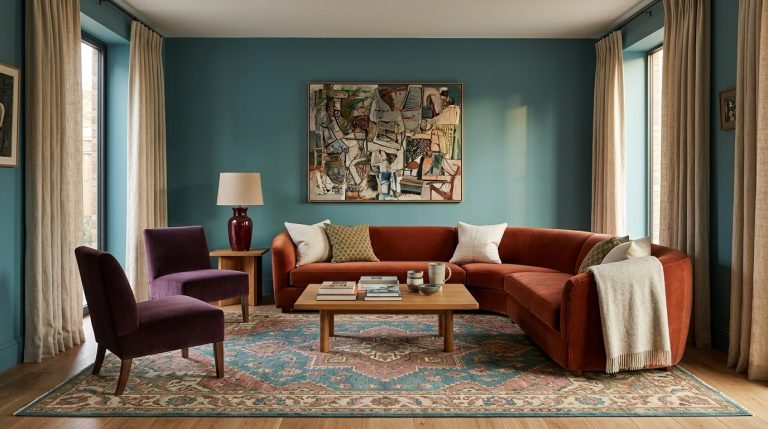
Idea 4: Use a larger earthy rug to connect the seating. A small rug can make a small living room feel even smaller. If the rug floats beneath only the coffee table, it visually creates a little island in the middle of the room. Instead, choose a rug large enough to connect the main seating. Depending on the layout, 6-by-9 feet or 8-by-10 feet can be useful starting points, aiming for at least the front legs of the sofa and main chair to sit on the rug where possible. For an earthy room, consider a warm wool rug, a faded Persian-style design, muted olive and rust, mushroom with chocolate, or a low-contrast geometric weave. Do not automatically choose jute; it can work beautifully, but a wool rug is usually softer underfoot and gives you more opportunities to introduce olive, terracotta, tobacco, burgundy, or dusty blue.

Make storage part of the design
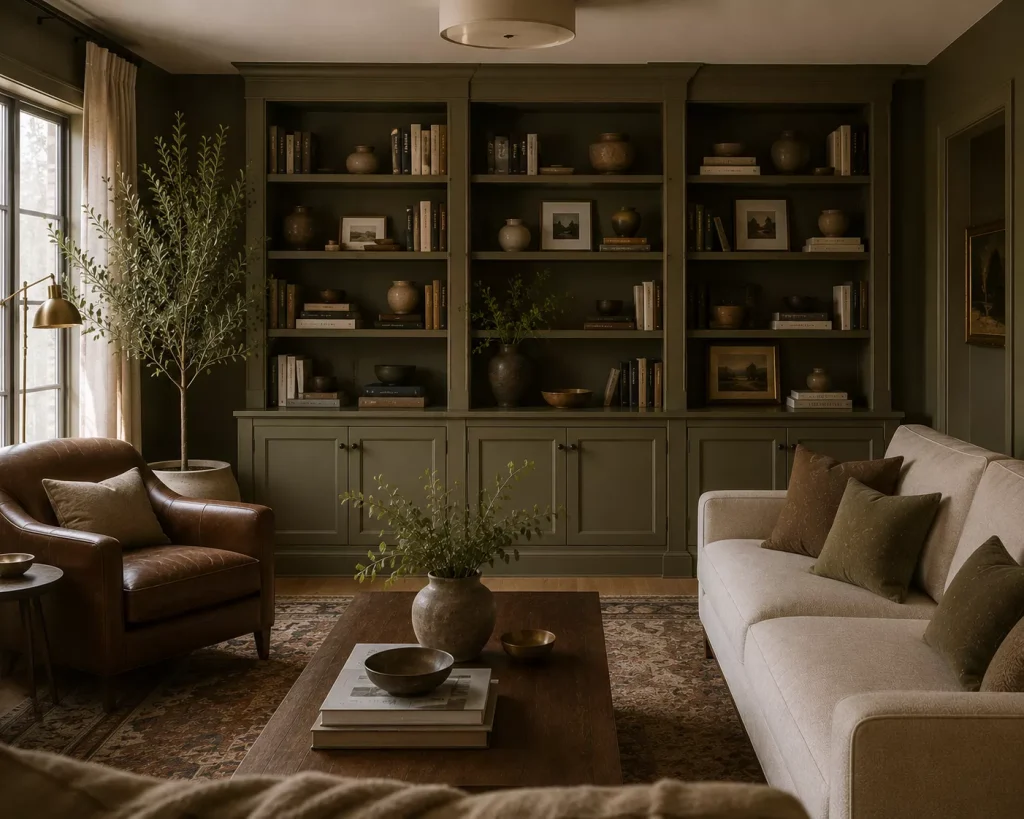
Idea 5: Consolidate storage into fewer, larger pieces. The room should feel collected, but collected does not mean every possession needs to be visible. If built-ins are outside your budget, closely spaced freestanding bookcases painted in one color can create a similar effect.
Introduce natural materials without repeating one texture
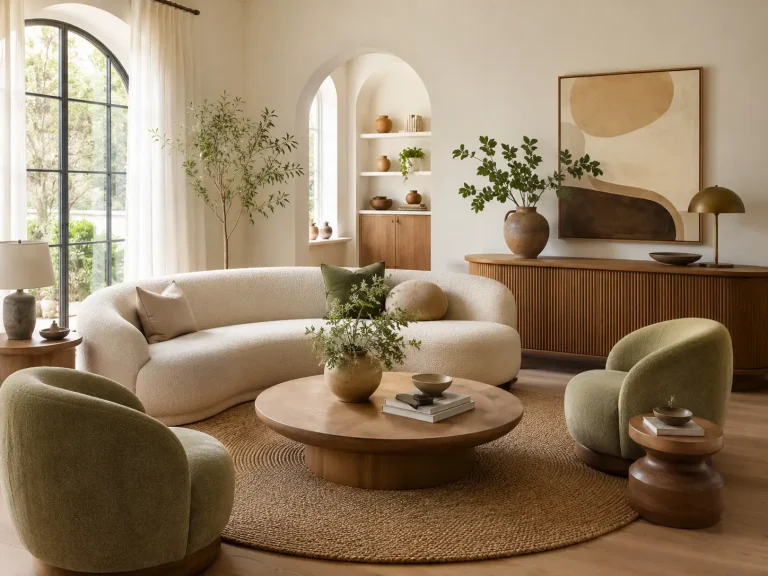
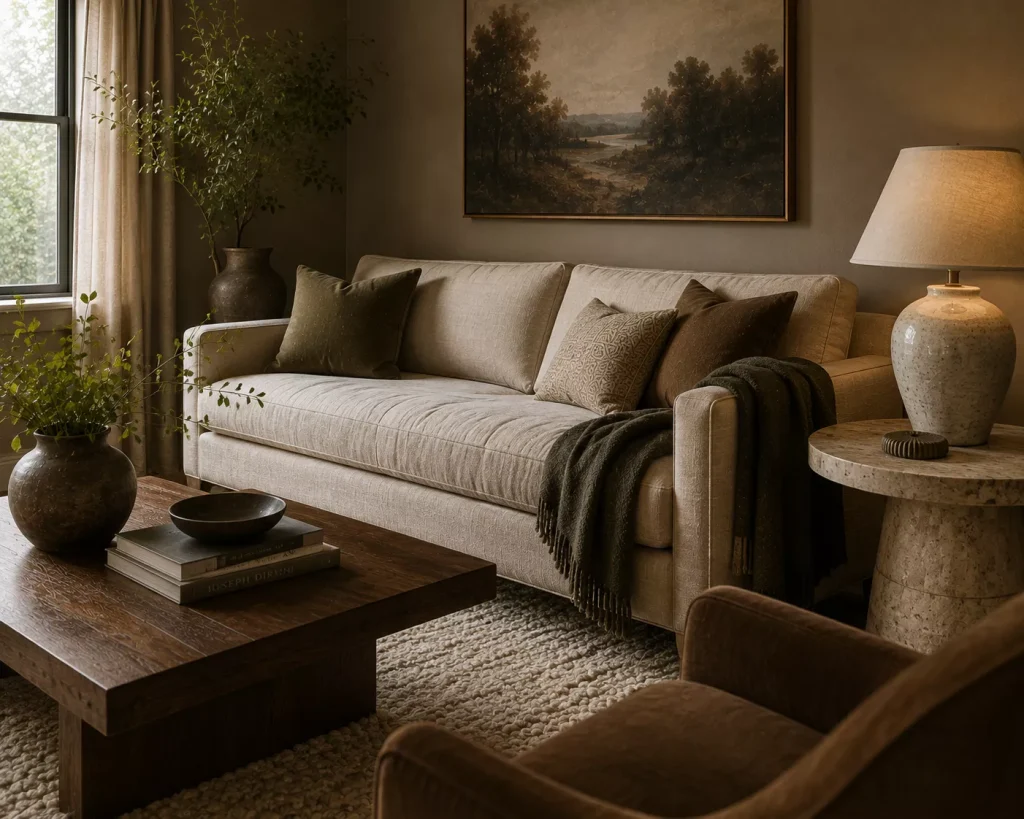
Idea 6: Mix wood, wool, linen, stone, and ceramic. The easiest way to make earthy decor feel generic is to use the same natural texture everywhere: jute rug, rattan chair, wicker basket, cane table, woven pendant. Everything may technically be natural, but nothing contrasts. Instead, use materials with different surfaces, such as a linen sofa, wool rug, walnut table, ceramic lamp, and stone side table. That combination gives soft, rough, polished, matte, and glazed finishes without adding extra decorative objects, reflecting the same “material tension” explored in earthy boho living room ideas, where darker woods, stone, polished surfaces, raw texture, and patina deliberately sit beside one another.
Use mirrors with intention
Idea 7: Choose one substantial mirror in a warm finish. Reflective finishes are becoming more prominent in 2026 partly because designers are using them to manipulate both light and perceived space. For an earthy room, choose a frame in dark wood, aged brass, bronze, or warm painted timber. Antiqued mirror glass can also feel softer than a perfectly crisp contemporary mirror, and one substantial mirror is generally calmer than several small decorative mirrors. Before hanging it, check what appears in the reflection; there is little benefit in visually doubling the clutter around your television.

Make lighting part of the atmosphere
Idea 8: Use oversized lighting instead of several tiny lamps. A small room does not mean a small light fixture. One confident floor lamp or sculptural pendant can give the space a stronger focal point without consuming much additional area. Oversized and sculptural lighting is one of the major living-room directions for 2026, with designers treating pendants, sconces, and floor lamps almost like functional art.

Edit with restraint
Idea 9: Choose fewer, larger decorative objects over many small ones. A single substantial ceramic vase or sculptural bowl usually reads as more intentional than a cluster of small trinkets, and it is far easier to keep a small room feeling calm this way. This same principle of restraint is central to minimalist living room ideas, even in a room that leans warmer and more earthy than strictly minimal.
Idea 10: Keep circulation paths genuinely clear. No matter how good the palette and materials are, a small earthy living room will feel cramped if there is nowhere comfortable to walk. Leave real space around the main seating before adding another accessory.
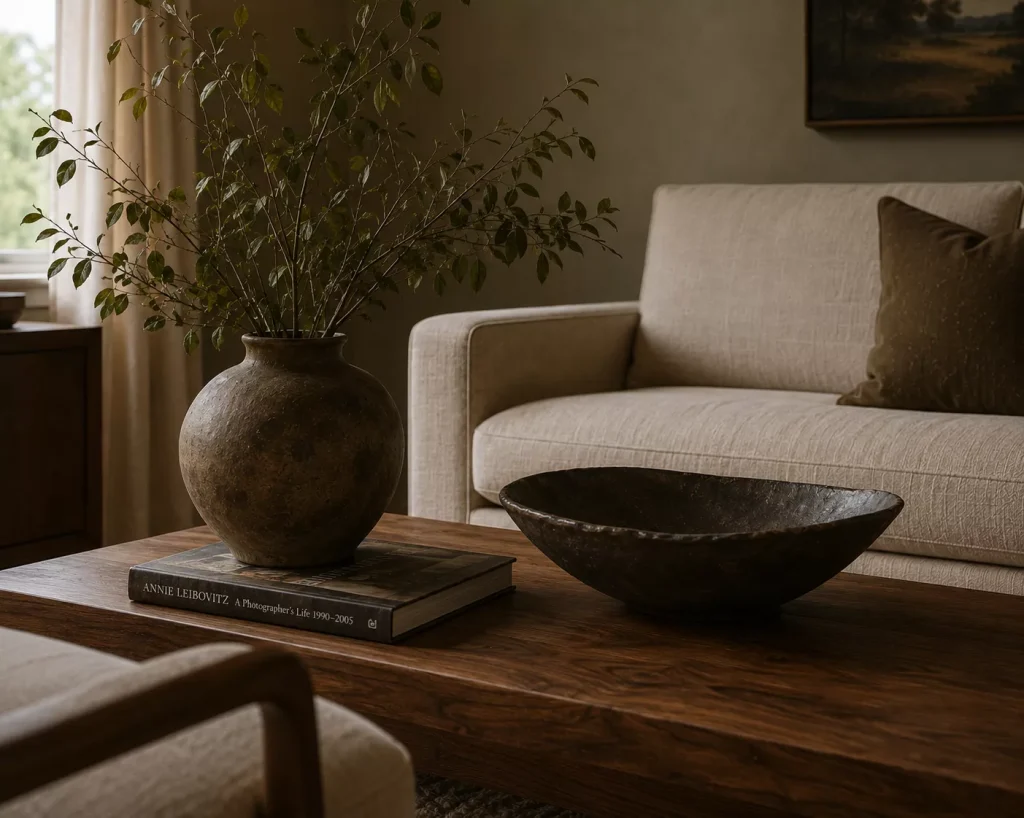
Try this if your small living room already feels beige and crowded
Do not start shopping. Remove the small decorative objects first. Then photograph the room from its main entrance. Look for the largest pale-on-pale area. Introduce one darker anchor there: a walnut table, chocolate chair, olive curtain, or dark wood cabinet can be enough. Next, check whether the rug actually connects the furniture. Consolidate loose storage. Improve one evening light source. Finally, return only the decorative pieces you genuinely want to see.
You may discover the room needed deeper color and clearer hierarchy rather than more earthy accessories, a lesson that applies just as much in a larger room, as covered in small living room decor ideas.
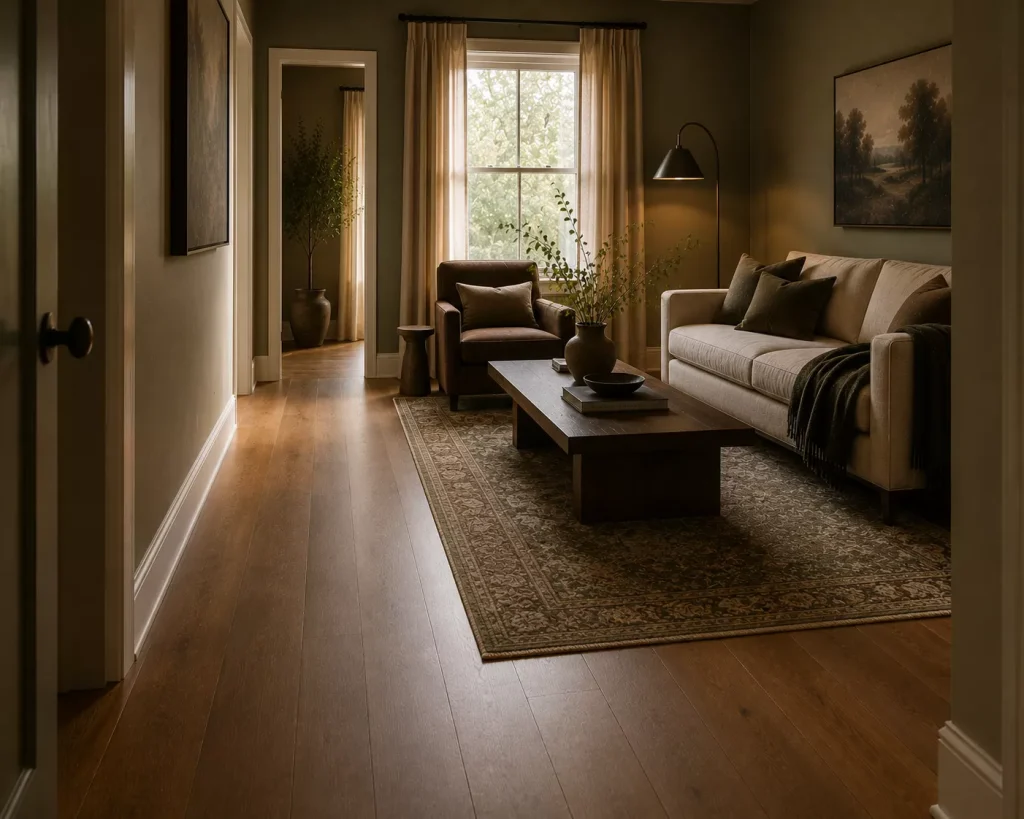
What colors work best for a small earthy living room?
Olive, mushroom, chocolate brown, tobacco, terracotta, warm ivory, clay, moss, and muted blue all work well. Current 2026 living-room palettes particularly favor nuanced earthy greens, browns, and clay tones rather than cool gray.
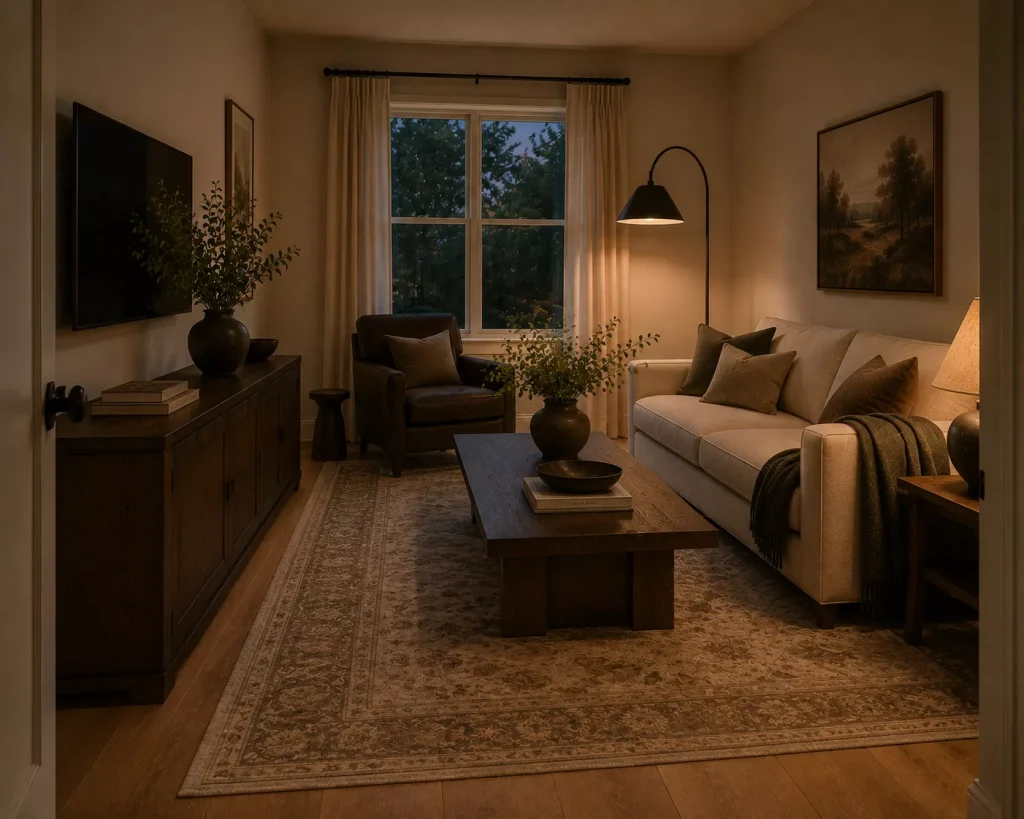
Do dark earthy colors make a small living room look smaller?
Not automatically. A continuous olive, brown, or clay-toned scheme can unify a compact room’s architecture instead of chopping it into contrasting patches. A small living room can still feel rich, layered, and deeply comfortable. The goal is not to convince anyone that it is larger than it really is. The goal is to make the space you have feel complete.