10 Small Laundry Room Ideas That Make Every Inch Work Harder
Small laundry rooms have an unfairly difficult job. A space barely wider than the washer may need to handle detergent, sorting, washing, drying, stain treatment, folding, ironing, cleaning supplies, and baskets that never seem to have a permanent home.
The smartest 10 Small Laundry Room Ideas for 2026 solve those jobs before adding decoration. Designers are using stacked appliances, ceiling-height cabinetry, concealed drying racks, folding counters, integrated hampers, stronger color, and better lighting to make utility rooms feel deliberately designed rather than squeezed into leftover space. This same instinct toward making every inch work harder is at the heart of modern small kitchen ideas, where compact utility spaces are treated as design problems worth solving properly rather than shrinking down.
The best small laundry room is not the one that stores the most. It is the one where every task has a place.
Solve the appliance question first
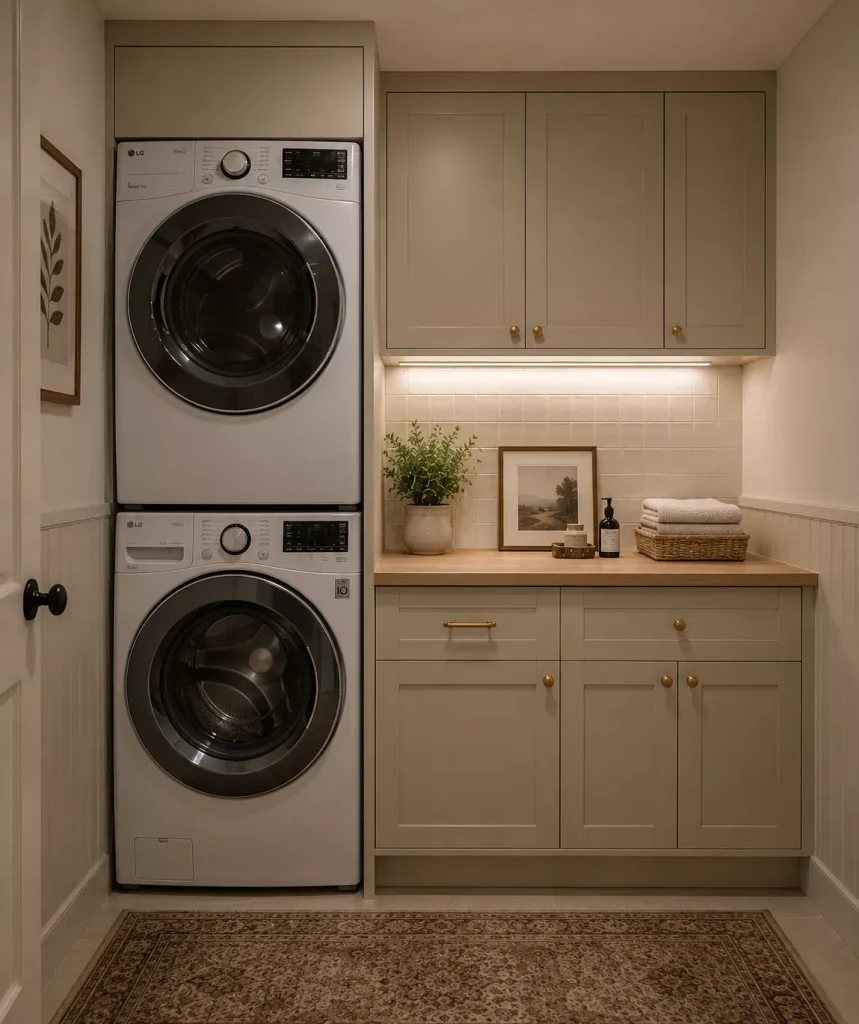
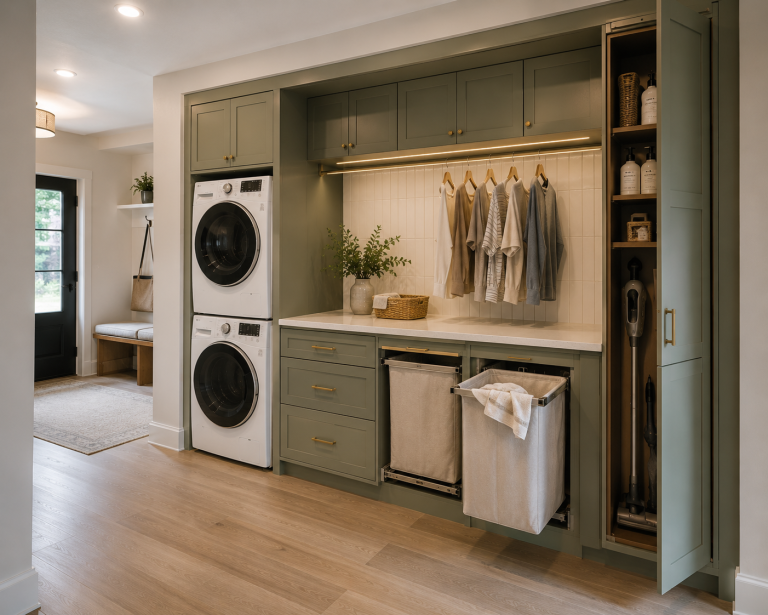
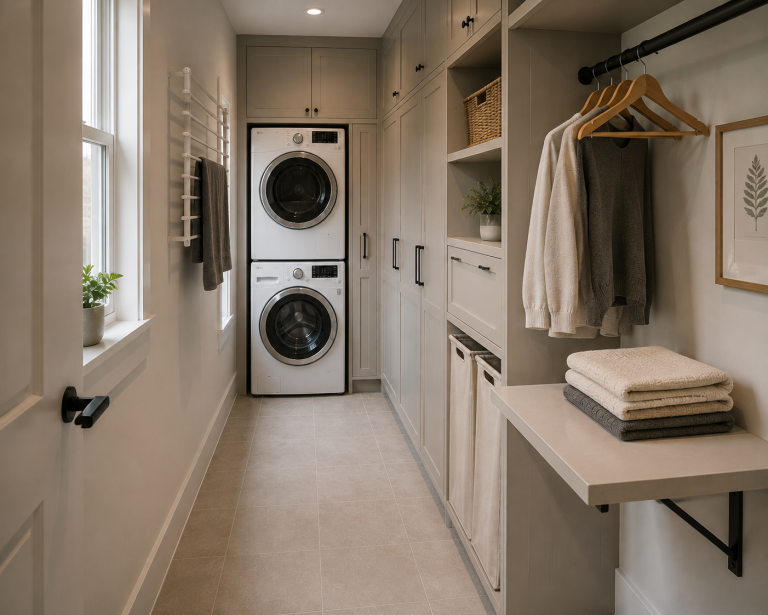
Idea 1: Stack the washer and dryer wherever compatible. Stacking is often the single biggest space-saver in a tight laundry room, freeing up an entire footprint for storage or a folding counter. Check manufacturer requirements for compatible kits, clearances, power, ventilation, plumbing, and servicing, and remember accessibility: if controls become uncomfortably high for members of your household, a side-by-side arrangement with storage above may work better.
Use every vertical inch without creating clutter
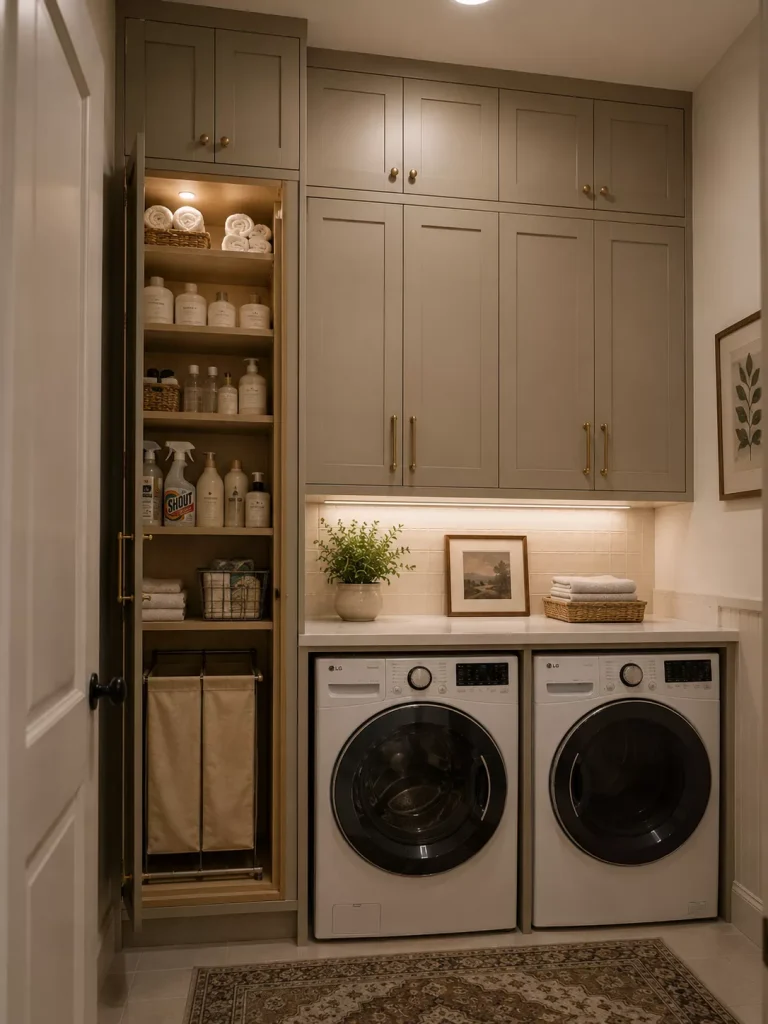
Idea 2: Take closed cabinetry all the way to the ceiling. Small utility rooms cannot afford an unused strip above wall cabinets. Extend storage upward wherever practical, keeping everyday supplies such as detergent, stain remover, dryer products, cleaning cloths, and laundry bags within comfortable reach. Use the uppermost cabinets for less frequent items such as spare linens, bulk supplies, or seasonal cleaning products. Closed storage is particularly useful here since open shelves look beautiful in photographs but can quickly read as visual clutter in a genuinely small room.
Give yourself somewhere to actually work
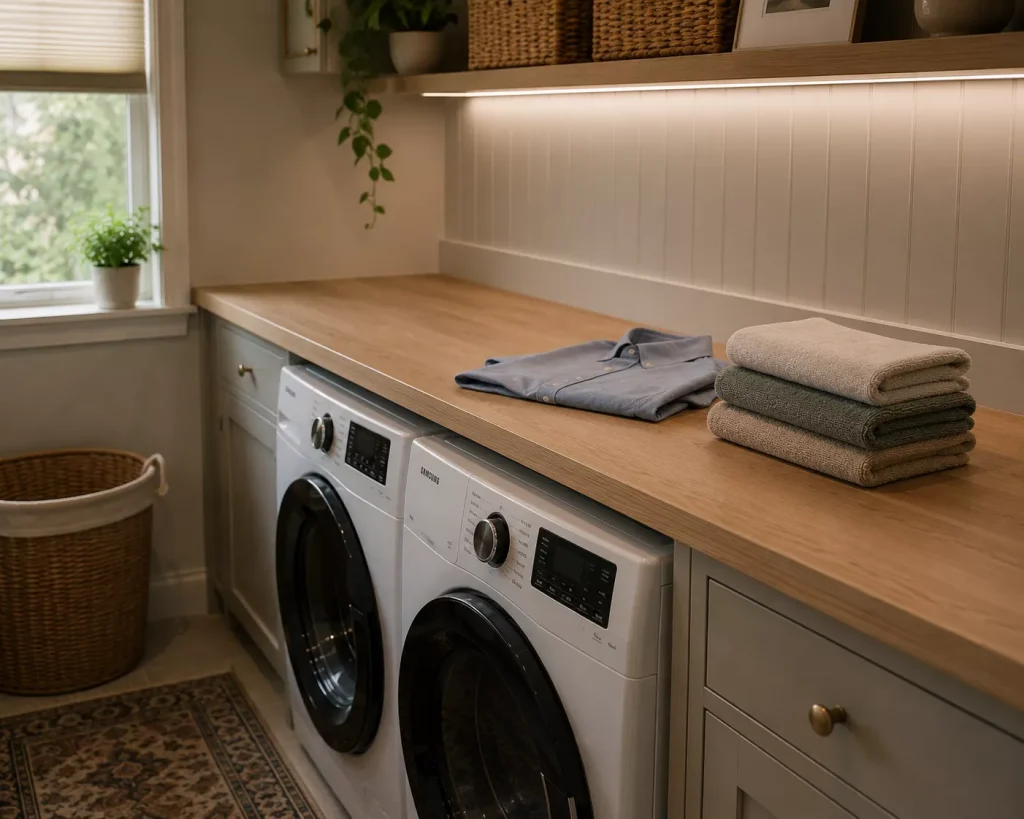
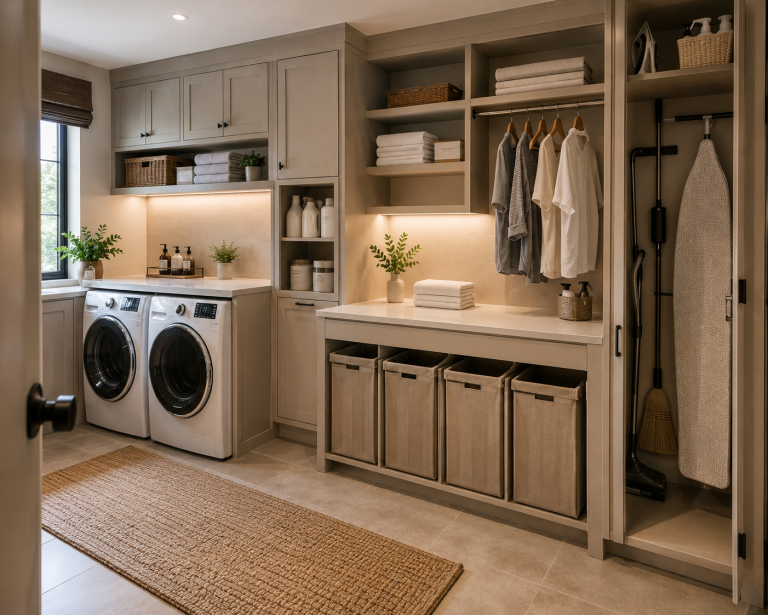
Idea 3: Build a proper folding counter over the machines. A counter spanning stacked or front-loading machine tops turns wasted vertical space into one useful work zone. Good materials might include sealed wood, quartz, durable laminate, solid surface, or appropriate stone, chosen according to moisture exposure, maintenance, budget, appliance requirements, and how the counter will be supported. Storage is not automatically the highest priority; a work surface can matter more. Choosing the right surface material is a similar exercise to the one covered in kitchen flooring ideas, where durability and moisture resistance matter just as much as looks.
Give air-drying a permanent solution
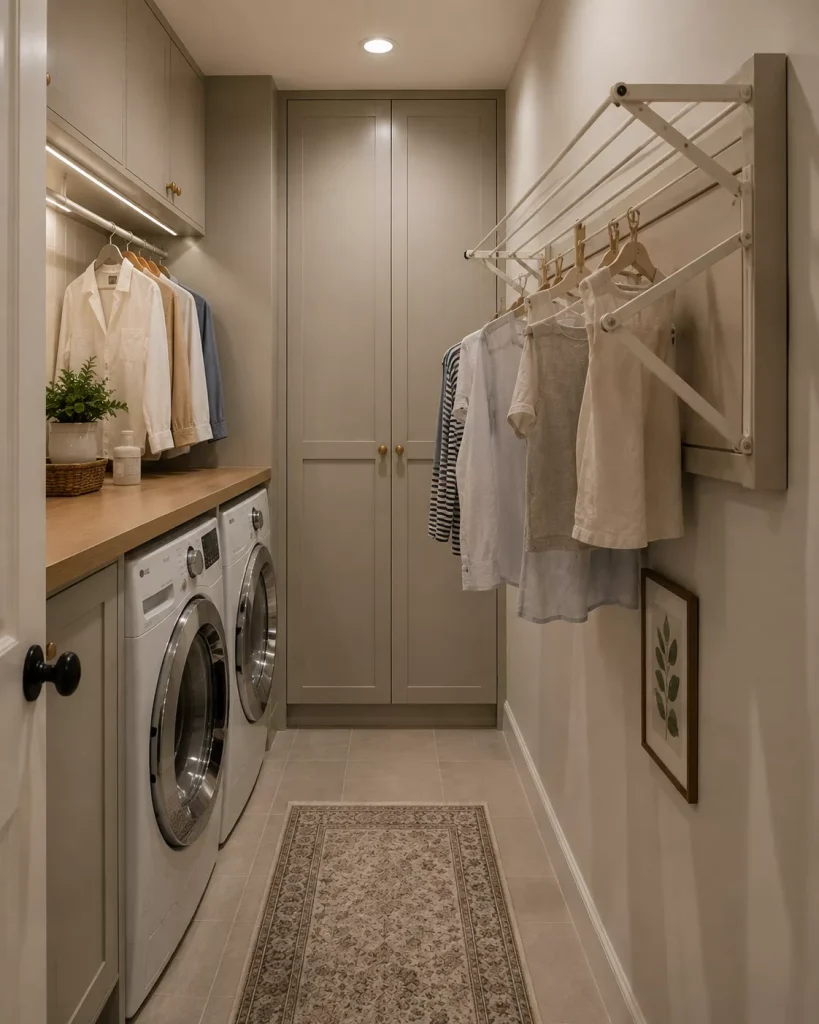
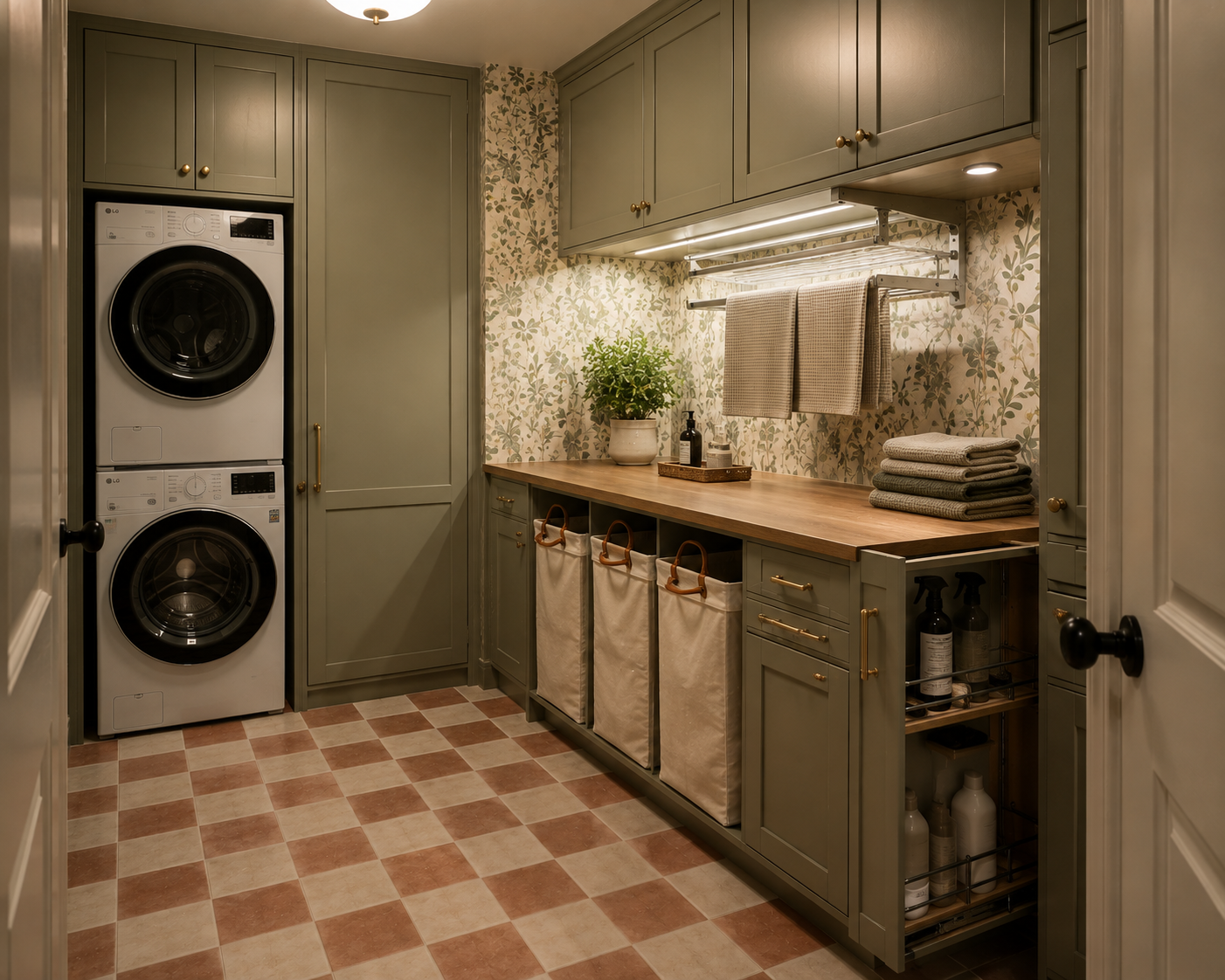
Idea 4: Install a wall-mounted drying rack or hanging rail. Air-dry clothing is one of the hardest things to accommodate in a tiny laundry room. A freestanding clothes horse works, but it can consume nearly every available inch of floor whenever it is open. Instead, use the wall: consider a fold-down drying rack, a retractable clothesline, or a ceiling-mounted rack where suitable, so the drying solution disappears when it is not needed.
Let the room have some personality
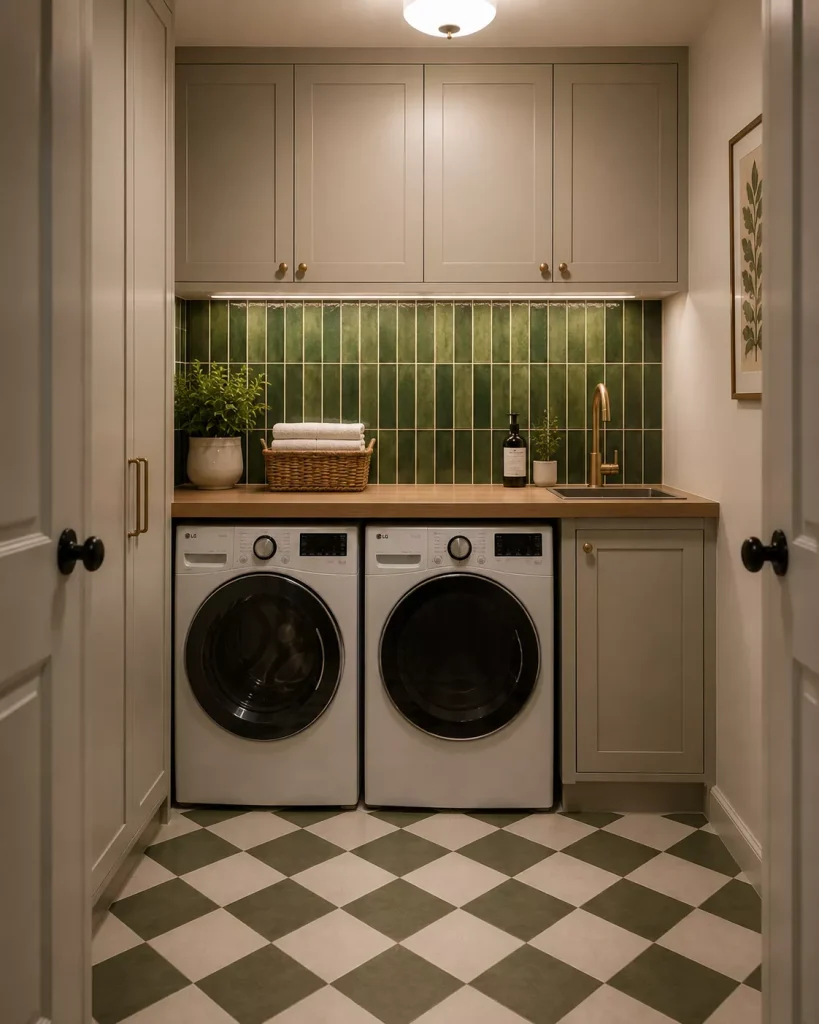
Idea 5: Choose one bold surface instead of an all-white box. A small laundry room is a low-risk place to be more adventurous with pattern and color, financially easier than it would be in a kitchen or living room. Try checkerboard tile, small geometric porcelain, terracotta-look tile, muted botanical wallpaper, a striped wall covering, or a glazed ceramic backsplash. Choose materials for the environment, since laundry spaces can experience moisture, splashes, heat, and damp clothes, and avoid fragile wall coverings such as silk or grasscloth where damp laundry may come into contact with them. One patterned surface is usually enough: if the floor is graphic, keep cabinetry calmer, and if the wallpaper is strong, a quiet floor gives the eye somewhere to rest.
Make narrow storage genuinely useful
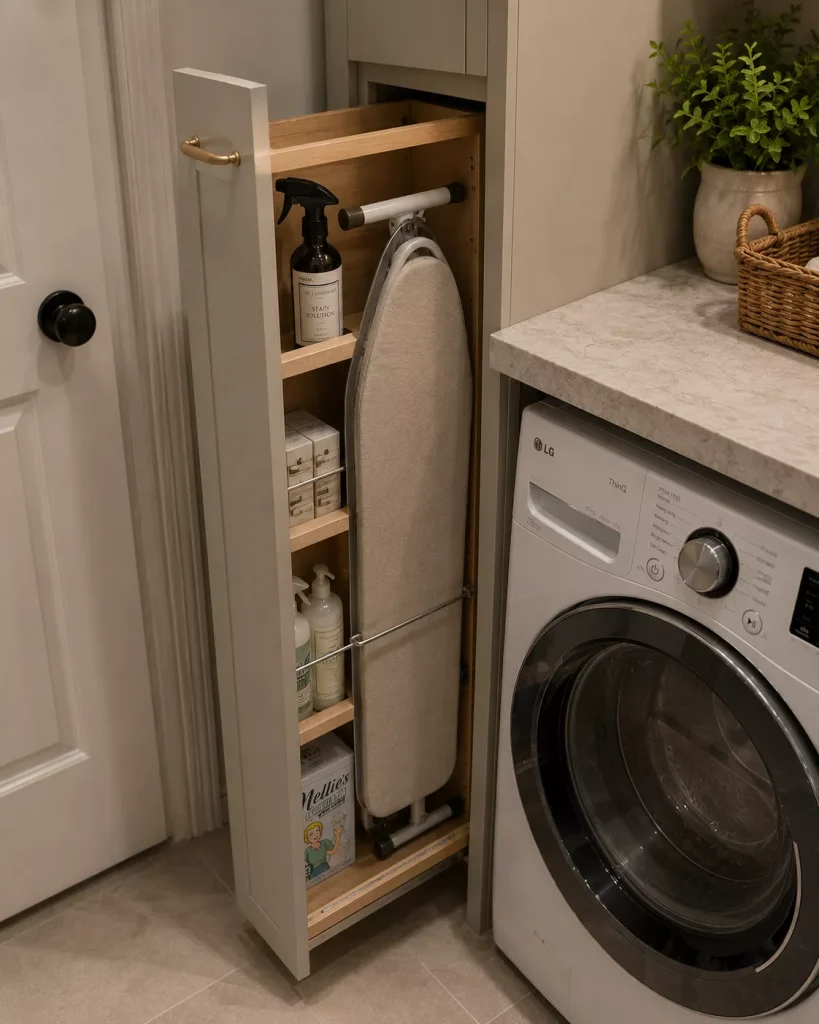
Idea 6: Turn the slimmest leftover space into a pull-out cabinet. Even a gap only a few inches wide can hold a slim pull-out unit for ironing boards, cleaning supplies, or an extra hamper. This kind of dedicated, purpose-built storage prevents the narrow dead zones that usually collect clutter instead.
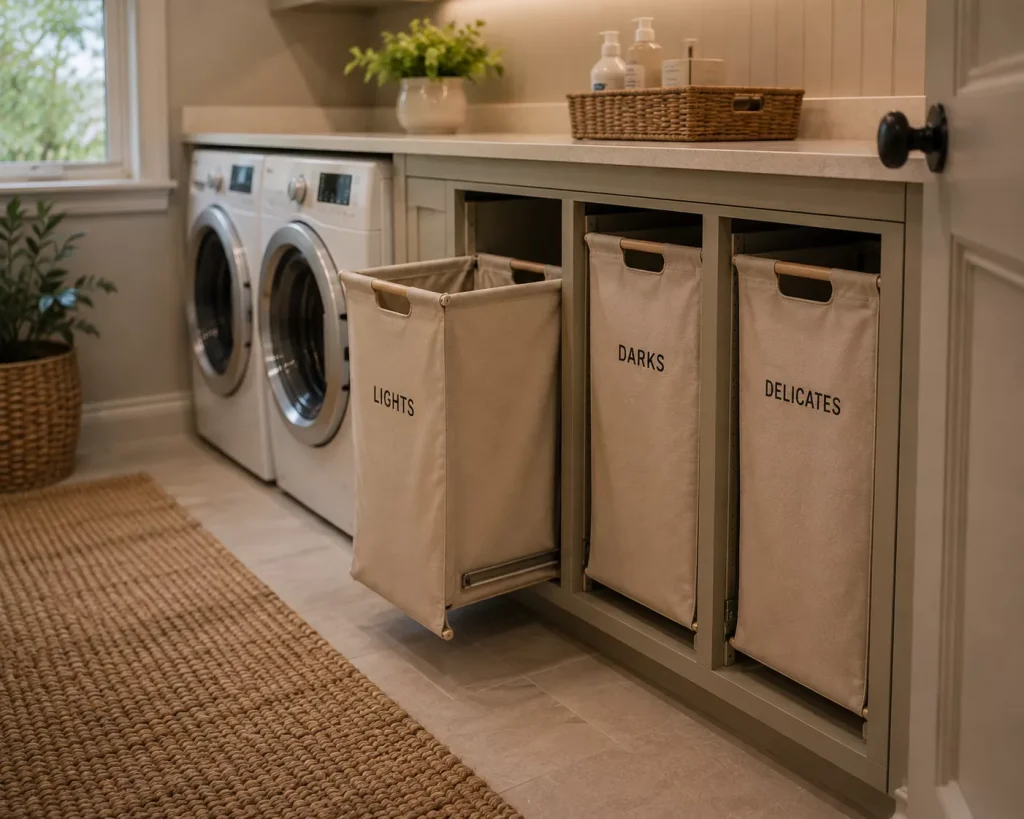
Idea 7: Dedicate specific bays to sorting. Separate bins or bays for lights, darks, and delicates keep laundry from piling on the floor while it waits to be washed, and they make the whole process faster once the machines are free.
Keep supplies contained without feeling clinical
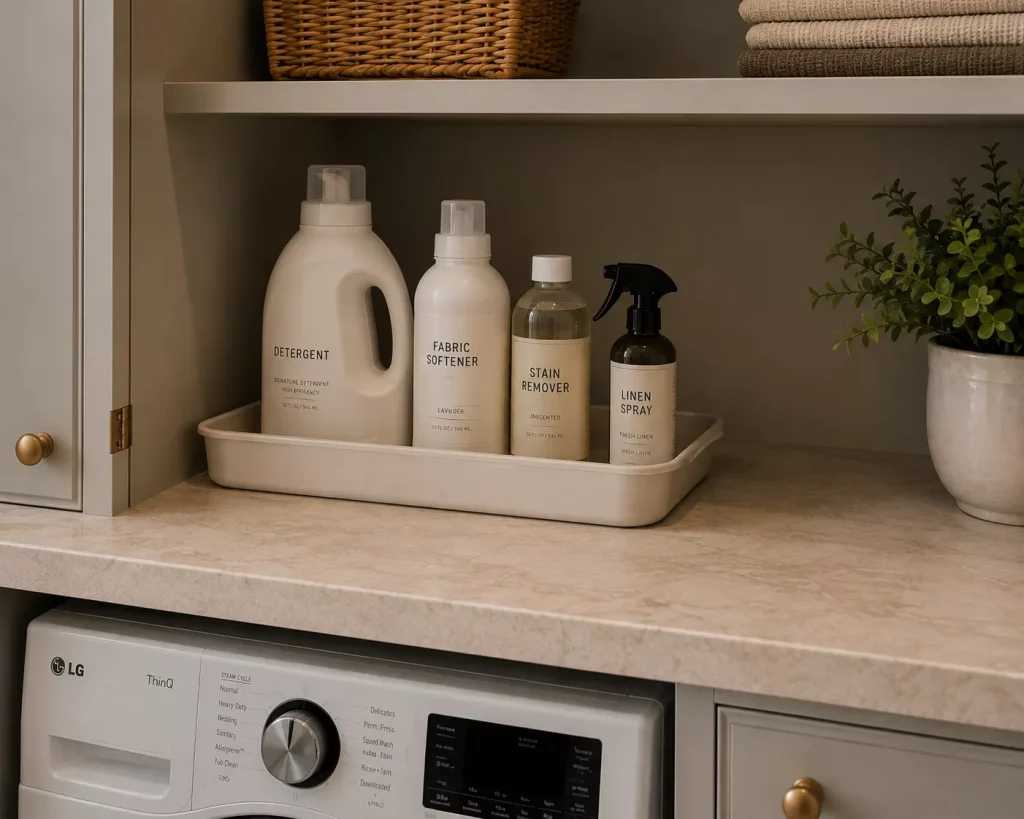
Idea 8: Use a shallow tray to corral bottles and household supplies. A shallow tray can contain occasional drips and make bottles easier to remove together. Leave one cabinet or shelf slightly underfilled, since storage packed perfectly to capacity on day one has nowhere for the next bottle of detergent to go. This kind of intentional restraint is the same principle explored in minimalist living room ideas, where leaving room to breathe matters as much as the storage itself.
Light the work, not just the room
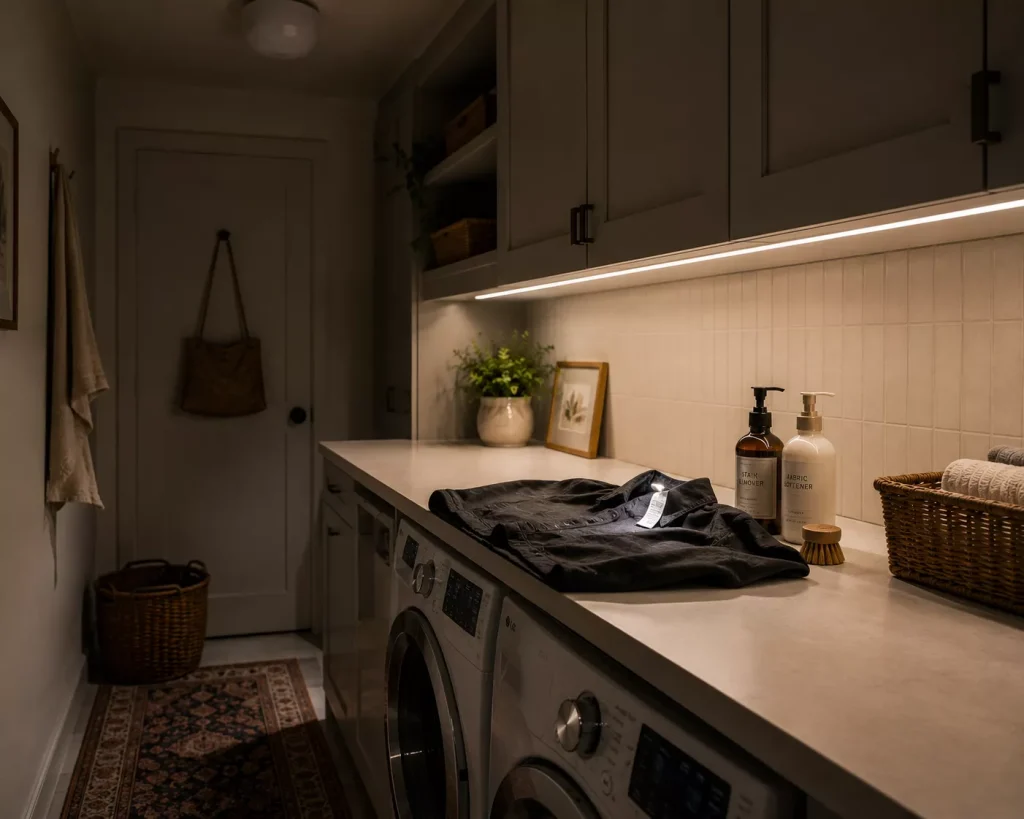
Idea 9: Add dedicated task lighting above the counter and machines. A single overhead fixture rarely lights a folding counter or stain-treatment area well enough. Under-cabinet task lighting, similar to the layered approach covered in kitchen island lighting tips, makes it far easier to actually see what you are doing at the counter, not just in the room generally.
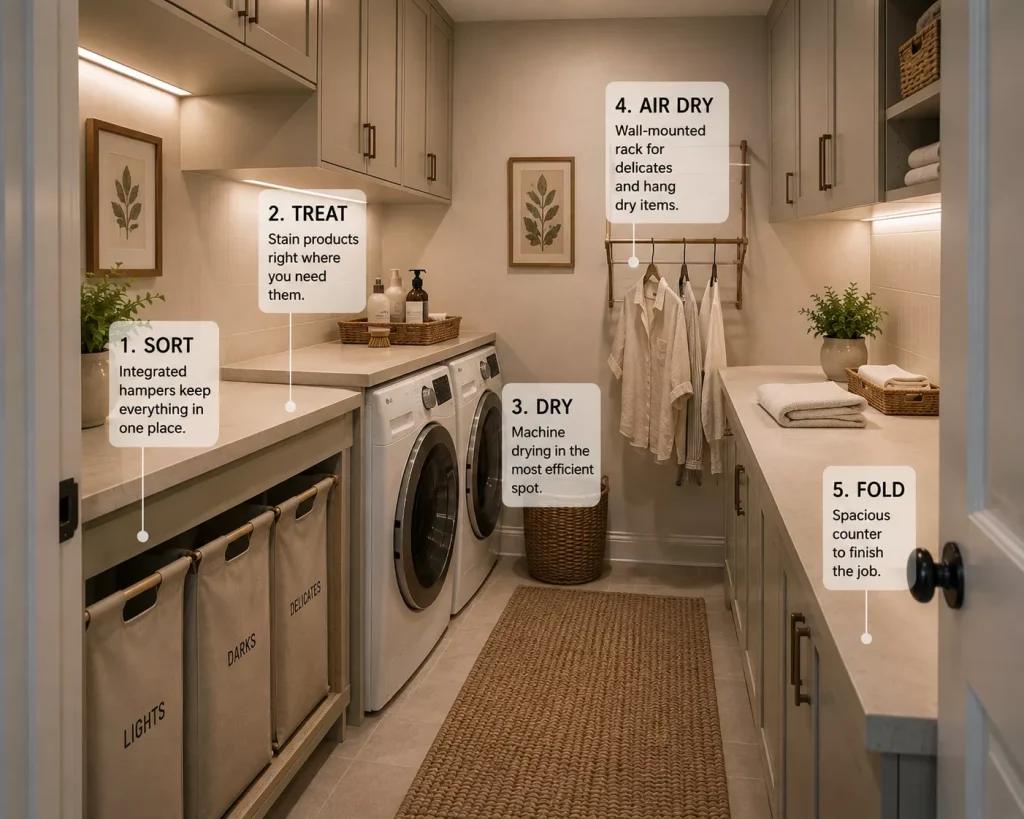
Idea 10: Think about the whole sequence of laundry, not isolated storage problems. Dirty clothes enter, they are sorted, stains are treated, items are washed, some are dried by machine, others are hung, and everything is eventually folded and put away. Designing around that sequence, rather than solving each storage problem separately, is what makes a small laundry room feel considered.
A practical small laundry room planning guide
| Problem | Space-smart response |
|---|---|
| Appliances use most of the floor | Stack them where compatible |
| No folding area | Counter above front loaders |
| Too many visible supplies | Ceiling-height closed cabinets |
| Nowhere to air-dry | Fold-down rack or hanging rail |
| Baskets block circulation | Dedicated hamper bays |
| Room feels bland | Color drenching or one patterned surface |
| Ironing board has no home | Narrow vertical cabinet |
| Worktops feel dark | Under-cabinet task lighting |
If you make one change first, remove everything currently sitting on top of the washer and dryer. That empty surface will quickly reveal whether your room needs more storage or simply a better place to work.