10 Laundry Room Ideas for a Clean and Organized Space That Stays Tidy
A laundry room can have beautiful cabinets and still feel permanently messy. The usual problem is not a lack of storage — it is that detergent, dirty clothes, clean clothes, hangers, stain products, baskets, and cleaning tools all compete for the same few surfaces.
These 10 laundry room ideas for a clean and organized space give each stage of the laundry routine a specific home, building on the storage discipline behind our 10 Small Laundry Room Ideas guide. Better Homes & Gardens identifies flexible work zones and more intentional storage as major laundry-room directions for 2026, while Architectural Digest emphasizes keeping everyday supplies close to the machines without leaving them on display.
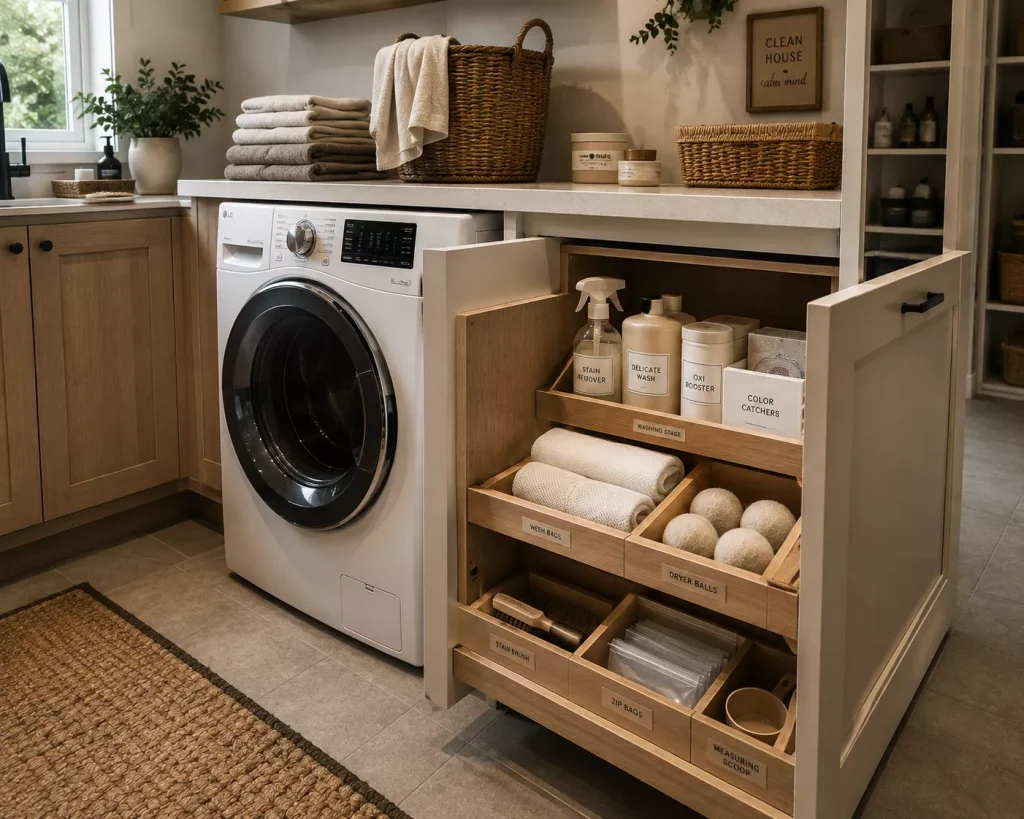
Idea 1: Store items by how they are used, not just what they are
Group supplies by the stage of the laundry process rather than by category. A bottle of stain remover belongs at the washing zone, not beside miscellaneous cleaning sprays just because both come in bottles. This sounds simple, but it solves a common organizational problem: storing items according to where they are actually used.
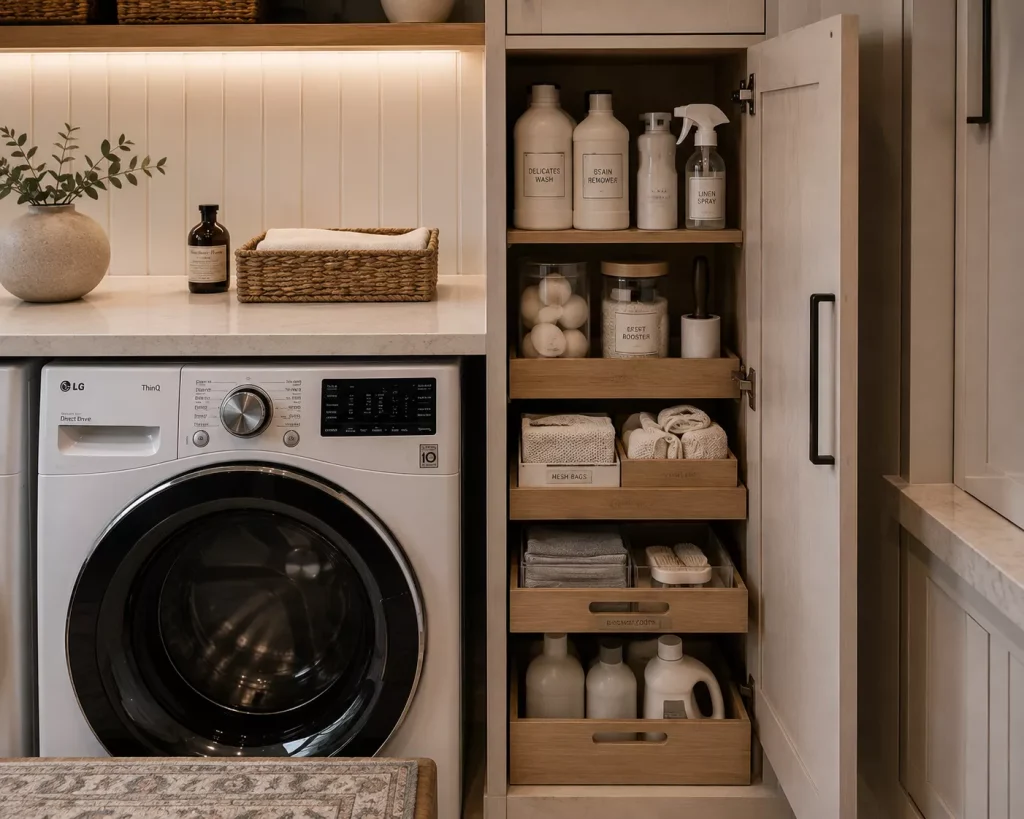
Idea 2: Put everyday laundry products in closed storage beside the washer
Laundry rooms accumulate a surprisingly unattractive collection of packaging — detergent, stain sprays, delicates wash, mesh bags, dryer balls, lint rollers, color-catching sheets, cleaning cloths. Keep these products close enough that doing laundry does not involve crossing the room, but place most of them behind a door. Frequently used products should stay within arm’s reach of the washer while remaining tucked out of sight.
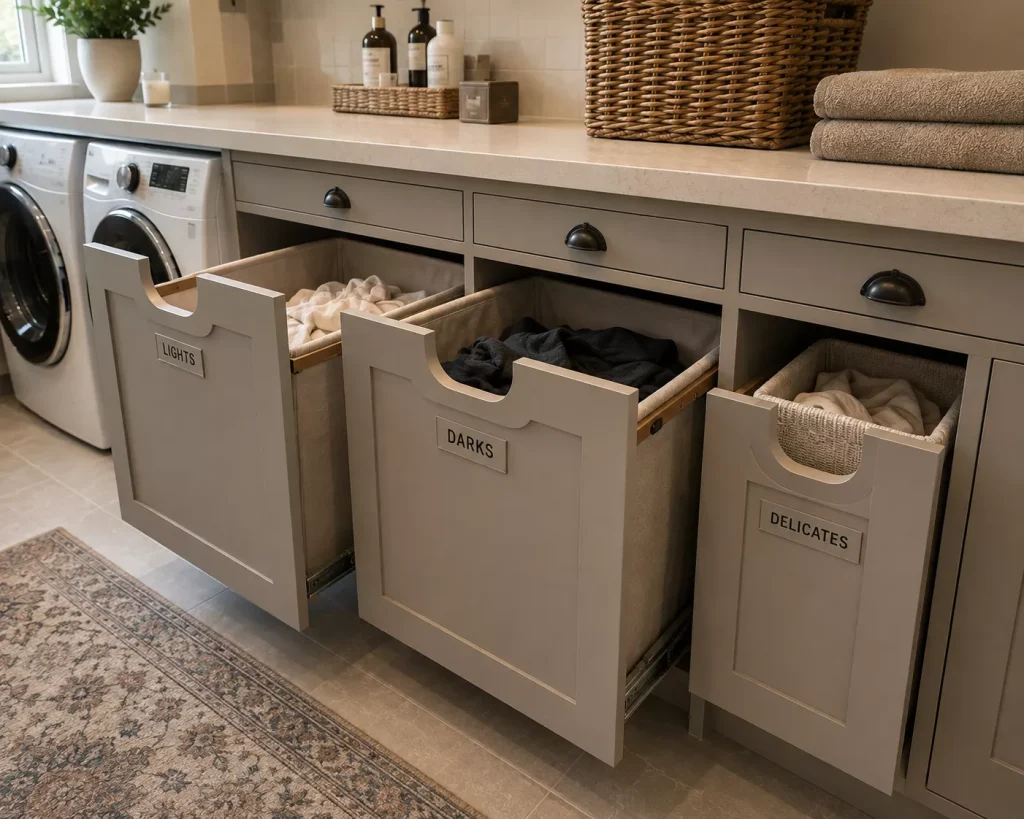
Idea 3: Match your hamper system to your actual sorting habits
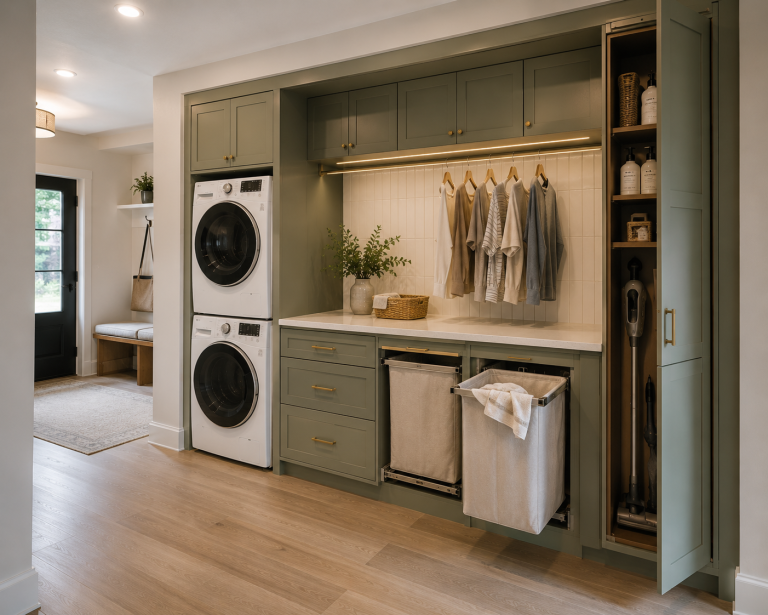
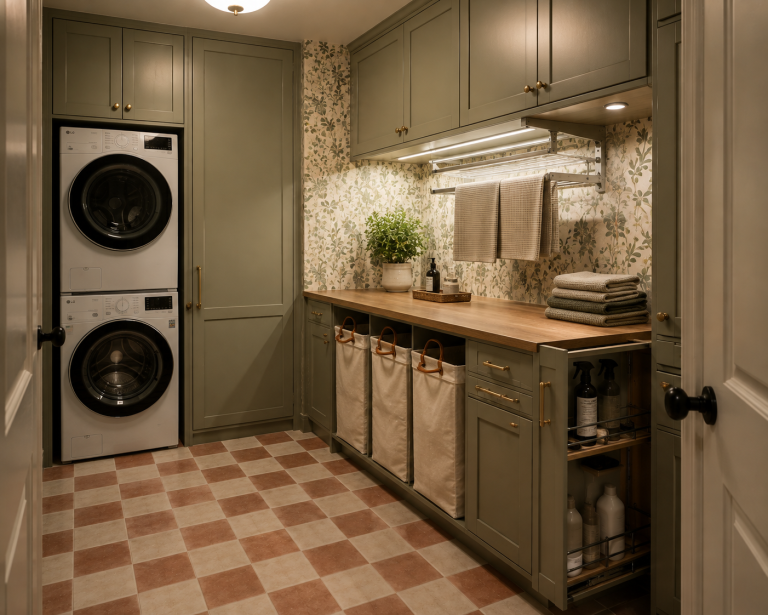
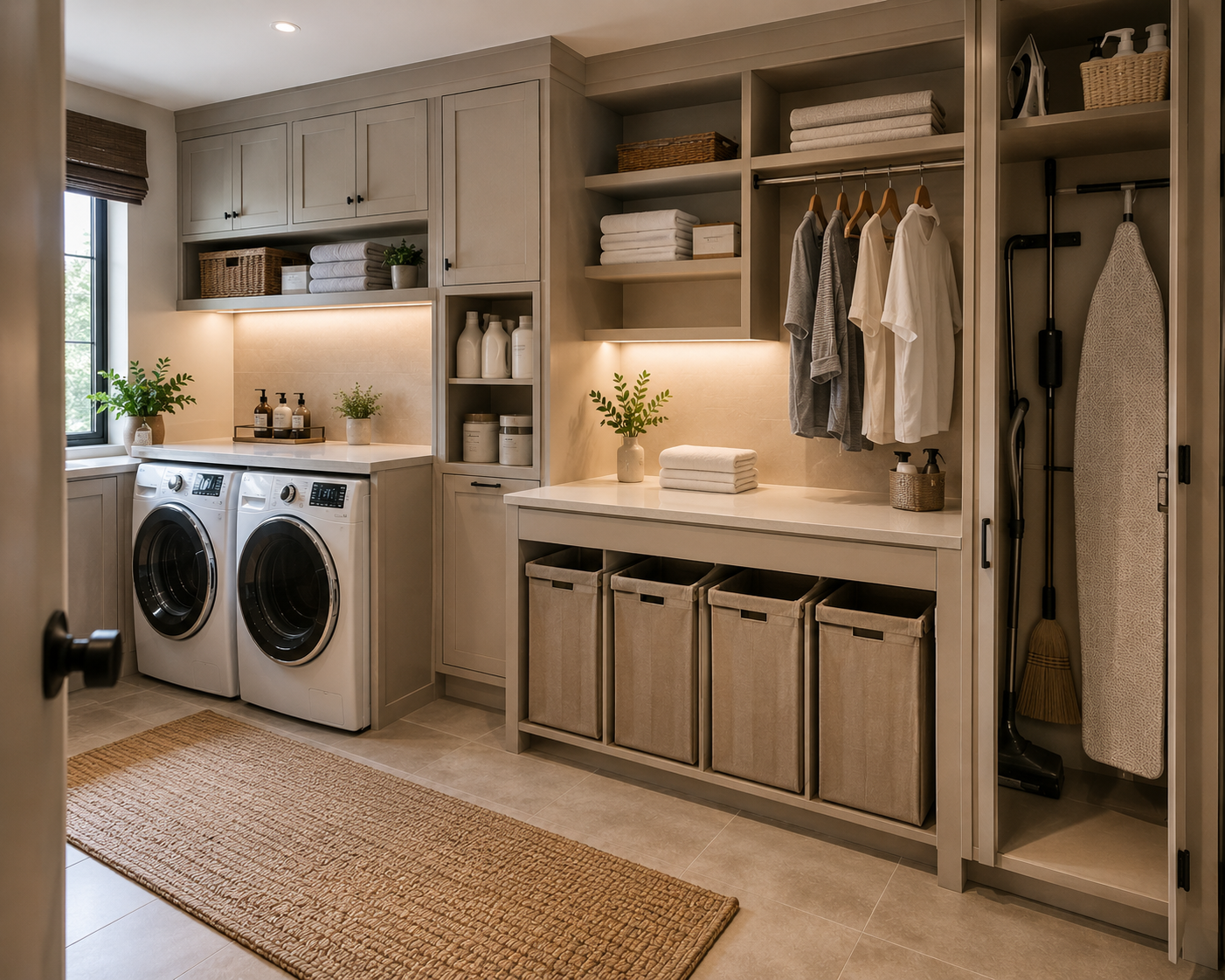
Choose from basic light/dark sorting, separate baskets for family members, a small delicates basket, or pull-out hampers behind cabinet fronts. Do not overcomplicate the system — if your household has never separated washing into six categories, building six custom compartments will not magically change that behavior. Measure baskets before cabinetry is installed, and allow some spare capacity; a hamper that only works when exactly half full is not a useful hamper.
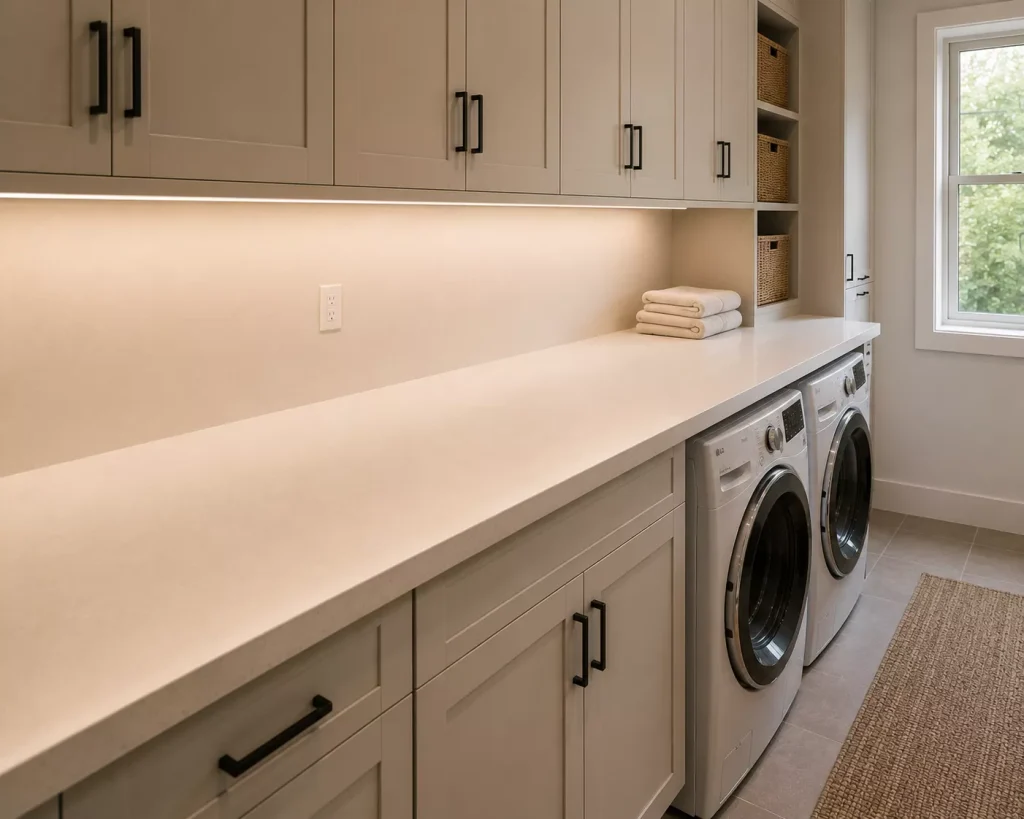
Idea 4: Keep one counter almost completely clear
Laundry countertops attract objects — a new detergent bottle arrives, then a basket, then a stack of towels, then some cleaning supplies. Protect the folding surface from this creep by giving every one of those items its own home elsewhere, so the counter stays free for the one job that actually needs it.

Idea 5: Give drying only as much space as you really use it
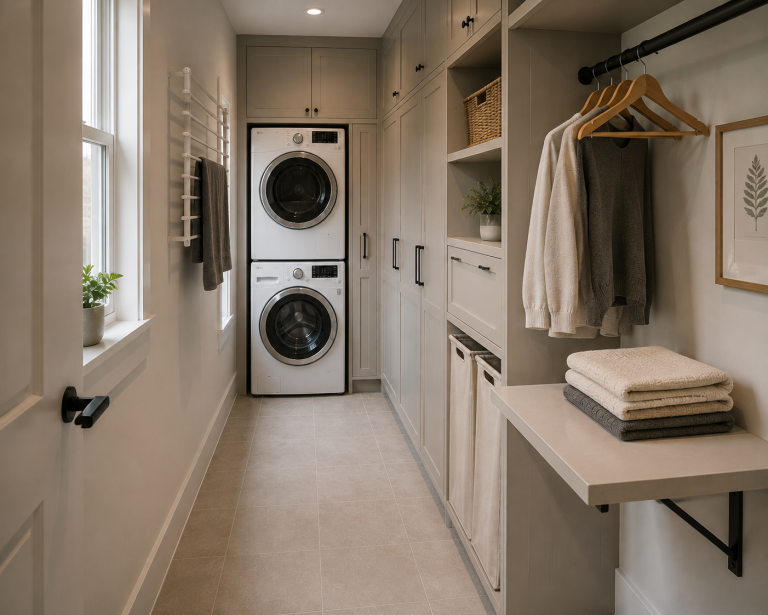
If drying is a daily task in your household, give it more space. If it is only used occasionally for delicates, do not sacrifice an entire wall to a rack that sits empty most of the week. The organized solution is the one sized to your actual routine, not an idealized one.
Idea 6: Build a simple, forgiving folding-and-put-away flow
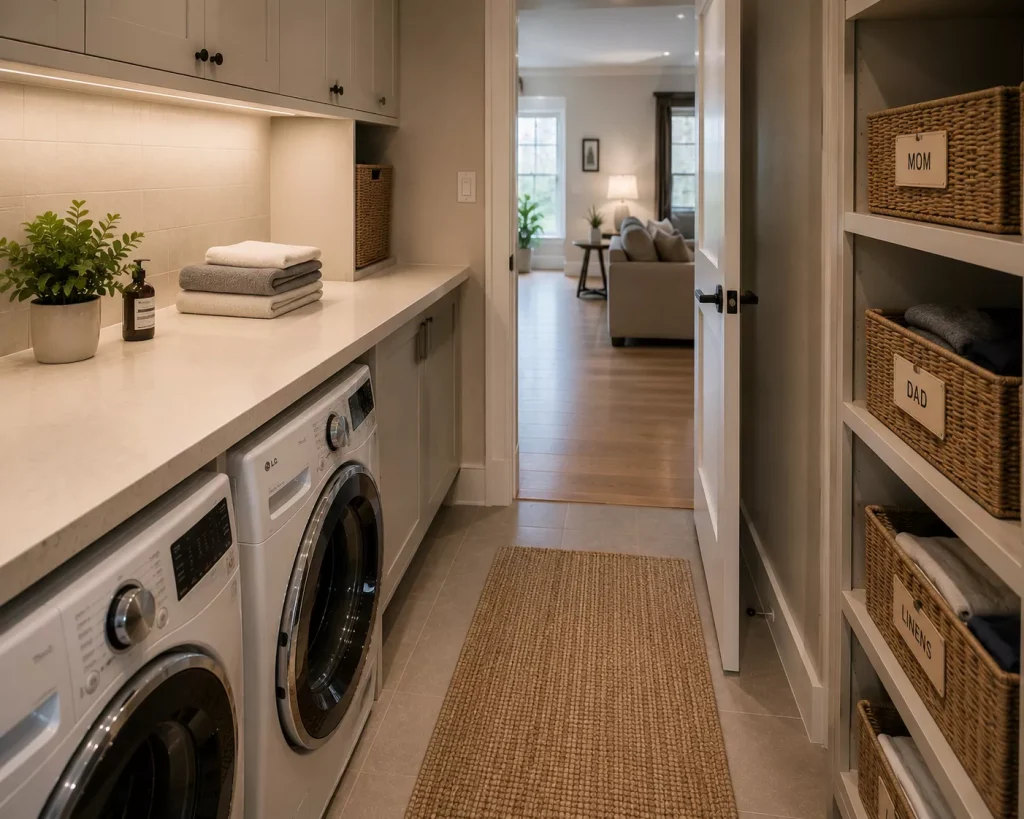
An organized laundry room fails quietly when folded clothes linger on the counter for days. Design a flow where folded laundry has an obvious next stop — a basket to carry out, a shelf per family member, or a hook by the door — so the room resets itself instead of accumulating a backlog, a lesson that shaped the floor-space thinking in 10 Small Laundry Room Ideas That Save Valuable Floor Space.

Idea 7: Create a vertical utility cupboard for awkward equipment
Brooms, mops, ironing boards, vacuum attachments, and folding racks are difficult to organize because they do not fit ordinary shelves. Give long objects vertical storage: a floor-to-ceiling cupboard can consolidate items that would otherwise lean against walls or become wedged between appliances. Inside, avoid installing shelves all the way down — use hooks, clips, a broom holder, one upper shelf, and a narrow side rack instead.
Idea 8: Label what is easy to misfile
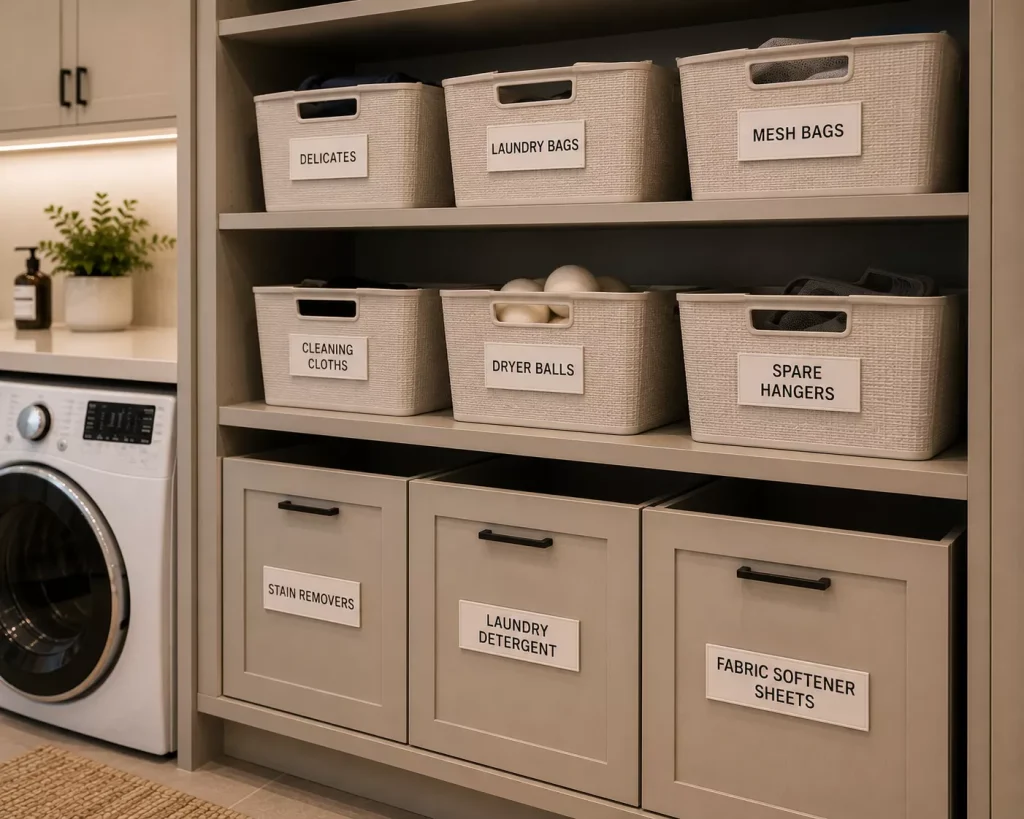
Bins that look identical get used inconsistently unless they are labeled. A simple label on a bin, drawer, or shelf removes the guesswork for every household member, not just the person who set the system up. This same clarity-over-cleverness approach is why 12 Tiny Laundry Room Ideas favors simple labeled zones over elaborate custom systems in a small footprint.

Idea 9: Leave spare capacity everywhere
An organized room is not finished when every shelf is full — in fact, that is usually when it starts failing. Leave some spare capacity: one partially empty shelf, a little extra hamper space, a drawer with room for the next packet of laundry bags. Reducing friction in storage systems, not maximizing density, is what keeps items easy to return after use.
Idea 10: Build a one-minute reset routine
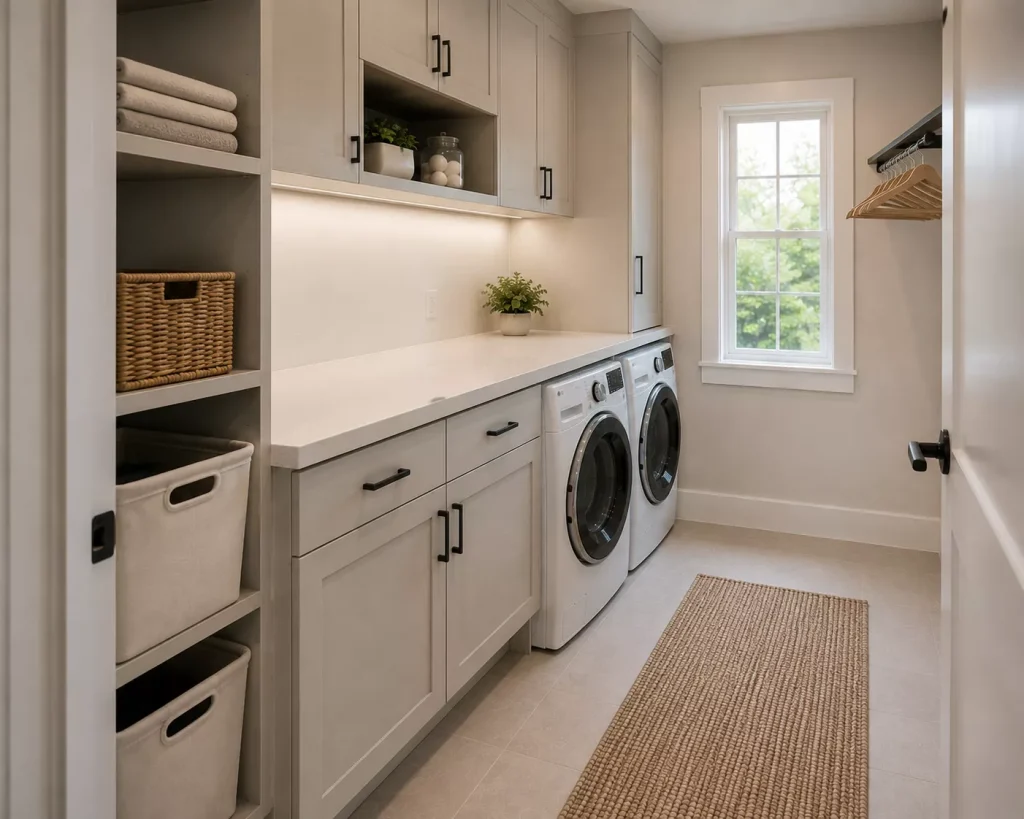
Return detergent to its cabinet, empty the lint filter, put empty hangers back on the rail, move folded laundry out of the room, return baskets to their bays, and wipe spills when they happen. This should take minutes, not become another cleaning project. A related sizing lesson applies here too — the same restraint we describe in 10 Laundry Room Ideas Small Space keeps a clean room from needing constant upkeep.
An organized laundry room that actually stays that way
The strongest organized laundry rooms are not the ones with the most storage. They are the ones where every object has an obvious home, the counter stays clear by default, and putting things away takes less effort than leaving them out. Build the system around your real habits, not an aspirational one, and the space will stay tidy without a weekly reset.