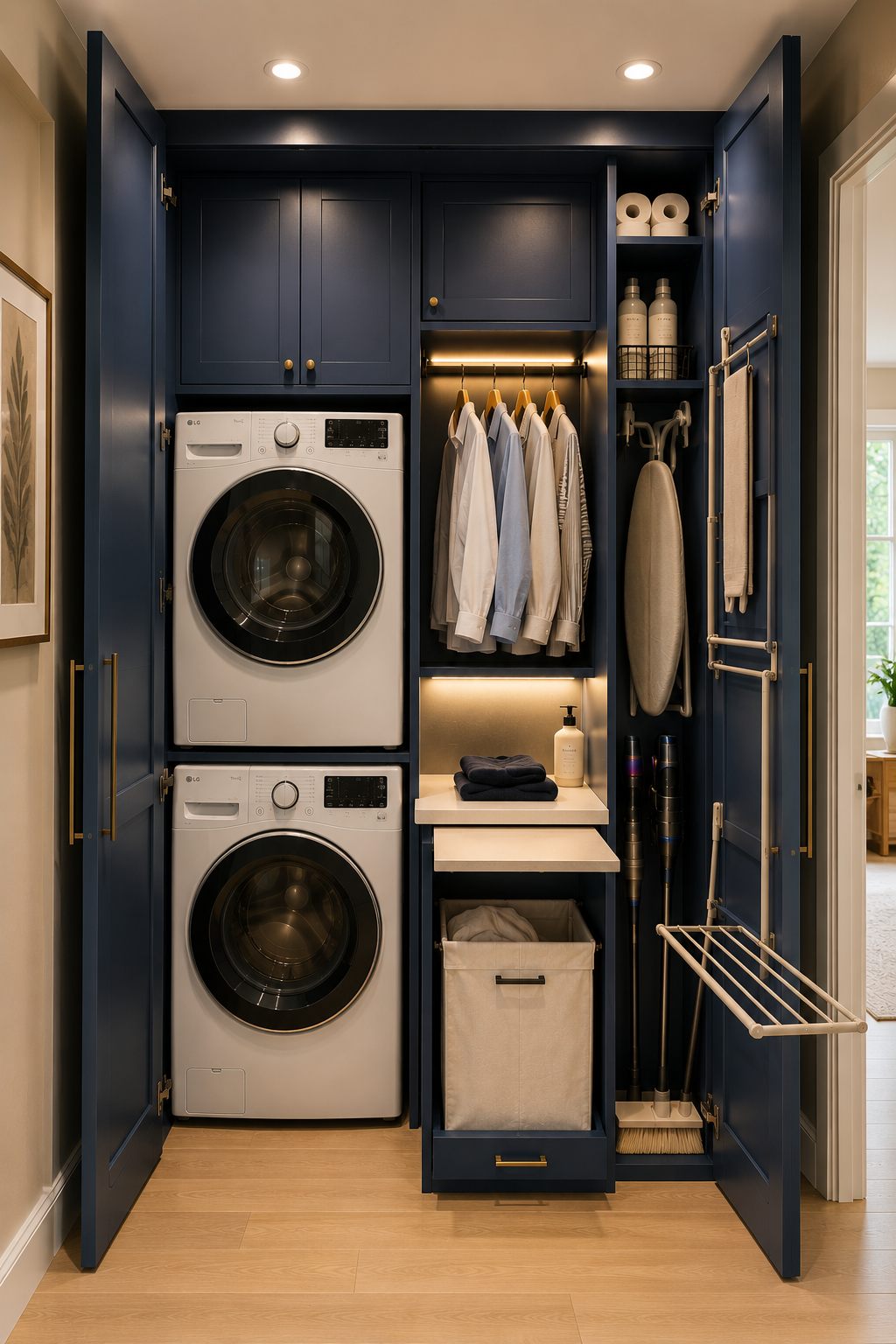
12 Tiny Laundry Room Ideas That Turn a Few Square Feet Into a Hardworking Space
A tiny laundry area has almost no tolerance for wasted space. A door that swings the wrong way, a shelf that is too deep, or a drying rack permanently occupying the floor can make an otherwise functional setup frustrating to use.
The best 12 Tiny Laundry Room Ideas treat the space more like carefully planned cabinetry than a miniature version of a full laundry room. In 2026, designers are stacking appliances, using wall-mounted drying systems, concealing supplies, building vertically, and giving narrow laundry closets genuine work surfaces instead of filling every available inch with storage, a philosophy shared with small laundry room ideas, where the same emphasis on planning around real tasks rather than decoration comes first.
The goal is simple: protect the floor, use the walls, and give every recurring laundry task a permanent place.
Start with the footprint, not the cabinetry
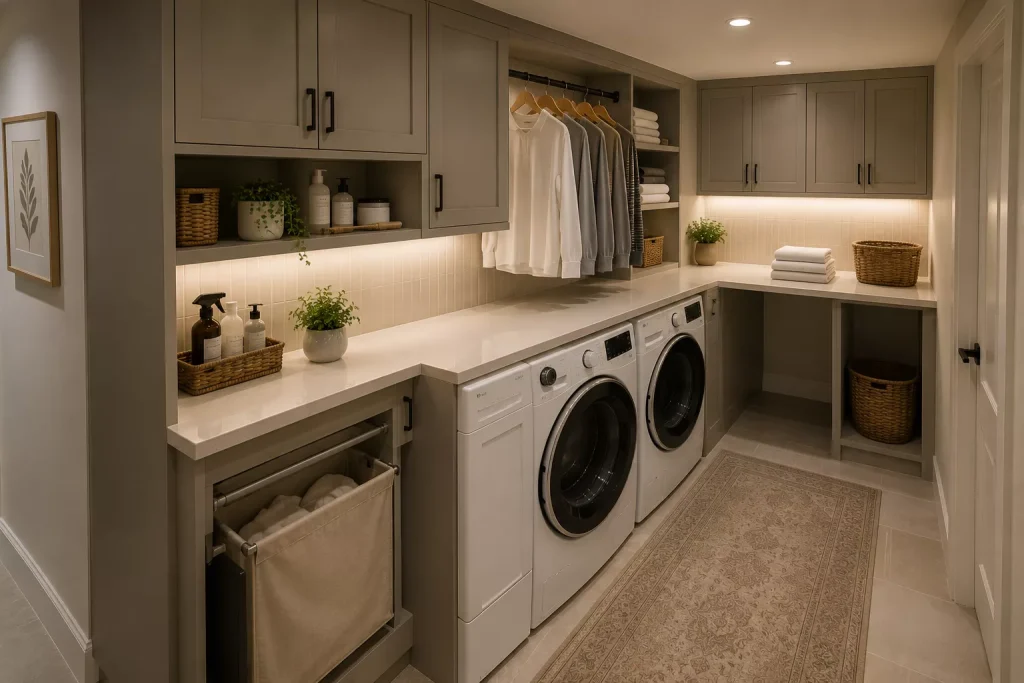
Idea 1: Design the room around the laundry sequence. Before adding shelves, decide how clothes actually move through the space. A useful sequence is: dirty laundry arrives, stains are treated, clothes enter the washer, some items move to the dryer, others need hanging space, clean laundry gets folded, then everything leaves. In a tiny room, these jobs may happen within a strip only a few feet wide, which makes placement more important than storage quantity. Keep detergent close to the washer, put hanging space near the machine rather than across the room, and if you fold laundry here, protect enough counter area to actually spread out a shirt or towel. Function gets first claim on the square footage.
Free the floor whenever the appliances allow it
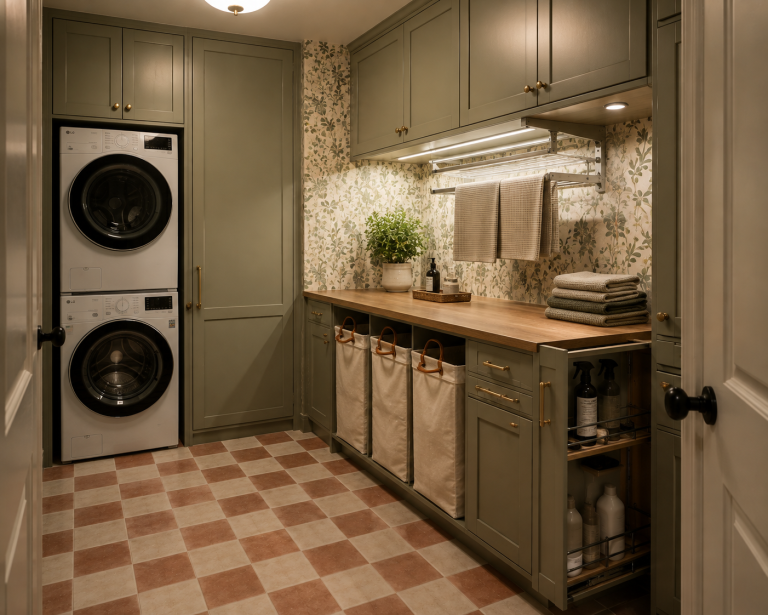
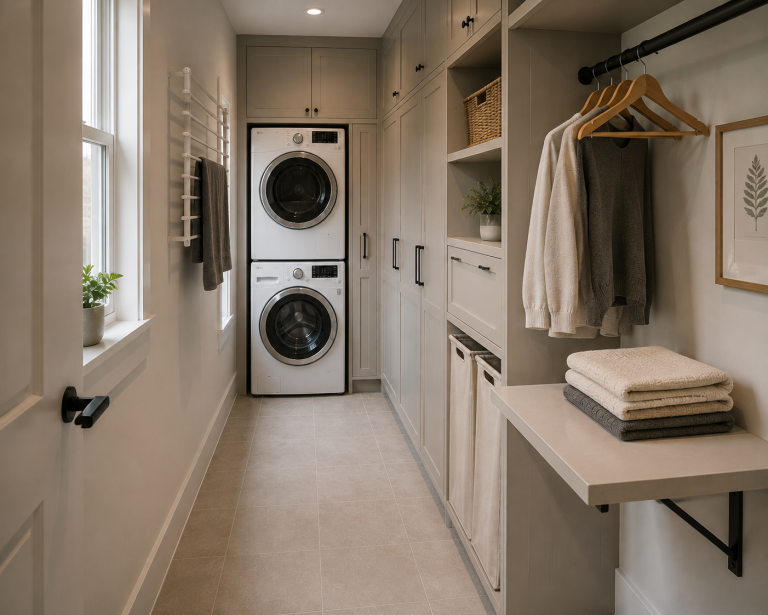
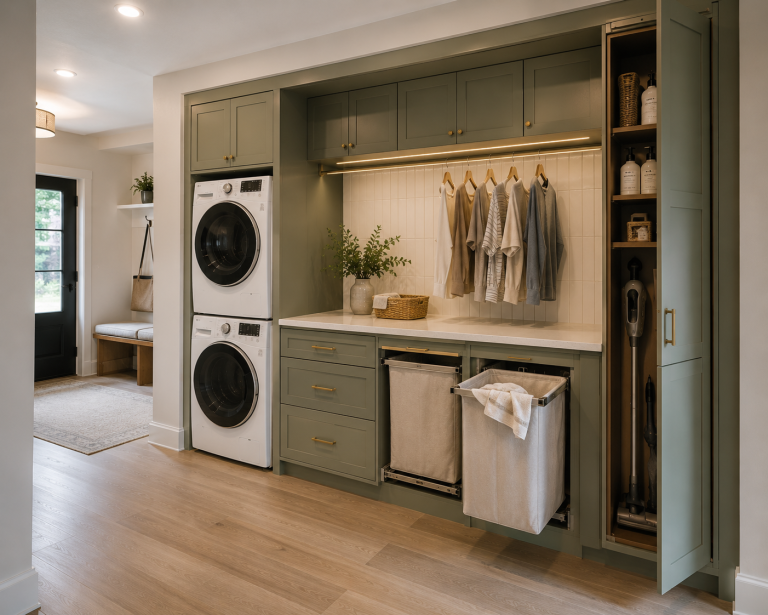
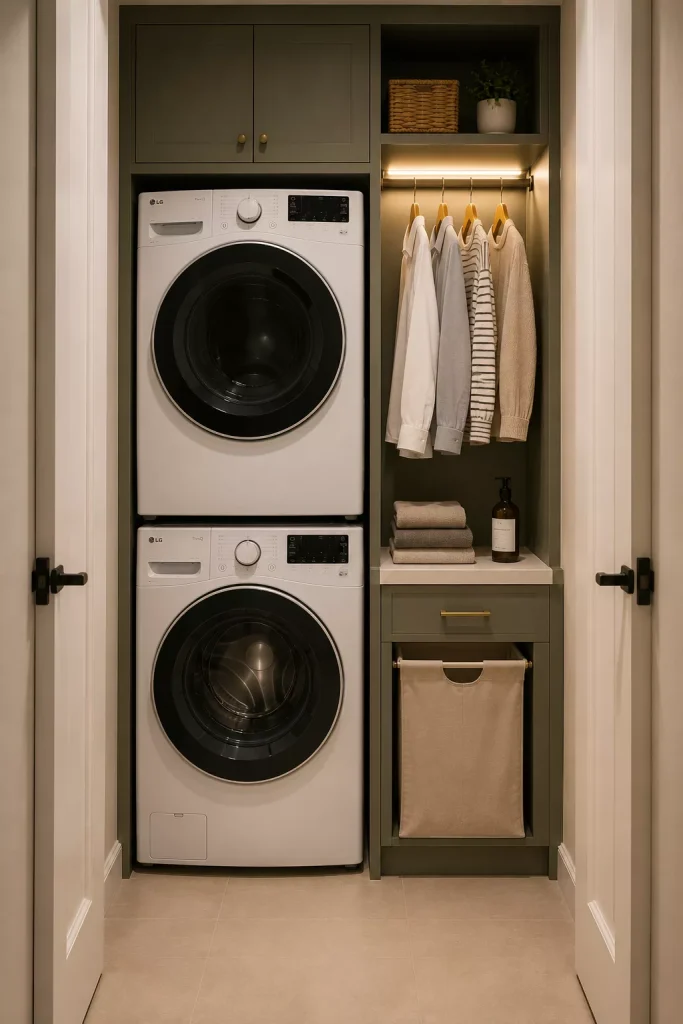
Idea 2: Stack the washer and dryer in a narrow laundry closet. Stacking can be transformative when the washer, dryer, installation conditions, and manufacturer’s instructions permit it. Two machines that previously occupied a wide wall now use one vertical footprint, and the space beside them can become a slim storage tower, folding surface, laundry sink, hanging zone, pull-out hamper, or cleaning cupboard. Do not assume every machine can simply be placed on top of another; use the correct compatible stacking arrangement and follow the manufacturer’s specifications for connections, clearances, servicing, and ventilation. Accessibility matters too, so if dryer controls become difficult for someone in the household to reach, a side-by-side arrangement may work better.
Idea 3: Consider a compact or all-in-one appliance where it genuinely fits the household. Machine size, appliance type, and capacity, drying speed, price, drainage, servicing, and household laundry volume should all influence the decision. When designing an exceptionally small laundry area from scratch, appliance type can affect the room almost as much as cabinetry does.

Use narrow storage instead of deep storage everywhere
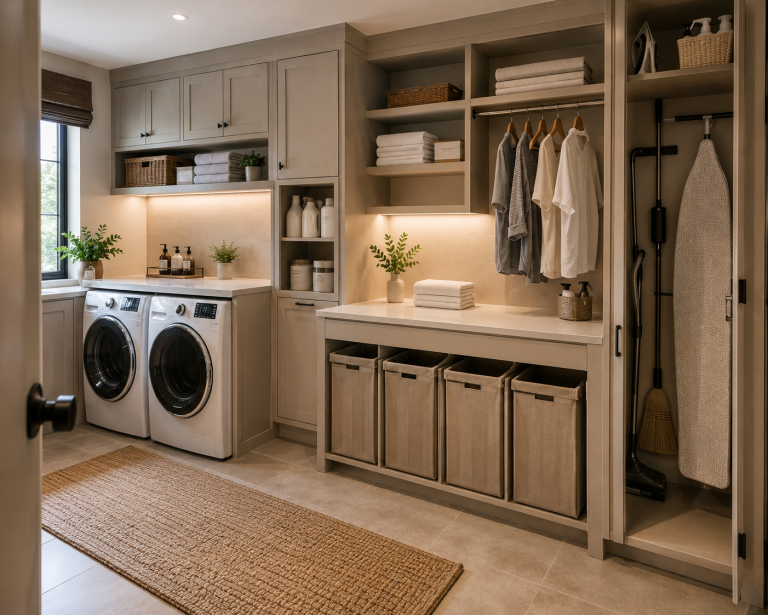
Idea 4: Build one slim full-height cabinet beside the machines. Tiny laundry rooms often have an awkward strip beside the washer or stacked appliances. Use it vertically: a narrow cabinet can hold detergent, stain products, an iron, laundry bags, vacuum attachments, a broom, a mop, a folded drying rack, and extra cloths. Plan the internal fittings around the actual objects; a cabinet intended for a broom should not contain fixed shelves every 12 inches. This kind of purposeful vertical planning is the same principle behind modern small kitchen ideas, where every inch is assigned a job rather than left as generic storage.

Give air-drying a permanent home
Idea 5: Install a fold-down or retractable drying rack. A rack that folds flat against the wall when not in use protects moisture-sensitive cabinetry or wallpaper. This is one feature worth planning before adding decorative shelving, since a drying solution used every week deserves the wall more than a display of matching jars.
Idea 6: Add a short hanging rail beneath an upper cabinet. Not everything needs a full drying rack; sometimes you just need a place for five shirts. A short rail beneath cabinetry can handle damp shirts, freshly ironed clothes, or items waiting to return to the closet. A rail can sit above a utility sink, over a folding counter, beside stacked machines, or between two cabinets. Avoid positioning it so hanging clothing blocks appliance doors or brushes against a hot appliance surface, and leave enough vertical height for garments to hang freely.

Build in a small folding surface
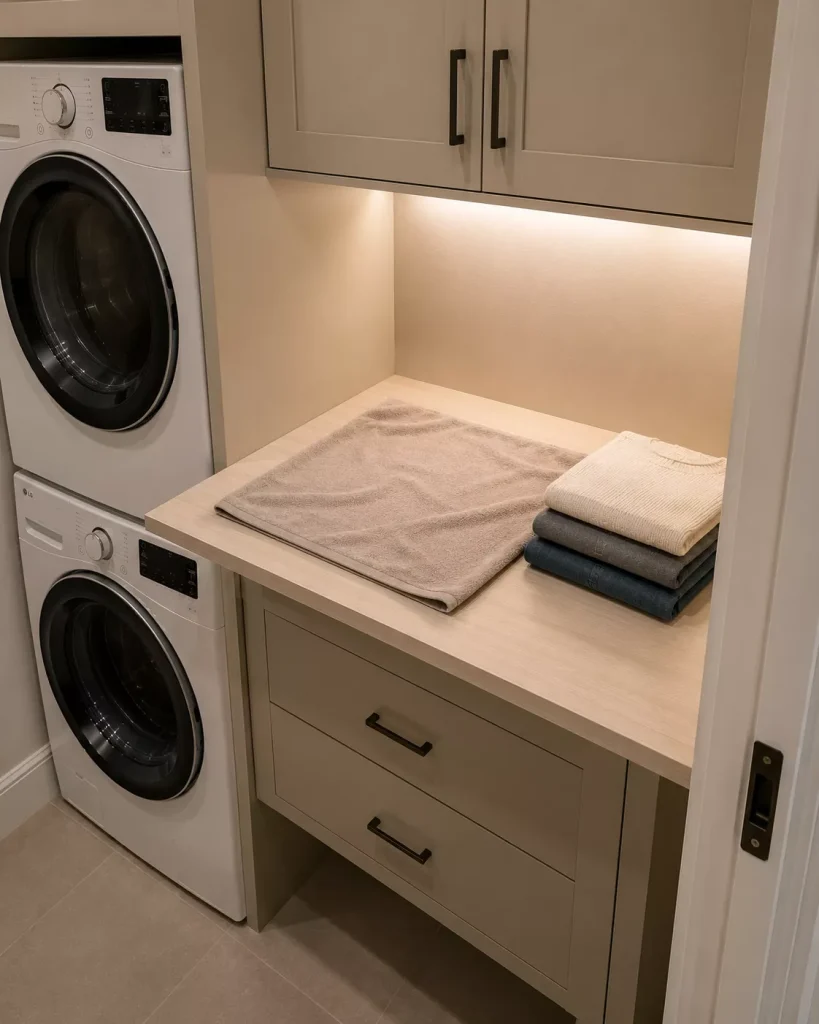
Idea 7: Fit a fold-down or slide-out counter even in a very narrow space. Even a shallow surface is enough to sort socks or smooth a shirt before it wrinkles further, and a hinged or sliding design means it does not need to occupy floor space permanently.

Design around real behavior, not an idealized system
Idea 8: Add an integrated hamper if clothes tend to pile up. If clothes accumulate here throughout the week, an integrated hamper becomes much more useful. One useful principle for tiny laundry rooms is to design around actual behavior instead of an idealized organization system. Do not build four sorting compartments because a photograph looked tidy if your family will still drop everything into one basket.
Treat the door as part of the floor plan
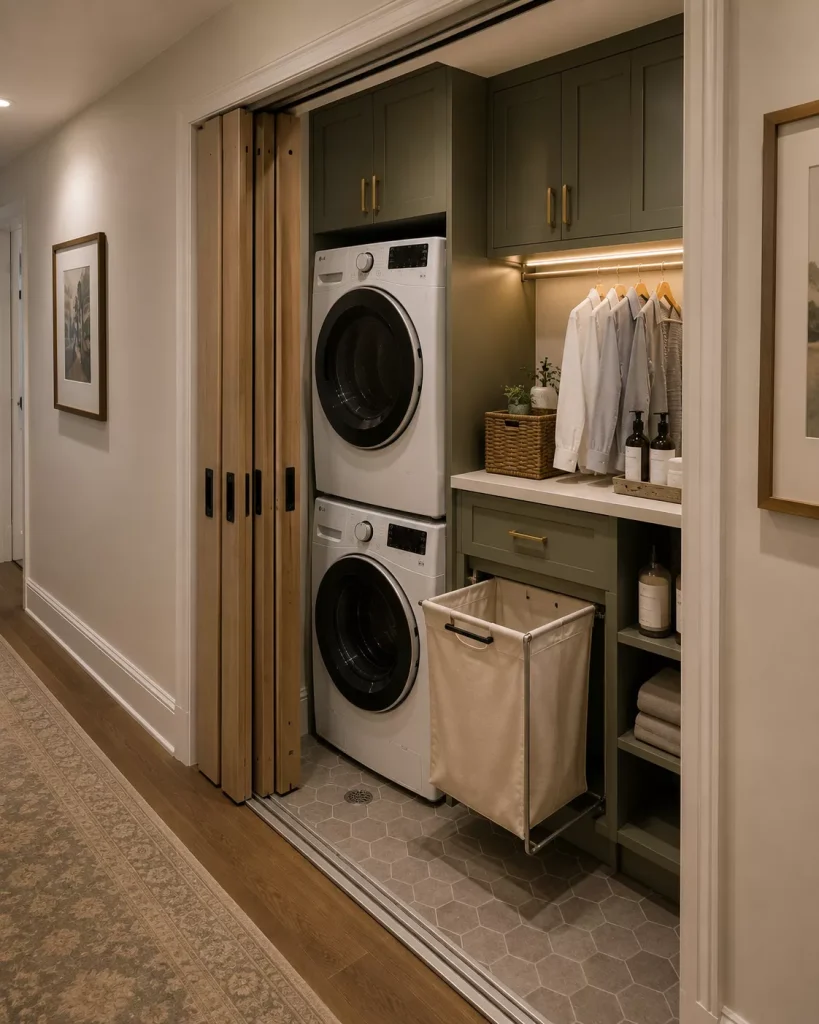
Idea 9: Change a space-hungry door arrangement where appropriate. In a true laundry closet, the door can consume almost as much usable area as the appliances. Depending on the architecture and what is appropriate for the opening, alternatives such as bifold, pocket, or sliding doors may reduce interference with circulation. But concealment should never compromise appliance requirements; the laundry enclosure still needs to comply with clearance, ventilation, and servicing needs.
Keep the surfaces clear for actual work
Idea 10: Resist decorating the folding surface. Decoration should never take away the work area. A clear folding shelf is more valuable than a vase permanently occupying half of it, echoing the same restraint that makes small living room decor ideas feel calm rather than cluttered.

Light the narrowest surfaces properly
Idea 11: Add task lighting where your body blocks the ceiling light. Tiny laundry closets frequently have adequate brightness on paper but poor working light in practice. Stand in front of the washer and your body may cast a shadow over the counter, and upper cabinetry can make this worse. Use compact task lighting beneath shelves or cabinets, then pair it with strong general illumination, the same layered approach covered in kitchen island lighting tips. For decorative lighting, keep projection in mind; a dramatic pendant may look wonderful but become irritating in a narrow space if you hit it while lifting a laundry basket. Flush mounts and compact sconces are usually the safer choice.
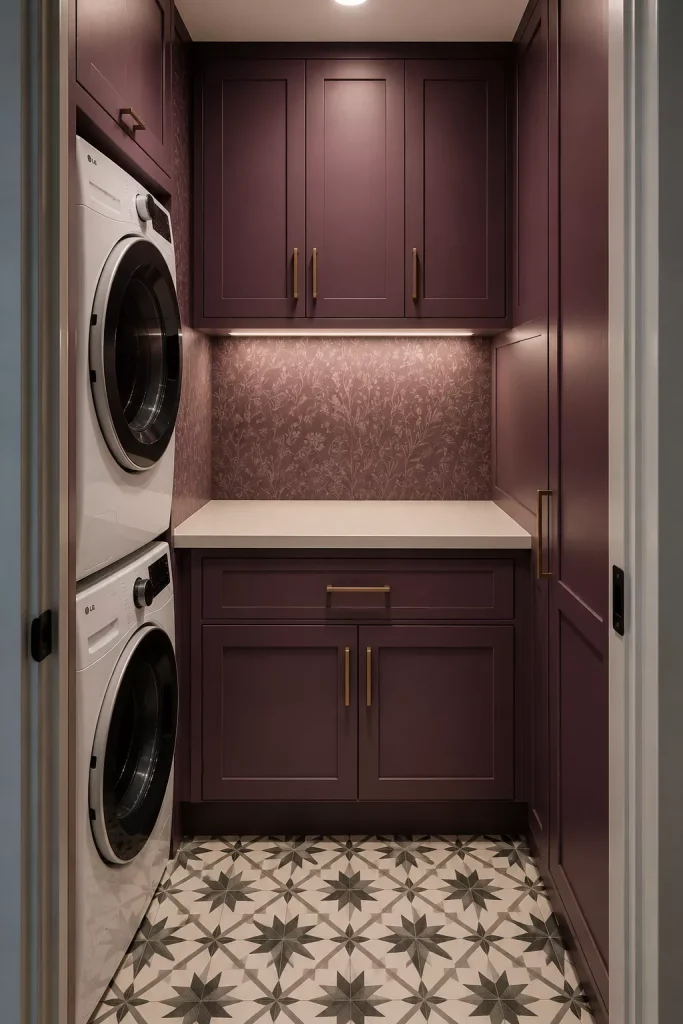
Idea 12: Choose one confident finish instead of several small decorative touches. Use one confident cabinet color, wallpaper, tile, or flooring treatment rather than adding decorative objects to worktops. Closed cabinetry hides visually messy supplies, while good lighting and one intentional finish can make even a laundry closet feel designed.
Are ventless dryers good for tiny laundry spaces?
They can be particularly useful where installing an exterior vent is difficult. Heat-pump dryers are ventless, and compact models are available for tight spaces, including stacked installations. They still have electrical, drainage, capacity, maintenance, and installation considerations, so choose based on the actual household and space.
Make the walls do what the floor cannot. If circulation still feels tight after these changes, walk through the room and identify exactly what is blocking movement. The specific basket, drying rack, detergent crate, or ironing board causing the obstruction will usually reveal the next storage decision you actually need to make.