10 Small Laundry Room Ideas That Save Valuable Floor Space Without Sacrificing Function
Floor space disappears quickly in a laundry room. A basket sits in front of the dryer, a freestanding rack blocks the doorway, and suddenly a room that was already narrow becomes frustrating to use.
These 10 small laundry room ideas that save valuable floor space solve that problem by moving functions upward, underneath counters, inside cabinetry, or onto the walls — the same approach we used to rescue floor space in our 10 Small Laundry Room Ideas guide. Current 2026 laundry-room design is strongly focused on stacked appliances, vertical storage, wall-mounted drying, concealed hampers, and work surfaces that make compact rooms genuinely functional.
You do not need more floor. You need the floor you already have to stop doing jobs the walls could handle better.
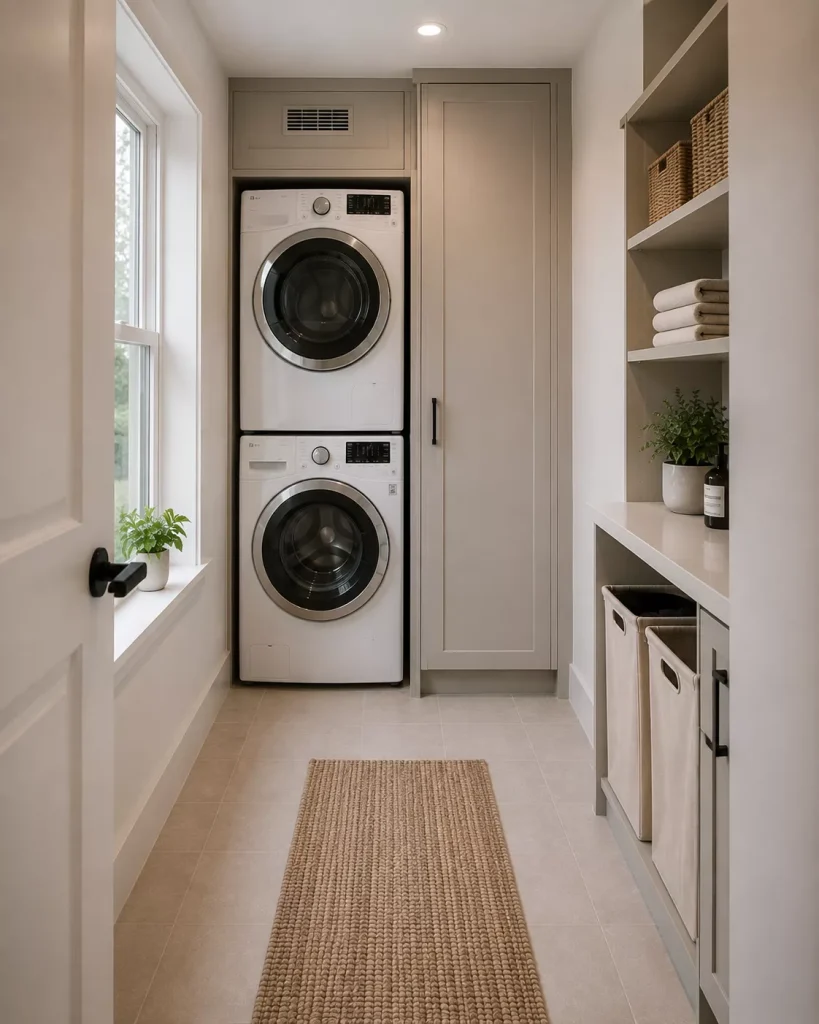
Idea 1: Stack the appliances and reclaim the footprint
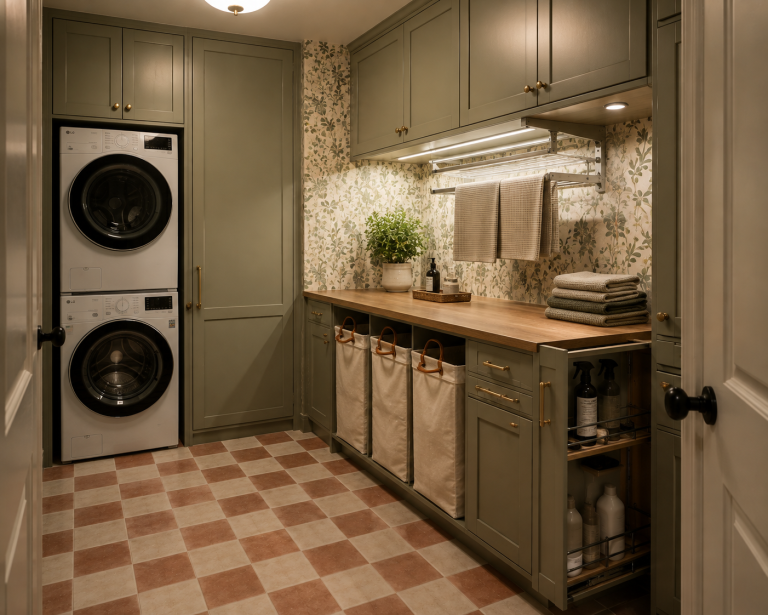
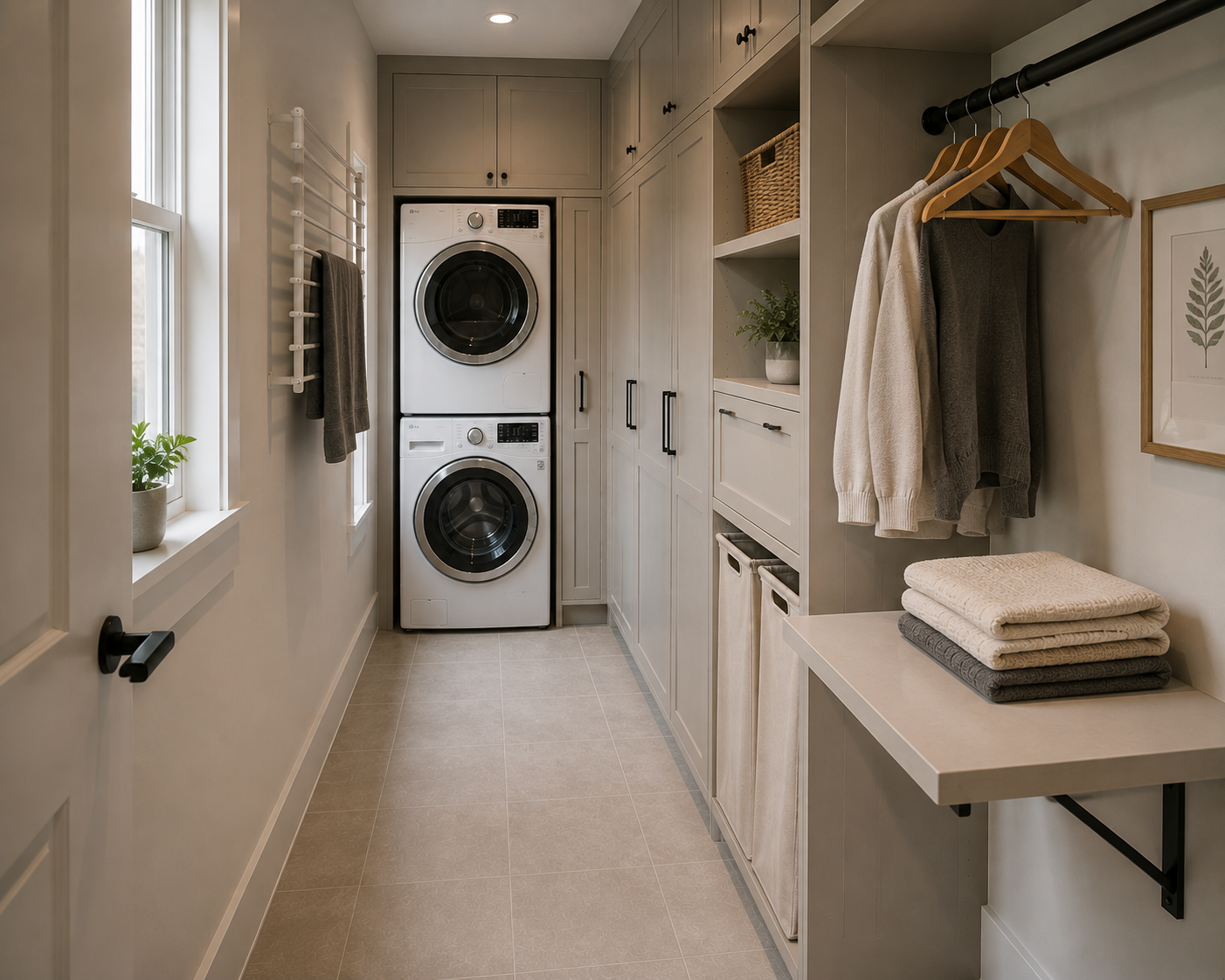
Stacking the washer and dryer is the most direct way to give a small room its floor back. Always use appliances approved for stacking and follow manufacturer requirements for compatible kits, clearances, ventilation, utilities, drainage, and service access. Consider reach, too — a side-by-side arrangement may remain better if upper controls become difficult for some household members to use.
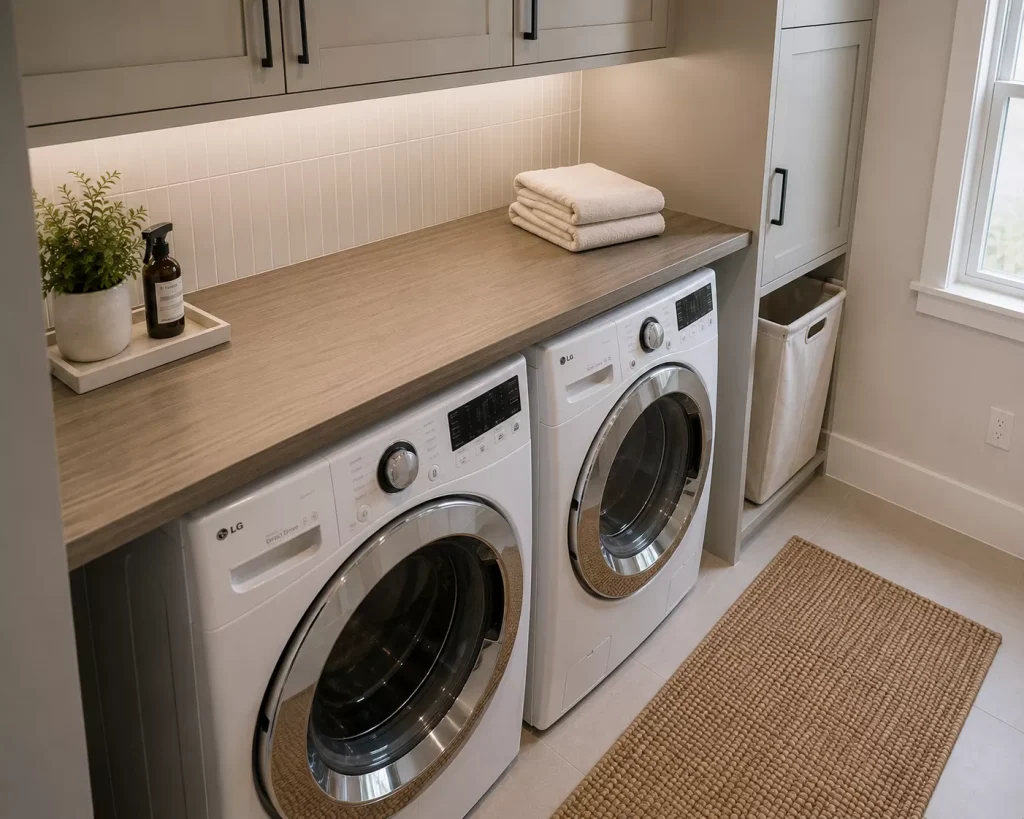
Idea 2: Turn side-by-side machines into one folding station
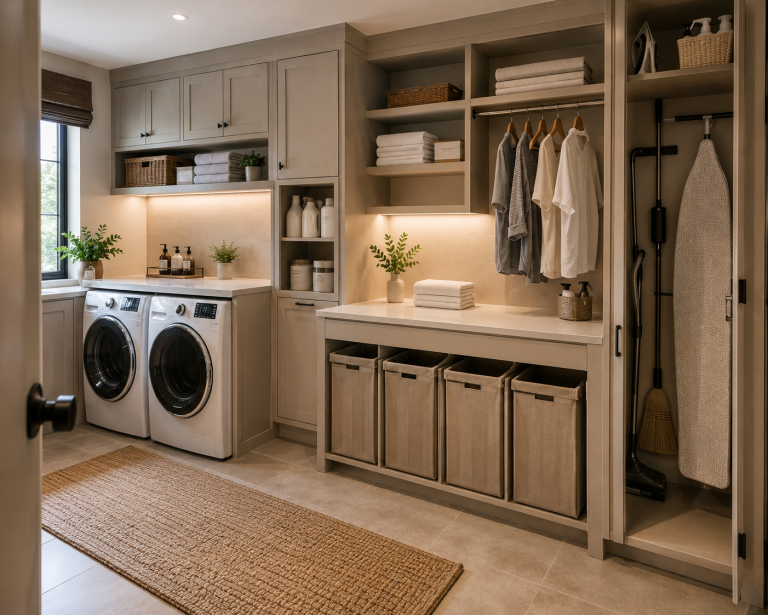
If stacking is not practical, use the appliance footprint twice. A properly supported counter over compatible front-load machines creates a work surface without requiring additional floor furniture. Good surface options include sealed wood, quartz, solid surface, durable laminate, and appropriate stone. Keep the counter mostly clear — a decorative tray or two is fine, but it should still function as a folding station.
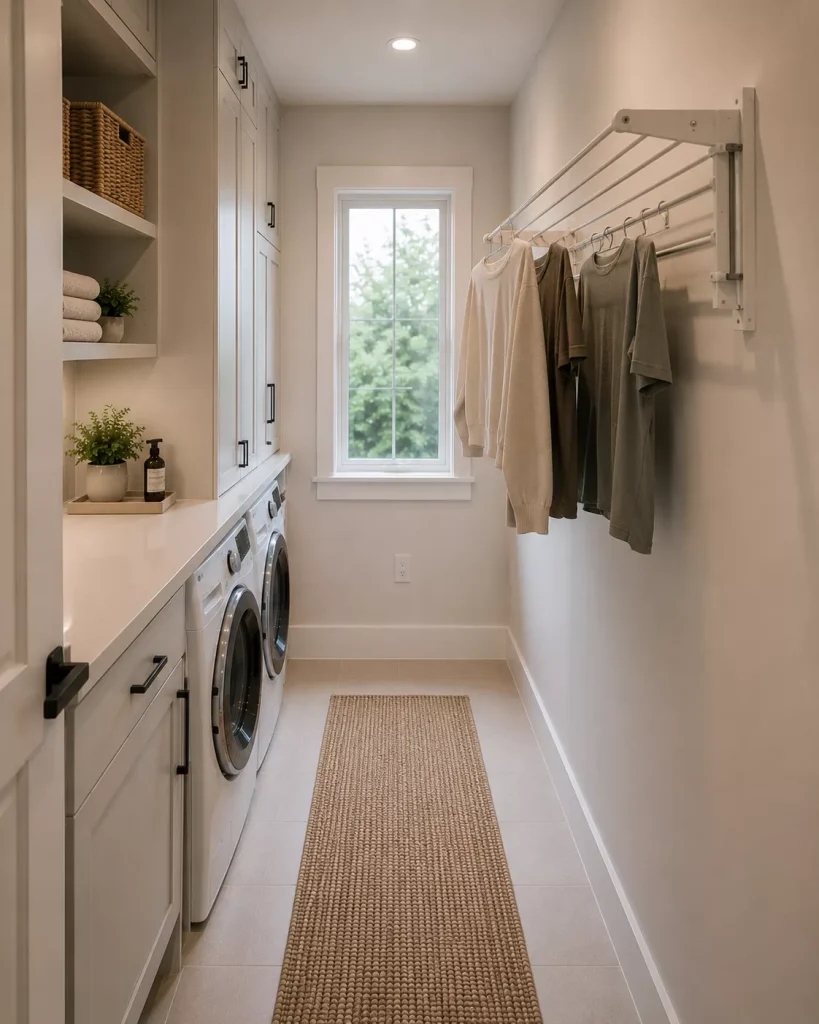
Idea 3: Move drying off the floor entirely
A floor-standing drying rack is one of the biggest space thieves in a small laundry room. Wall-mounted, fold-down, or retractable drying options preserve substantially more circulation room. Remember that wet laundry introduces moisture, so allow enough air circulation and keep damp clothing away from surfaces that may be damaged by repeated dampness. Give a good drying rack wall space before decorative shelving every time — one solves a recurring household problem, the other holds objects.
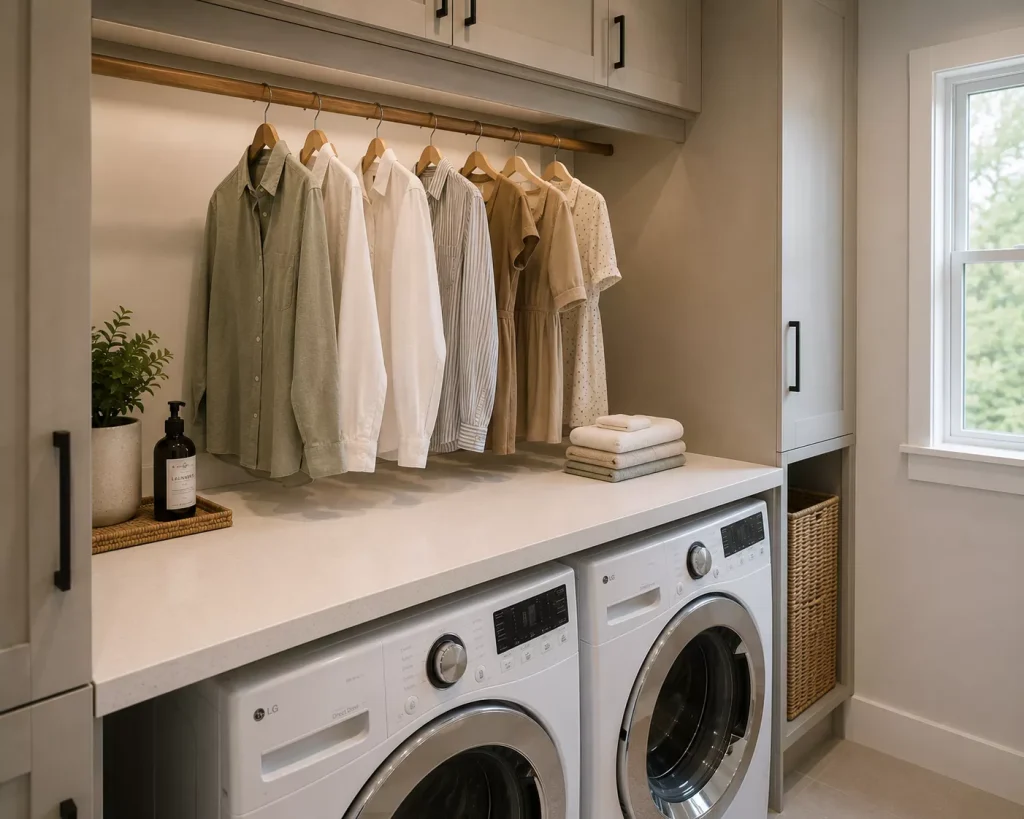
Idea 4: Add a hanging rail above a counter or appliances
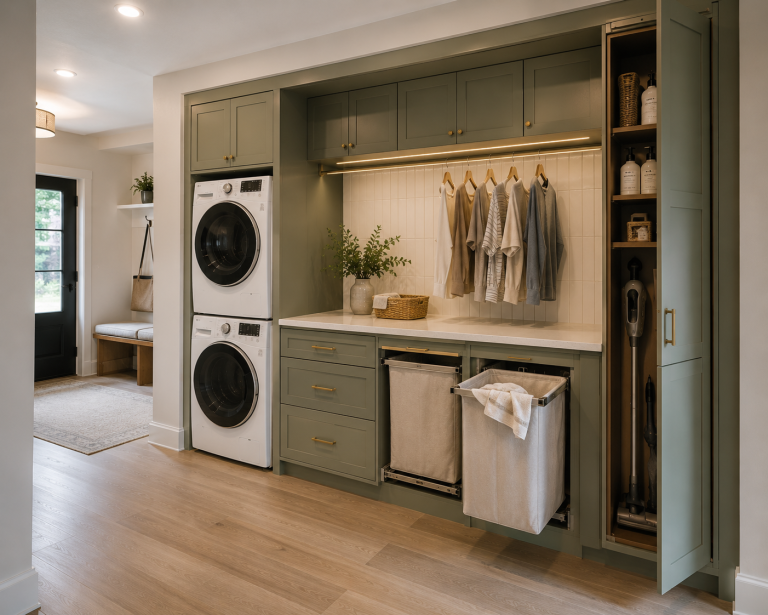
Sometimes you do not need a full drying rack — you need somewhere to put shirts, dresses, or garments straight from the washer. A short rail can use otherwise wasted airspace. Install it below upper cabinetry, between two tall cabinets, above a folding counter, or above a utility sink where appropriate. This gives wet or freshly ironed clothes somewhere to live without placing a garment rack on the floor.
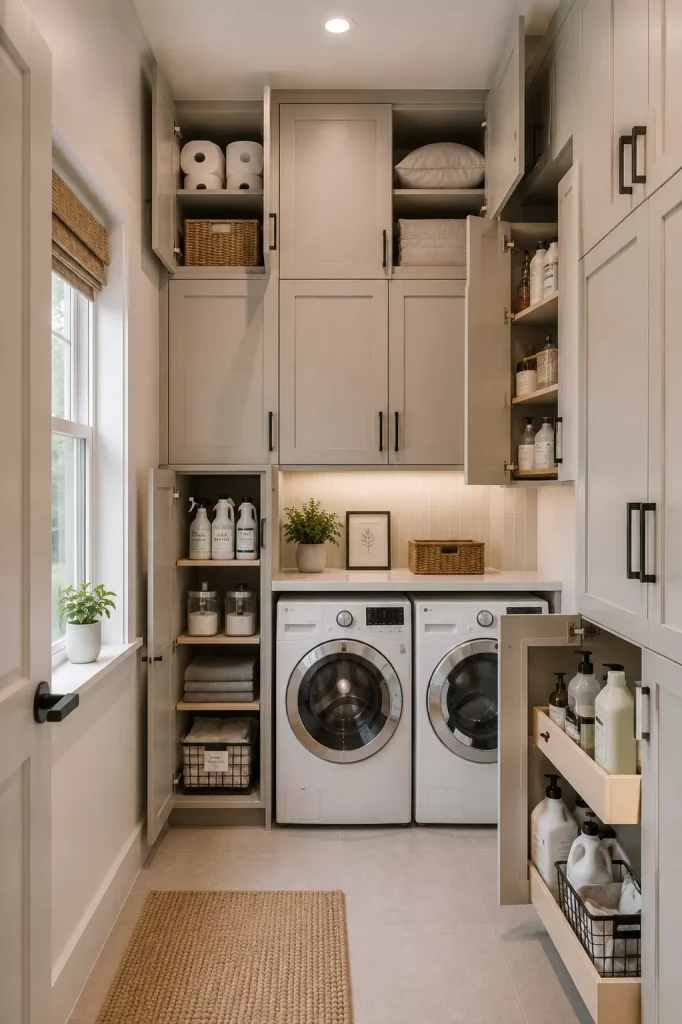
Idea 5: Think in cubic space, not square footage
Maximize ceiling height rather than floor area. Keep daily supplies — detergent, stain remover, laundry bags, dryer products, cleaning cloths — lower and within easy reach, and move bulk refills, spare linens, and occasional items upward. Closed cabinets usually work better than open shelving for most of this, since real laundry supplies arrive in different bottle shapes, colors, and sizes that can make a narrow space feel visually noisy. This same vertical-storage discipline is what made 12 Tiny Laundry Room Ideas work in an even smaller footprint.
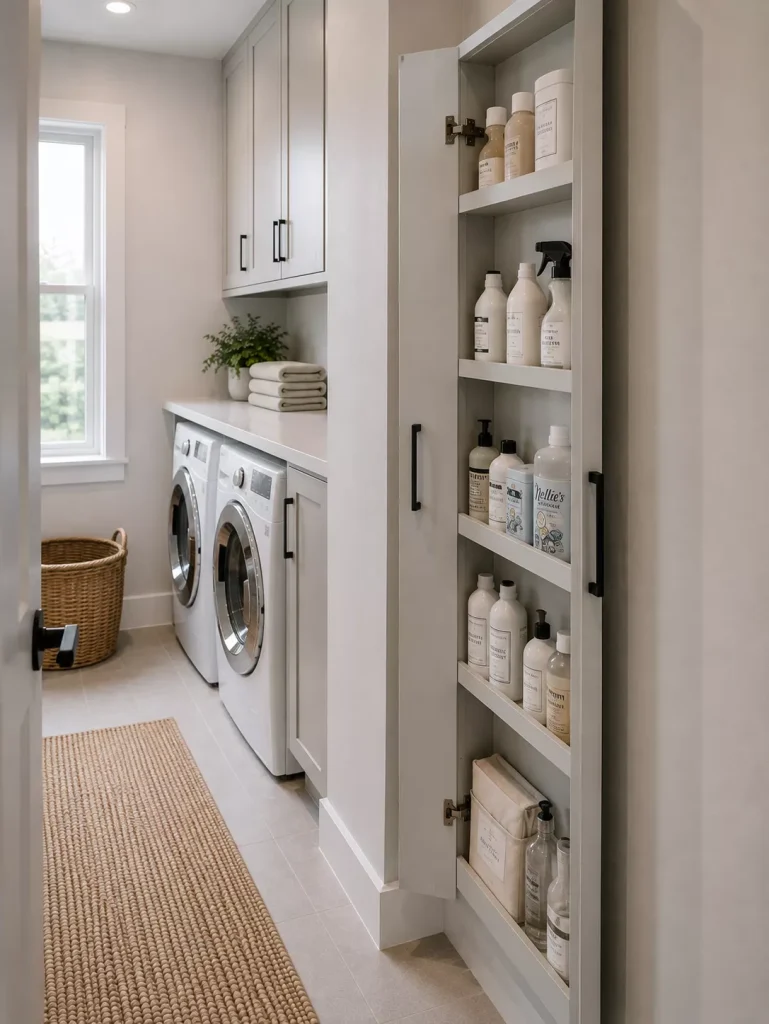
Idea 6: Use shallow, single-row storage instead of deep cupboards
A shallow cabinet where everything is visible in one row is far easier to find things in than a deep cupboard where three rows disappear behind each other. This is a good example of how floor-saving ideas should work: instead of adding another object to the floor, you turn otherwise awkward architecture into storage.

Idea 7: Use a fold-down ironing or folding board
A full-size ironing board eats floor space it only occasionally needs. If you iron only occasionally, a compact board stored vertically, or a fold-down board built into a cabinet, may make more sense than dedicating cabinetry to a permanent built-in. Design around your actual routine, not an imaginary laundry routine borrowed from a showroom — the same floor-space thinking we applied in 10 Laundry Room Ideas Small Space.
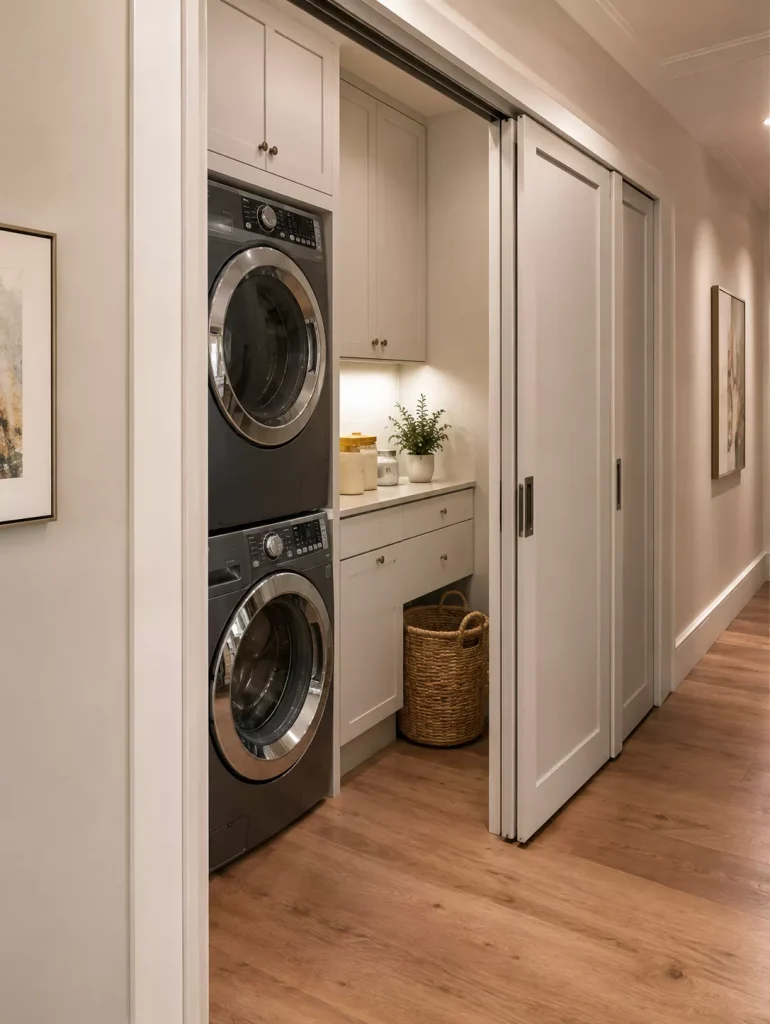
Idea 8: Choose sliding, folding, or pocket-style access where a swing door steals usable area
The room door itself may be occupying valuable square footage. A conventional inward-swinging door can conflict with a washer, hamper, storage cabinet, or drying rack. Depending on the architecture, a pocket, sliding, bifold, or outward-opening solution may free that area — particularly useful for hallway laundry closets, laundry niches, bathroom laundry zones, and very narrow utility rooms. Just make sure appliance doors can still fully open and that lint filters, detergent drawers, and hookups stay accessible.
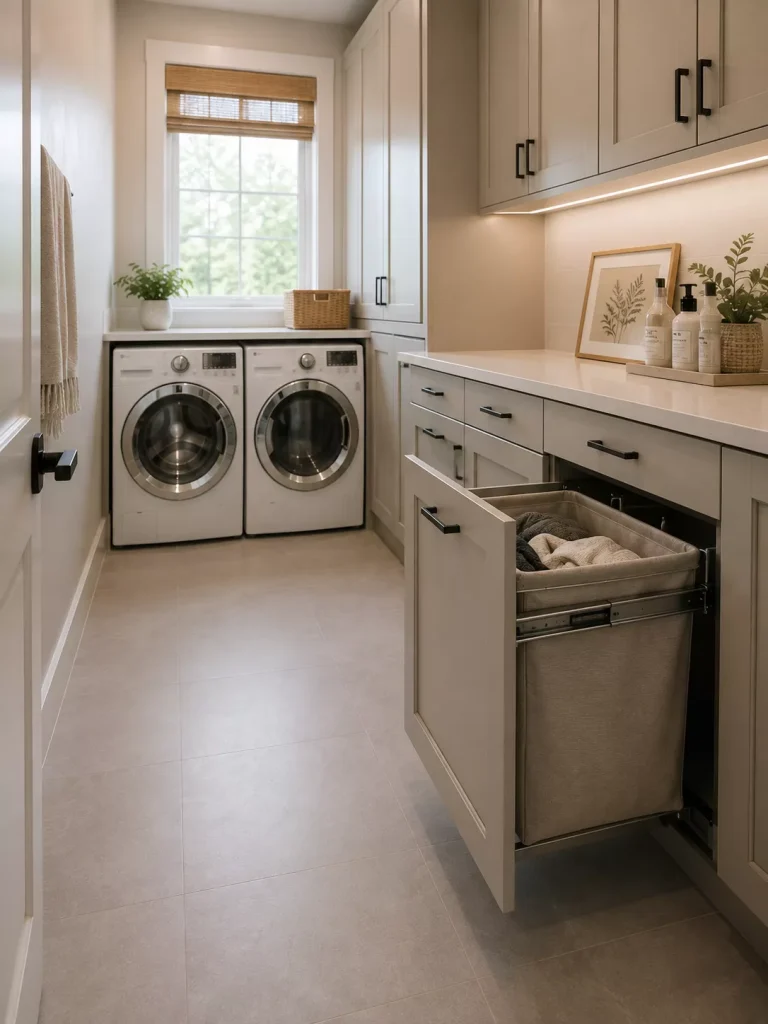
Idea 9: Give hampers a dedicated, off-floor home
Loose laundry baskets are one of the most common reasons a small floor feels cluttered. A pull-out hamper bay, an under-counter bin, or a wall-mounted bag frees the exact spot where baskets tend to collect. The goal is the same restraint that shapes a good small room anywhere in the house — the kind of intentional emptiness we favor in 12 Minimalist Living Room Ideas.
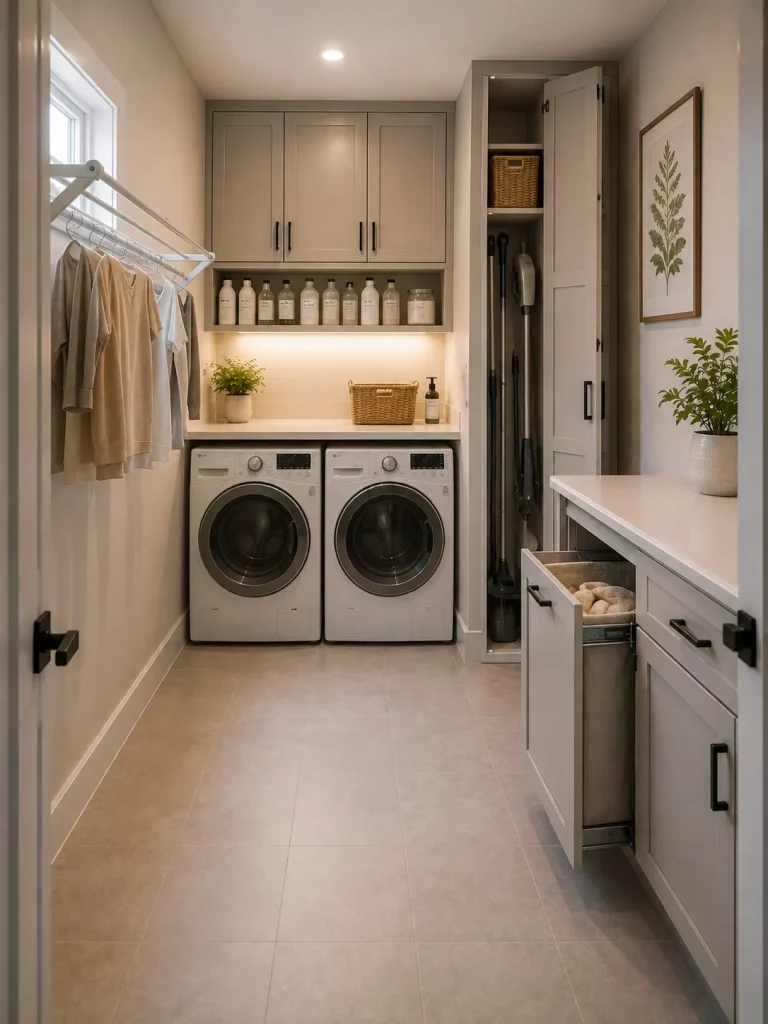
Idea 10: Audit the floor before adding anything new
Remove every movable item from the floor except the appliances, then identify what you removed. If it is mostly laundry baskets, create an under-counter bay. If it is the drying rack, move drying onto a wall. If it is cleaning equipment, dedicate a tall narrow cupboard. If it is detergent, add shallow closed storage above the washer. Solve the biggest offender first.
What to avoid when trying to save floor space
Skip stacking storage on the floor before using the walls — wall cabinetry or shelves provide storage without another footprint. Skip installing cabinets everywhere and losing the work surface, since folding still needs somewhere to happen. Skip using a large freestanding drying rack as the default. Skip building storage without measuring the baskets and appliances first — an inch can decide whether doors open properly. And never block access to appliance connections or service areas.
A small laundry room that finally feels bigger
Saving floor space is rarely about removing function — it is about relocating it. Move drying to the wall, folding to a counter over the machines, and storage into shallow, well-organized cabinetry, and even the tightest laundry room starts to feel like it has room to breathe.