24 Fall Front Porch Ideas That Work for Halloween and Thanksgiving
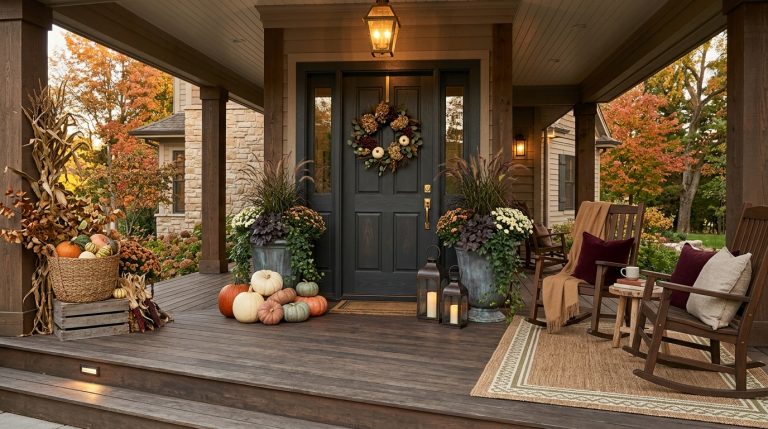
The easiest way to decorate a porch from September through Thanksgiving is not to create three completely different displays. Build one strong autumn foundation first, then treat Halloween as a temporary layer you can remove in early November.
That means pumpkins, mums, foliage, lanterns, planters, wreaths, baskets, and warm textiles do most of the long-term work. Bats, ghosts, skeletons, jack-o’-lanterns, and darker lighting can come in for October, then disappear when you want the porch to feel warmer and more Thanksgiving-ready.
This transitional approach is practical too. HGTV specifically recommends using shared fall materials for both Halloween and Thanksgiving to reduce cost and waste, while Homes & Gardens notes that pumpkins, foliage, lanterns, and other outdoor fall pieces can carry from early autumn through Thanksgiving.
Here are 24 realistic front porch ideas for fall and Halloween that can transition easily into Thanksgiving.
Build a fall foundation before adding Halloween

Idea 1: Start with pumpkins, plants, and lanterns
Before you buy anything spooky, build the porch from pieces that already work throughout autumn.
- Three to seven pumpkins
- One or two substantial LINK_PLANTER
- A seasonal wreath
- One or two lanterns
- A fall doormat or outdoor rug
HGTV’s current 2026 fall porch guidance still relies heavily on pumpkins, mums, lanterns, wreaths, and vertically layered displays because those pieces work across the entire season rather than one holiday.
Once that foundation feels complete, Halloween becomes an accent rather than a complete redesign.

Idea 2: Use foliage that still works in November
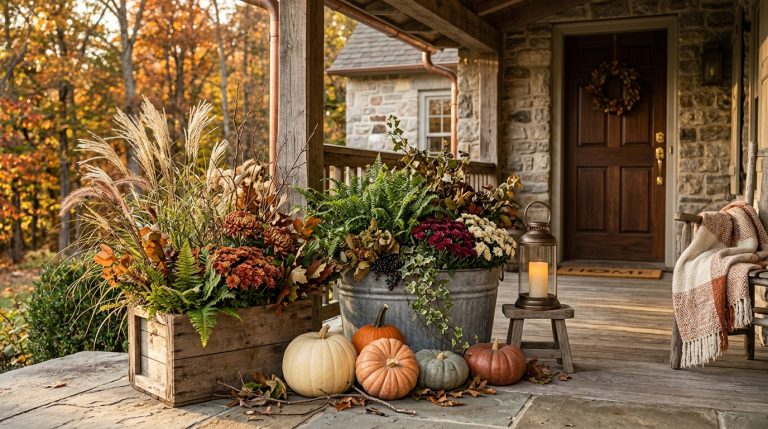
Choose plants and foliage that do not scream Halloween. Try mums, ornamental grasses, ferns, hydrangeas, coral bells, branches, or other plants suited to your local conditions.
Joanna and Chip Gaines’ 2026 fall porch has been highlighted specifically for using layered foliage and perennial-style planting that continues looking appropriate well after Halloween.
That is a smarter investment than building the entire porch around temporary spooky props.
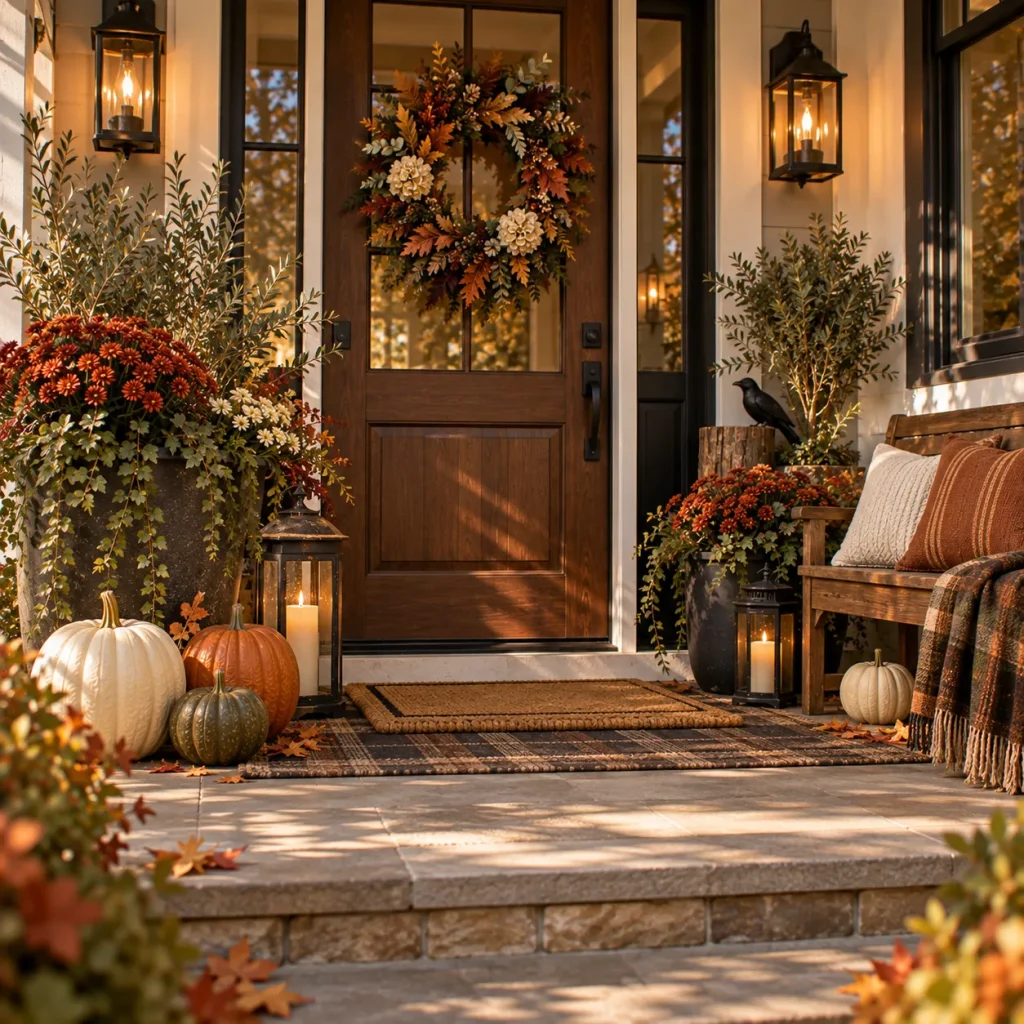
Idea 3: Choose one autumn palette for both holidays
Pick a color scheme that can carry the porch from October into late November.
- Rust + cream + olive
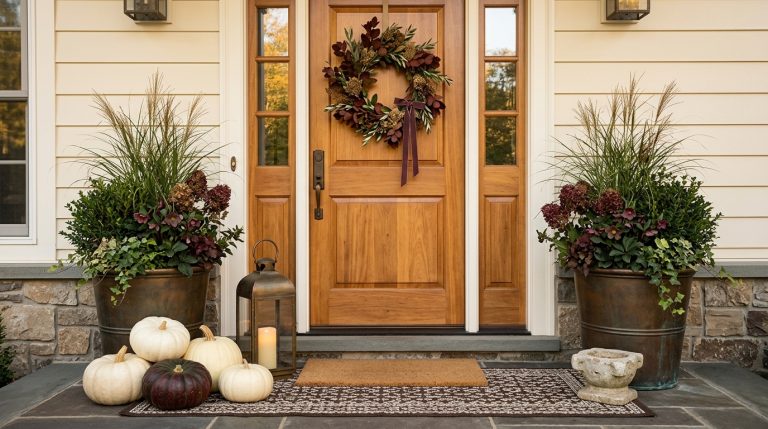
- Oxblood + brown + warm white
- Orange + burgundy + dark green
- Cream + charcoal + muted orange
Halloween can add black temporarily. Thanksgiving can replace black with warmer brown, brass, wheat, or golden foliage.
The shared underlying palette keeps the porch from looking completely different every few weeks.
Make pumpkins do more than one job

Idea 4: Keep most pumpkins uncarved
Carved pumpkins are Halloween-specific and deteriorate much faster than intact ones. Keep the majority whole. Use different sizes and colors to create a substantial display, then carve only one or two close to Halloween.
After October 31, remove the jack-o’-lanterns while the remaining pumpkins continue working through Thanksgiving.
Homes & Gardens specifically identifies pumpkins as one of the easiest decorations to use across fall, Halloween, and Thanksgiving.
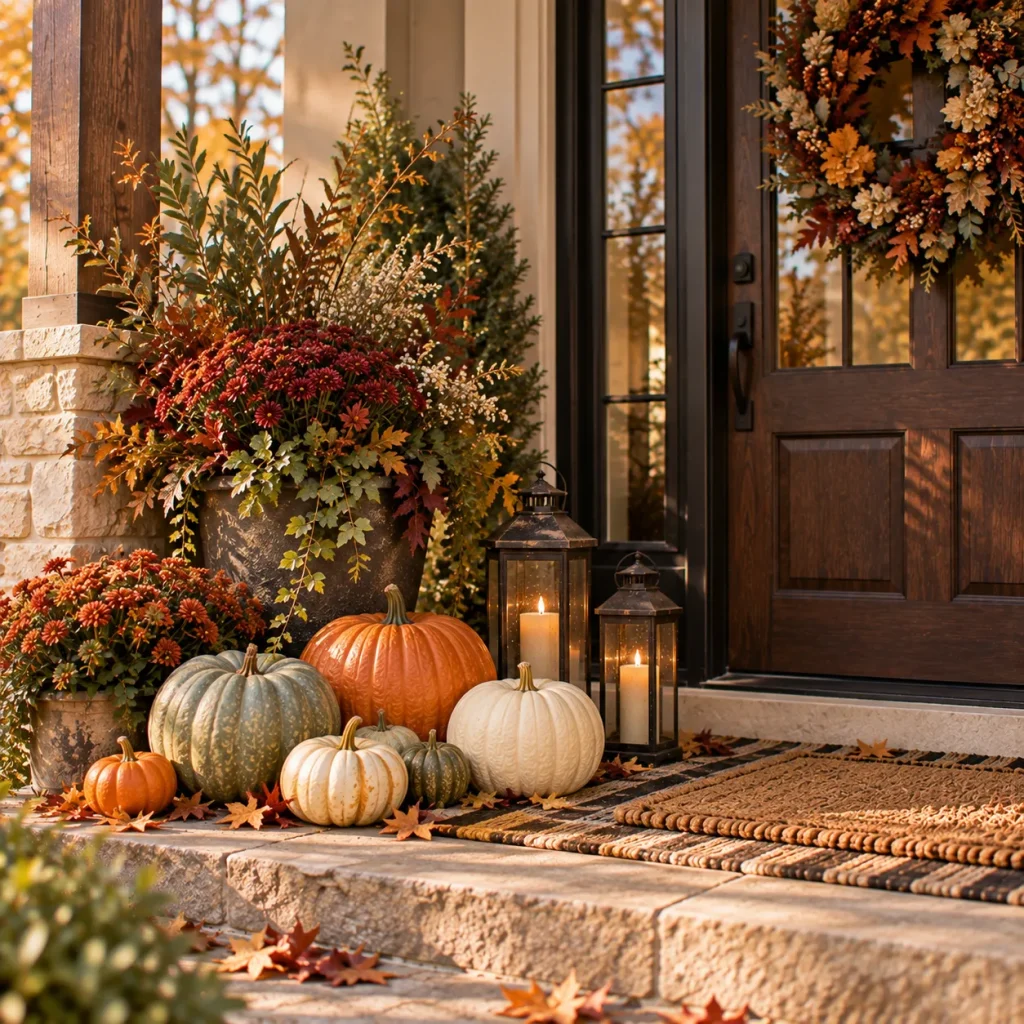
Idea 5: Mix orange pumpkins with cream and green
A mixed palette transitions better than a porch made entirely from bright orange.
- Orange for recognizable fall color
- Cream for softness
- Pale green or blue-green for contrast
This creates enough variety for October but still feels calm enough for a Thanksgiving entrance.
Recent 2026 fall entrance styling is also favoring integrated palettes of cream, muted orange, green, and seasonal planting rather than overt holiday themes. For more ideas built around this exact combination, see this mums and pumpkins collection.
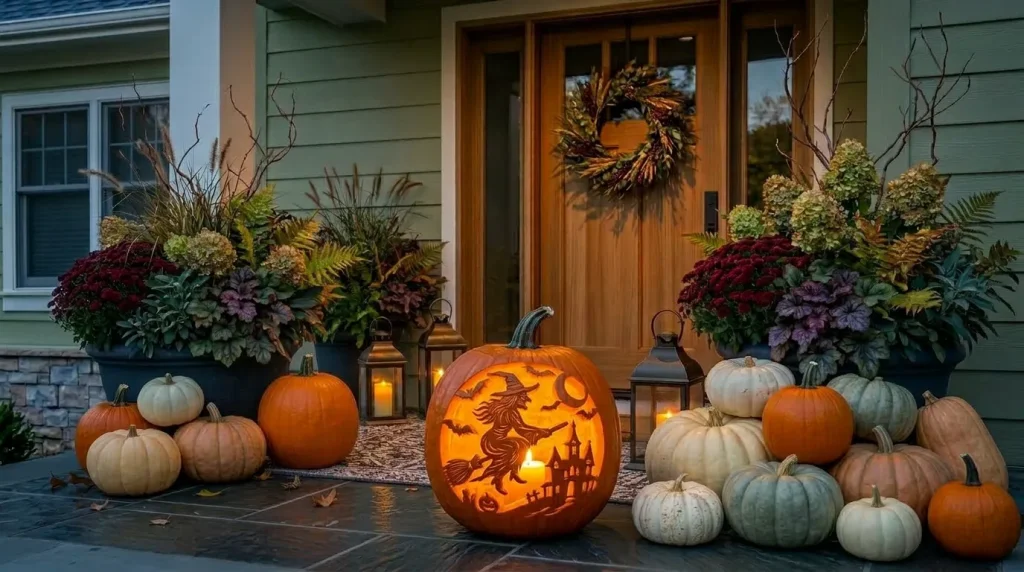
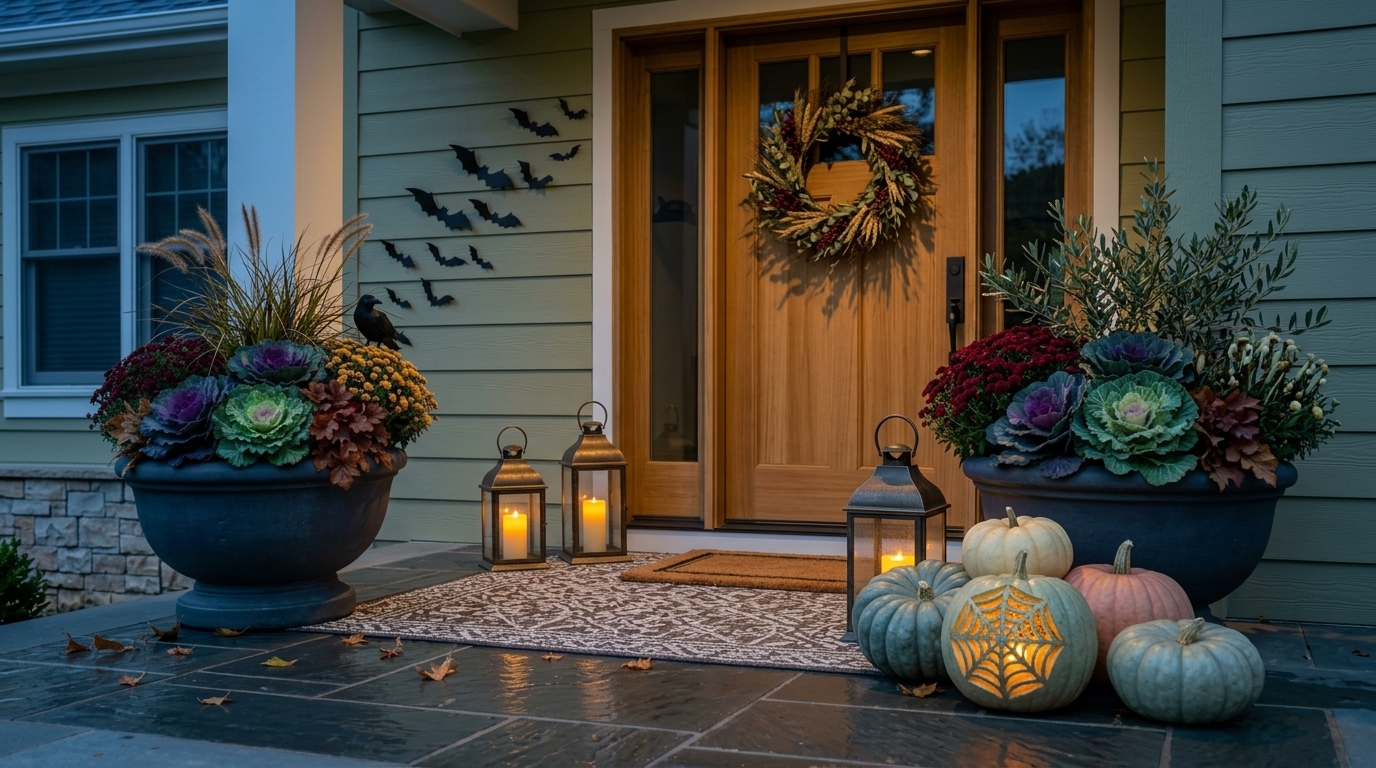
Idea 6: Turn one pumpkin into the Halloween feature
Instead of carving every pumpkin, make one the focal point. Create one dramatic jack-o’-lantern and surround it with intact pumpkins.
That gives Halloween a clear identity without sacrificing the entire display.
When November arrives, remove that one carved pumpkin and the arrangement immediately becomes regular fall decor again.
Add Halloween in removable layers
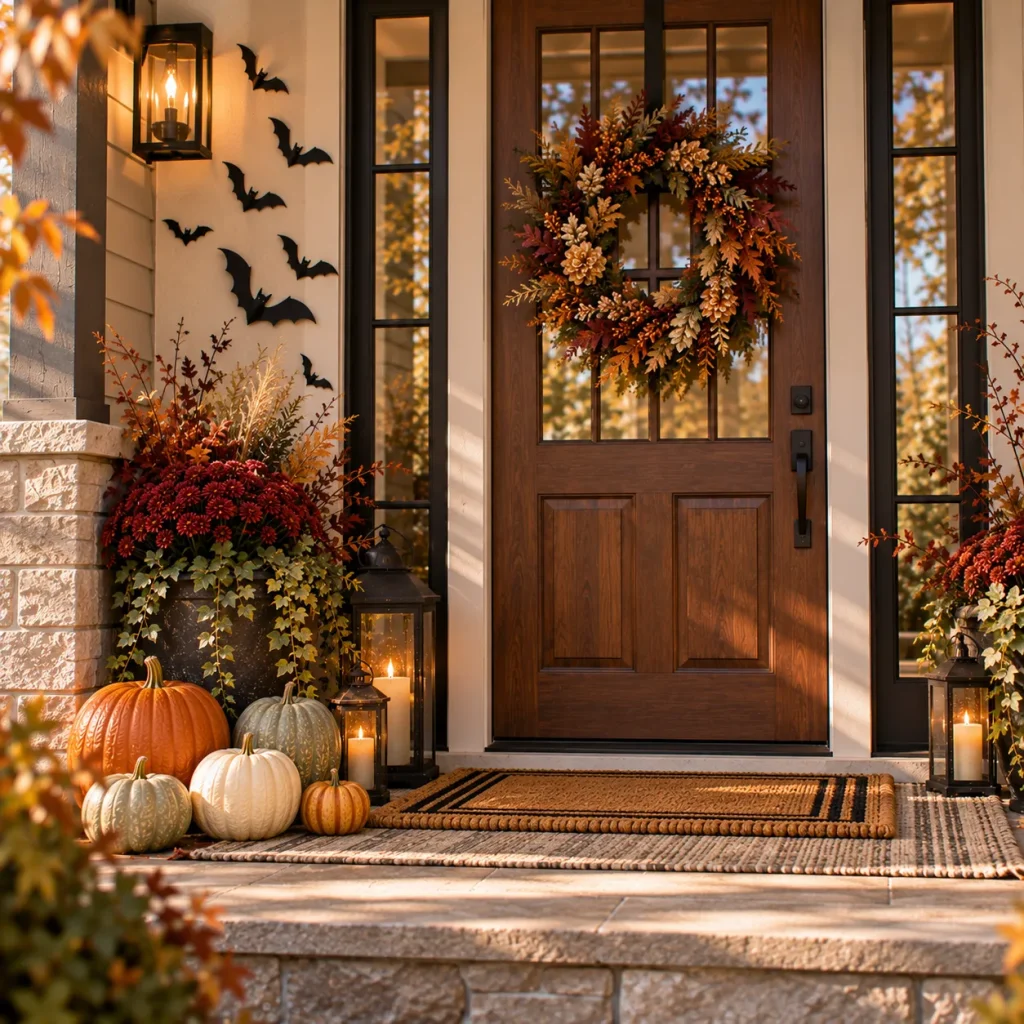
Idea 7: Use removable bats around the front door
Bats are one of the easiest temporary Halloween additions because they require very little storage. Arrange them as though they are moving in one direction across the door or wall.
HGTV specifically recommends keeping decorative bats clear of hinges and testing the door several times to make sure they do not interfere with normal use.
After Halloween, remove them and store them flat. The pumpkins, lanterns, and planters can stay exactly where they are.
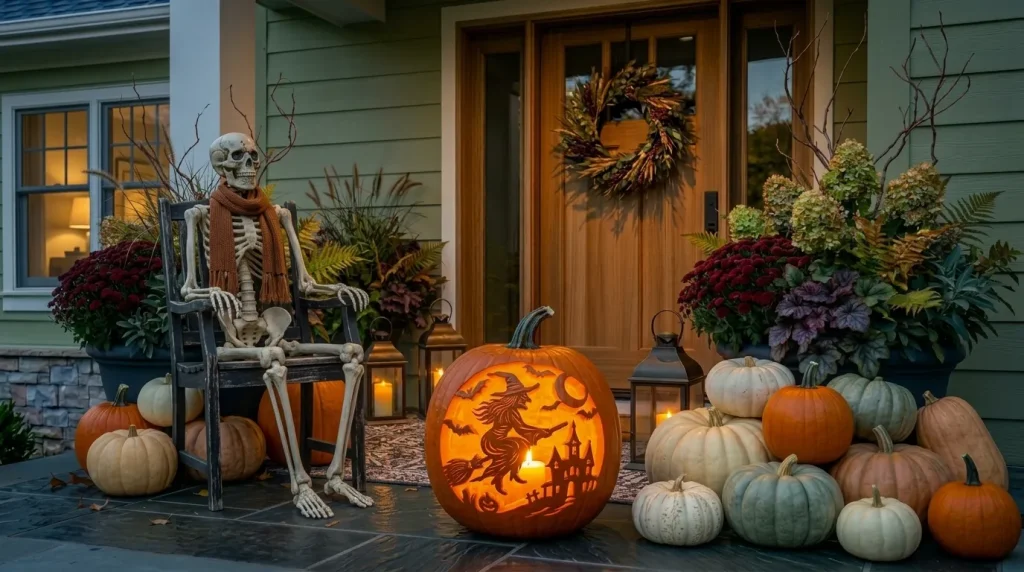
Idea 8: Add one reusable ghost or skeleton
You do not need a graveyard. One well-placed reusable Halloween figure can create enough personality. A skeleton sitting in a porch chair, a pair of simple wood ghosts near the steps, or one hanging ghost can work.
HGTV’s 2026 Halloween porch guide continues to feature DIY ghosts and other reusable outdoor pieces as practical ways to make the entrance feel spooky.
Remove the figure on November 1. No other part of the porch needs to change.
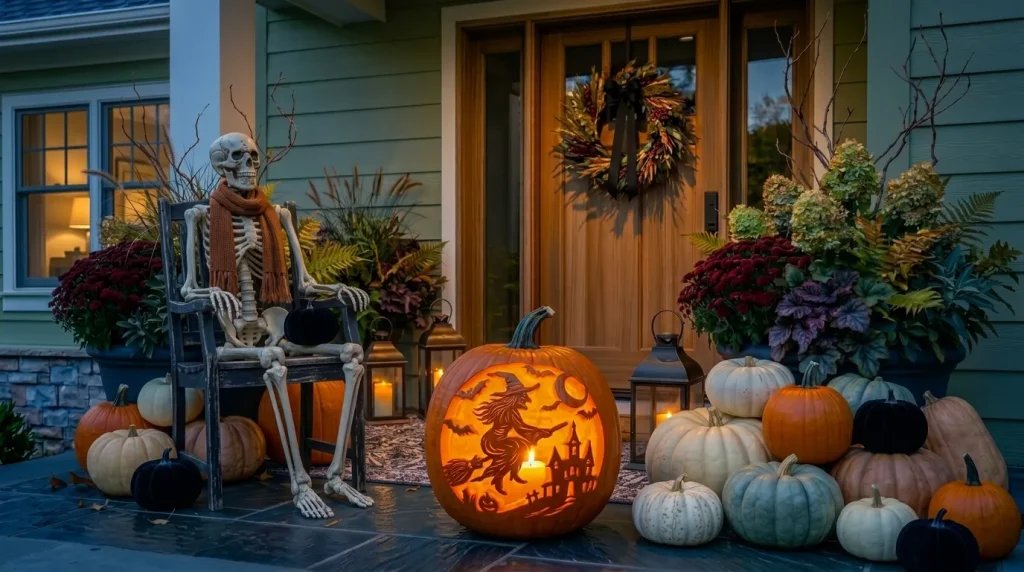
Idea 9: Use black accessories temporarily
Black is an easy bridge between ordinary fall decor and Halloween. Introduce it through:
- One black lantern
- A black wreath ribbon
- A charcoal planter
- A few black faux pumpkins
- A dark outdoor cushion
For Halloween, emphasize those darker notes. For Thanksgiving, soften them with cream, brown, wheat, or warm foliage.
This is far easier than buying an entirely separate orange-and-black porch collection.
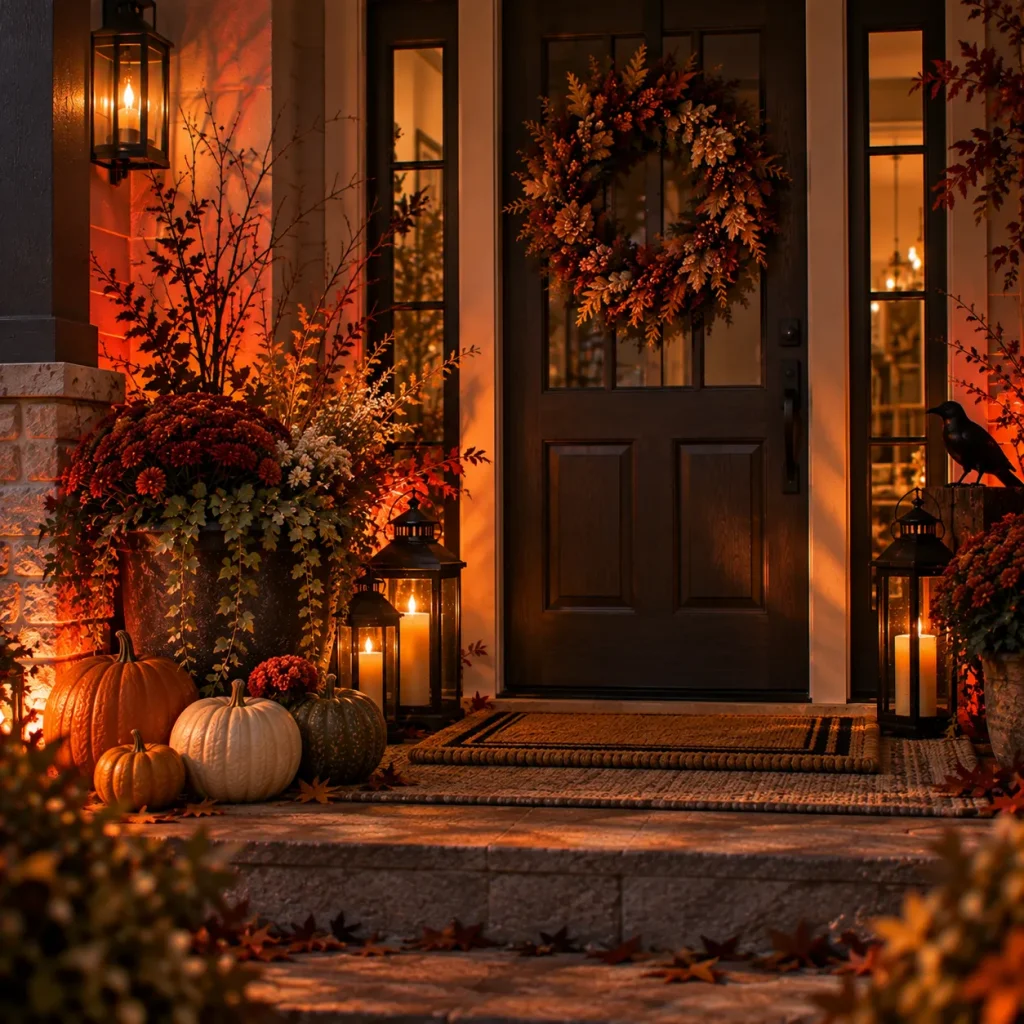
Idea 10: Add moody lighting only for Halloween
Keep your core porch lighting warm and welcoming. Then introduce one temporary Halloween layer such as dim amber, deep red-orange, or subtly spooky accent lighting.
Current Halloween entrance coverage emphasizes solar lanterns, faux flickering candles, and moody lighting as effective ways to change the atmosphere at night without relying only on physical decorations.
Once Halloween ends, return to the normal warm lantern glow.
Use the door as the easiest holiday-changing surface

Idea 11: Start with a reusable front-door basket
A door basket is particularly useful when several holidays happen close together. HGTV specifically recommends a slim basket or straw tote because the same base can be refreshed for fall, Thanksgiving, and winter.
For October, fill it with:
- Dark foliage
- Branches
- Small faux bats
- Burgundy leaves
For Thanksgiving, remove the spooky pieces and add:
- Wheat
- Sunflowers
- Seed heads
- Fall leaves
One basket replaces multiple wreaths.

Idea 12: Use a general fall wreath and change only the ribbon
A neutral autumn wreath can stay up for months. Choose grapevine, olive foliage, dried grasses, wheat, or muted leaves.
For Halloween, add a black or oxblood ribbon. For Thanksgiving, replace it with brown plaid, rust, velvet, or no ribbon at all.
Country Living’s latest fall wreath coverage includes both traditional foliage-focused options and darker Halloween variations, which makes this kind of seasonal adaptation especially easy.

Idea 13: Keep the front-door decor more fall than Halloween
If you want the porch to transition easily, avoid making the door itself completely Halloween-specific. Let the door carry the enduring fall layer. Put the more theatrical Halloween elements around it.
Then on November 1, the entry already looks appropriate for Thanksgiving once the temporary pieces are removed.
Make lanterns carry the whole season
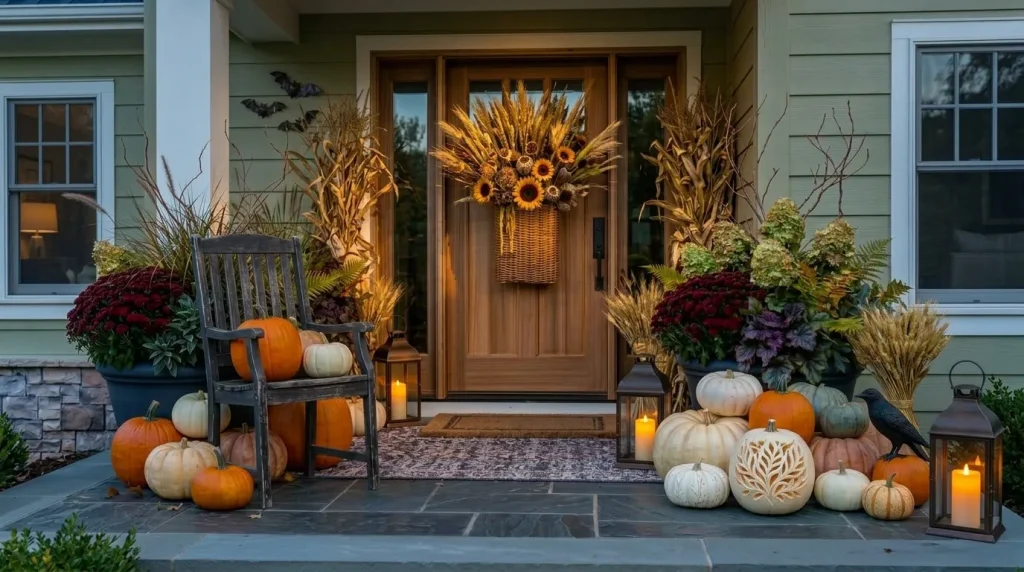
Idea 14: Use flameless candles inside lanterns
Lanterns are one of the best crossover pieces because they feel appropriate from September through Thanksgiving and even into winter. Use warm battery-operated candles.
For Halloween, place black pumpkins or spooky props nearby. For Thanksgiving, pair the same lantern with gourds, foliage, or a basket.
NFPA recommends battery-operated candles for seasonal decorating and warns that dried cornstalks and similar materials ignite easily around open flames.

Idea 15: Group lanterns with pumpkins at different heights
Use one large lantern and one smaller one beside a pumpkin grouping. HGTV recommends combining lanterns of varying sizes with mini pumpkins for a warmer evening fall display.
Halloween version: Add a carved pumpkin.
Thanksgiving version: Replace it with an intact cream pumpkin or basket of gourds.
The lighting stays untouched.
Build a porch that transitions through plants and texture

Idea 16: Use mums as a seasonal constant
Mums work equally well for early fall, Halloween, and Thanksgiving. For the easiest transition, choose colors that are not overly tied to Halloween.
- Cream
- Burgundy
- Rust
- Deep red
Place them in planters, baskets, crocks, or galvanized containers. Then let the holiday-specific decorations change around them.
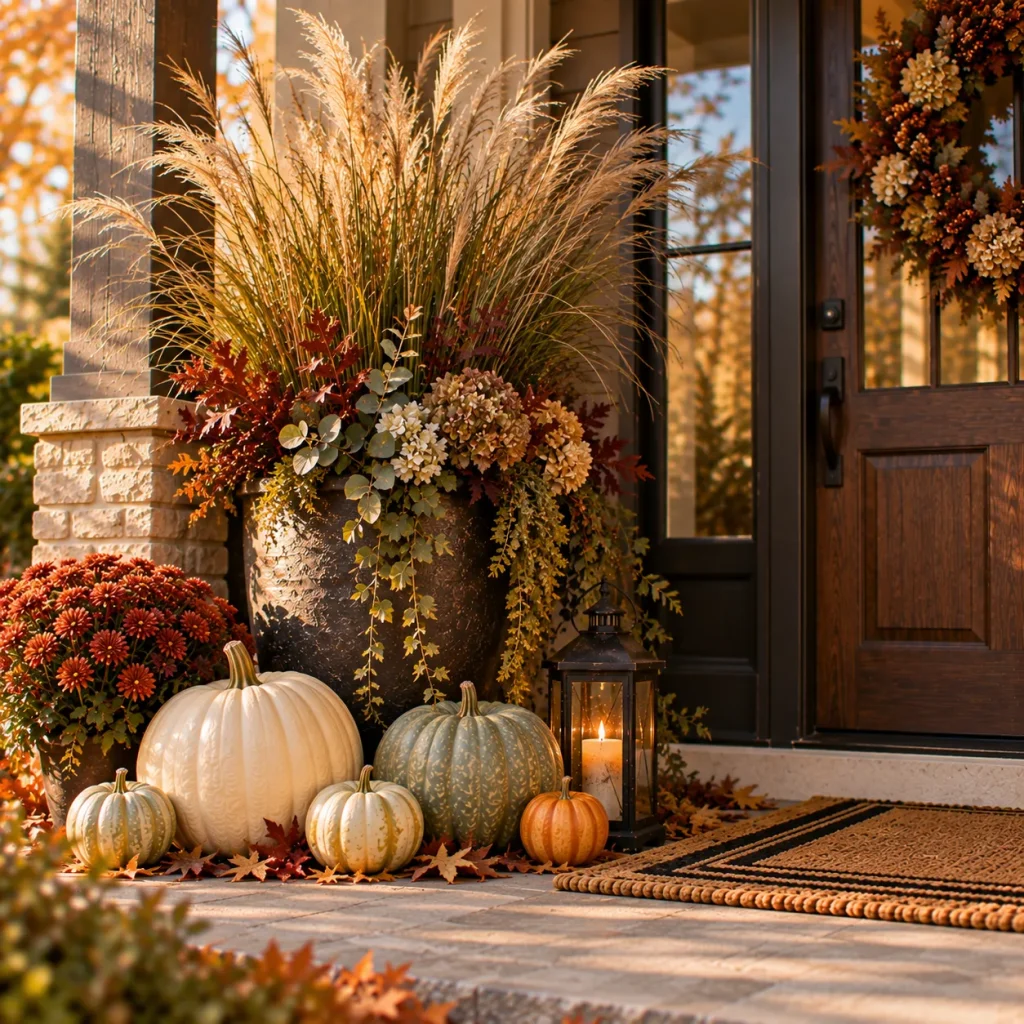
Idea 17: Add ornamental grass for late-season height
Grasses can give a porch useful vertical movement without making it specifically Halloween or Thanksgiving. Place one tall grass in a planter and surround it with pumpkins.
For October, add a dark lantern. For November, add a basket, wheat bundle, or additional foliage instead.
The grass carries the same arrangement through both holidays.

Idea 18: Use dried hydrangeas instead of another novelty prop
Dried hydrangeas bring faded green, mauve, parchment, and dusty brown into the porch naturally.
HGTV specifically uses rustic containers filled with dried hydrangeas alongside mums, pumpkins, and lanterns as a warm autumn porch treatment. This farmhouse aesthetic pairs especially well with dried hydrangeas and natural containers.
For Halloween, let dark accessories make them moodier. For Thanksgiving, their muted color already feels completely appropriate.
Transition the seating instead of removing it

Idea 19: Change one cushion between Halloween and Thanksgiving
If your porch has a bench or rocking chair, let textiles handle some of the seasonal shift.
For Halloween:
- Black and cream stripe
- Dark plum
- Charcoal
- Rust with black
For Thanksgiving:
- Camel
- Brown plaid
- Burgundy
- Olive
- Oatmeal
Changing one cushion cover is easier to store than replacing multiple decorations.

Idea 20: Keep one throw or blanket general enough for both holidays
On a covered porch, use a practical textile in an autumn palette rather than one printed with skeletons or turkeys. Good choices include brown plaid, olive stripe, rust check, and cream and chocolate. If your porch already leans toward a coastal palette, keep the textiles in soft neutrals so the Halloween and Thanksgiving accents still feel cohesive.
The porch stays cozy throughout the season, while smaller removable accessories handle the holiday-specific message.
Make Thanksgiving feel warmer, not like leftover Halloween
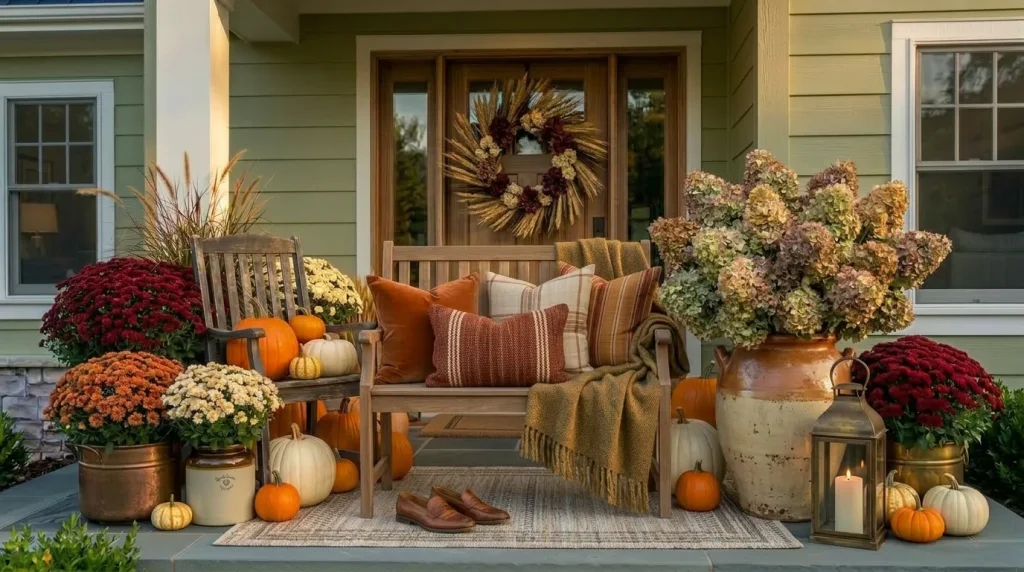
Idea 21: Remove black props before adding more Thanksgiving decor
The best transition often begins with subtraction. On November 1, remove:
- Bats
- Ghosts
- Skeletons
- Cobwebs
- Carved pumpkins that are finished
- Obvious Halloween signs
Then look at what remains before buying anything else.
HGTV’s transition-focused decorating advice specifically recommends keeping shared fall materials and making simple modifications between Halloween and Thanksgiving rather than rebuilding the entire arrangement.
Often the remaining pumpkins, plants, lanterns, and wreath already look appropriate.

Idea 22: Add wheat, branches, or seed heads for Thanksgiving
If the porch feels too empty after removing Halloween decor, introduce natural late-fall material.
- Wheat
- Dried grasses
- Branches
- Seed heads
- Sunflowers
- Rust-colored foliage
HGTV’s reusable Thanksgiving door-basket example uses sunflowers, fall leaves, grasses, and seed pods to create a warmer late-fall look without abandoning the autumn foundation.
One branch-filled urn or basket can be enough.
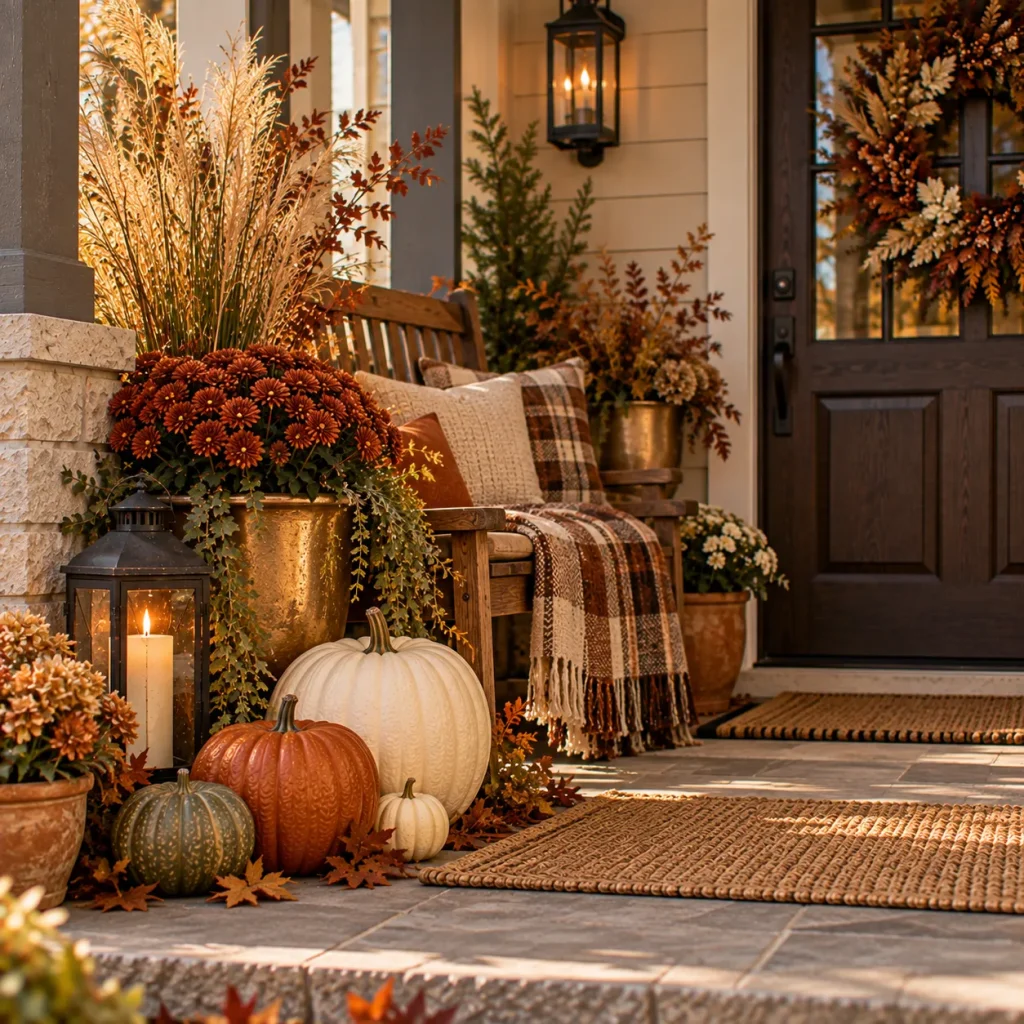
Idea 23: Replace Halloween black with warm brown and brass tones
You do not have to remove every dark piece. Instead, shift the balance. Black lanterns can stay. But pair them with:
- Warm wood
- Brown plaid
- Aged brass
- Cream pumpkins
- Golden grasses
- Terracotta
This moves the porch away from spooky contrast and toward a warmer Thanksgiving palette.
Homes & Gardens’ Thanksgiving porch guidance similarly emphasizes pumpkins, wreaths, lanterns, and cozy lighting that continue the broader fall look rather than introducing a completely separate visual theme.
Plan the whole season before you buy
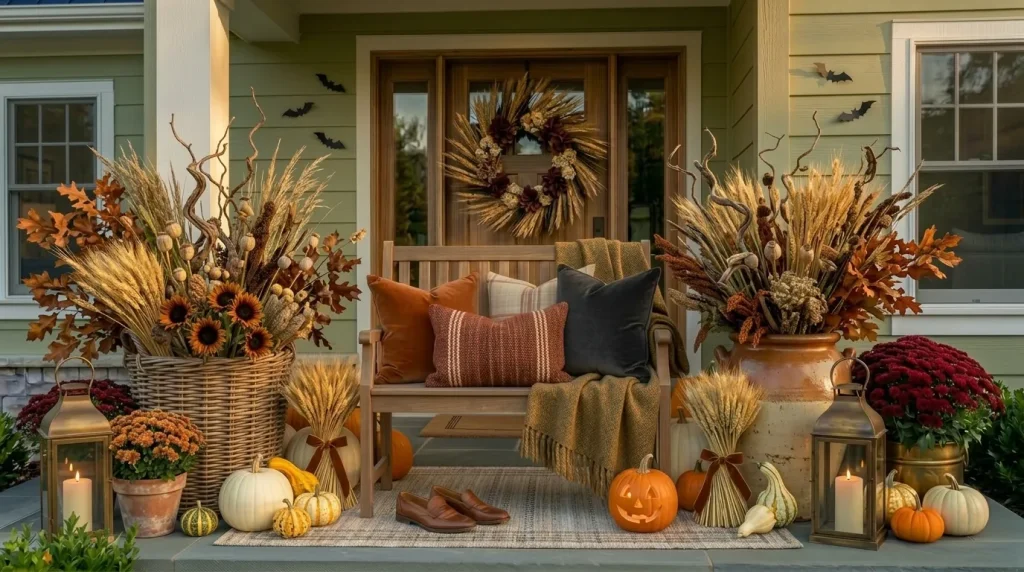
Idea 24: Use a three-layer fall porch system
Before decorating, divide everything into three categories.
| Layer | What it Includes |
|---|---|
| Layer 1: September through Thanksgiving | Planters, rug, wreath base, lanterns, whole pumpkins, foliage, furniture |
| Layer 2: Halloween only | Bats, skeletons, ghosts, carved pumpkins, spooky signs, darker temporary lighting |
| Layer 3: Thanksgiving | Wheat, seed heads, extra gourds, warm ribbon, brown plaid, late-fall branches |
This prevents duplicate purchases and makes seasonal transitions much faster.
It also follows the increasingly practical 2026 approach of integrating seasonal decor into existing lighting, landscaping, and reusable outdoor pieces rather than treating every holiday as a complete reset.
A simple Halloween-to-Thanksgiving transition plan
| Porch element | Halloween | Thanksgiving |
|---|---|---|
| Pumpkins | Whole + a few carved | Whole pumpkins + gourds |
| Wreath | Fall wreath + dark ribbon | Fall wreath + warm ribbon |
| Lighting | Lanterns + moody accent | Warm lanterns |
| Planters | Mums + dark accents | Mums + grasses or wheat |
| Door decor | Removable bats | Basket or foliage |
| Seating | Charcoal or black accents | Brown, olive, burgundy |
| Natural material | Corn stalks | Wheat, branches, seed heads |
The important part is that the underlying porch barely changes. Only the smallest layer should be holiday-specific.
What should you avoid?
Do not make every fall object Halloween-specific. If every pumpkin is painted black and every planter contains a spooky prop, Thanksgiving will require a complete reset.
Do not carve pumpkins too early. Keep most whole so they remain useful later.
Do not add open candles around dried decor. Leave the front door and steps easy to use.
Do not assume Thanksgiving requires turkey signs everywhere. Pumpkins, foliage, lanterns, wheat, branches, and warmer textiles already create a convincing late-fall entrance.
Try this if your Halloween porch feels impossible to transition
Remove every item that has a face, a Halloween word, or an overtly spooky shape.
Leave:
- Pumpkins
- Plants
- Lanterns
- Furniture
- Wreath base
- Rug
Now look at the porch again. Add one natural Thanksgiving layer, perhaps a branch-filled basket or wheat arrangement. Change one dark textile to brown, olive, rust, or burgundy.
You may discover that the porch needs almost nothing else. A strong autumn base should survive the removal of Halloween.
FAQ
How can I decorate my front porch for both fall and Halloween?
Build the porch first with regular autumn elements such as whole pumpkins, mums, foliage, lanterns, and a fall wreath. Then add removable Halloween accents such as bats, ghosts, skeletons, carved pumpkins, and darker lighting that can be removed after October.
How do I transition my porch from Halloween to Thanksgiving?
Remove overt Halloween pieces first rather than immediately buying Thanksgiving decor. Keep intact pumpkins, planters, lanterns, wreaths, and fall textiles, then add wheat, branches, gourds, seed heads, or warmer ribbon where needed. Homes & Gardens notes that many standard outdoor fall decorations work from early autumn through Thanksgiving.
What fall porch decor works for both Halloween and Thanksgiving?
Whole pumpkins, mums, ornamental grasses, dried hydrangeas, lanterns, autumn wreaths, baskets, neutral rugs, branches, and foliage all transition well. Avoid making the expensive or bulky pieces holiday-specific.
When should I change my porch from Halloween to Thanksgiving?
There is no design rule requiring a specific day, but removing clearly spooky elements after Halloween gives you the longest useful Thanksgiving period. Because the autumn foundation can stay in place, the transition can be as simple as removing Halloween props and adding a few warmer late-season touches.
Final Thoughts
Build one strong autumn foundation with pumpkins, wreaths, lighting, natural material, warm light, and useful furniture.
Then let Halloween borrow that backdrop for a few weeks. Add bats to the door. Carve a couple of pumpkins. Introduce one spooky figure or darker light. Enjoy it.
When Halloween ends, remove that temporary layer. What remains should already feel like fall.
Then Thanksgiving needs only a small shift toward wheat, branches, gourds, brown, burgundy, warm metal, and softer lighting.
If you make one change first, stop buying seasonal decor by holiday. Buy the autumn foundation once, then make Halloween and Thanksgiving the smaller, removable layers.