10 fall porch decorating ideas for a Cozy Seasonal Welcome
A fall porch can go wrong surprisingly fast.
You buy two mums, then a plaid throw, then six pumpkins, then another six because the first six suddenly look lonely. By the end, the front door is barely visible and somebody has to move a decorative hay bale just to bring groceries inside.
The best 10 fall porch decorating ideas don’t rely on quantity. They work through color, texture, height, and a few seasonal details that actually suit the porch you have.
I once helped simplify a small covered entry that had been decorated with nearly every autumn symbol available. We removed more than half of it, kept the best pumpkins, added one taller planter, and changed the doormat.
The porch looked fuller afterward.
That’s the strange thing about seasonal decorating. Good editing often creates more impact than another trip to the garden center.

1. Start with a fall color palette that suits your house
Idea 1: Choose three or four seasonal colors before buying anything.
Traditional orange works beautifully, but it isn’t your only option.
Look at the permanent colors already outside your home first.
A red-brick house can handle cream pumpkins, dark burgundy mums, deep green foliage, and muted orange. A white exterior might look better with rust, olive, tobacco brown, and black. Blue-gray siding can pair nicely with dusty orange, warm beige, and plum.
This keeps the porch connected to the architecture rather than looking like temporary decorations were dropped onto it.
One palette I particularly like is:
- creamy white
- muted rust
- olive green
- dark brown
It feels autumnal without becoming overwhelmingly orange.
Let one color dominate
If everything gets equal attention, the porch can feel busy.
Use one main color across the largest elements, then bring the others in through smaller details.
For example, let green come from plants and foliage. Use cream pumpkins as the second layer, then add rust through a cushion or wreath.
You’ll get plenty of seasonal character without requiring every object to announce that October has arrived.
2. Make the front door your strongest fall moment
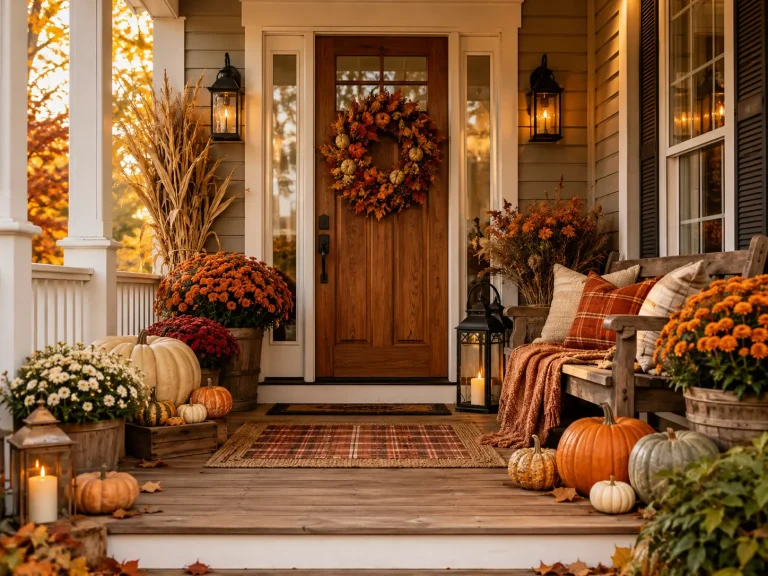
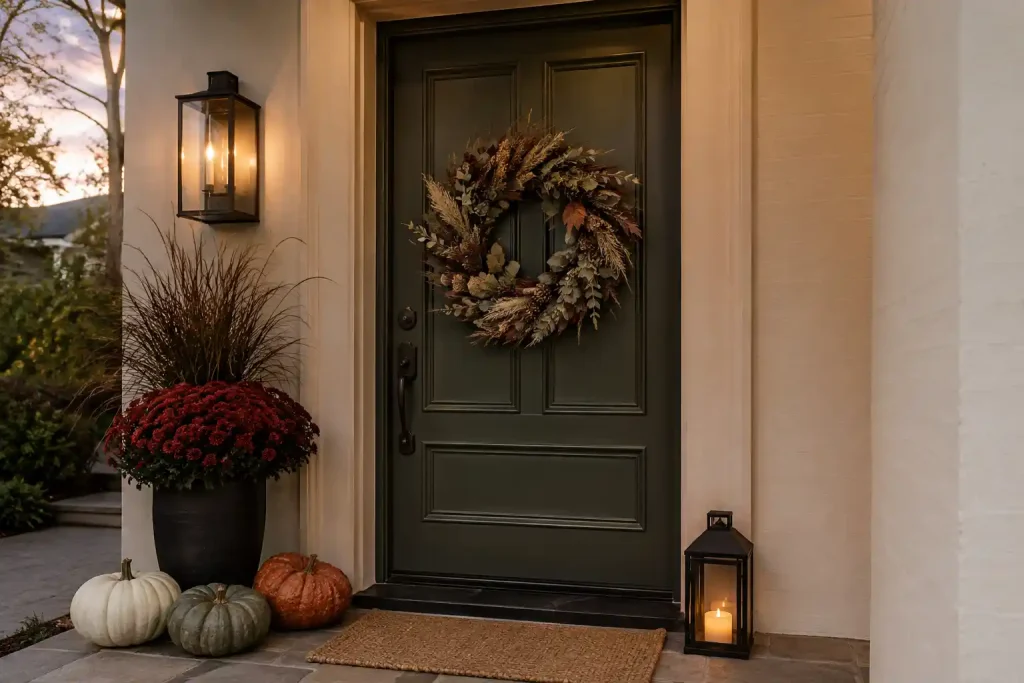
Idea 2: Use one substantial wreath instead of decorating every wall.
The door is usually where your eye lands first, so start there.
A wreath around 22 to 28 inches wide works for many standard front doors, though the exact size depends on the door and surrounding trim.
Try dried leaves, preserved grasses, wheat, eucalyptus, pinecones, or a mixed foliage design.
I prefer wreaths that include several related textures rather than five unrelated fall colors.
An olive and rust wreath with dried seed heads can look richer than one covered in plastic orange leaves.
You can also skip the wreath entirely and use a hanging basket filled with branches or dried grasses.
That gives the entry a slightly looser, country feel.
Idea 3: Add color through the door itself if you want less seasonal clutter.
A deep olive, oxblood, muted navy, charcoal, or warm terracotta door creates a strong backdrop for simple autumn decor.
Obviously, repainting the front door is more commitment than buying a wreath.
But if the existing paint already needs attention, fall is a useful time to rethink it.
The right door color can make three pumpkins look intentional.
The wrong backdrop can make twenty decorations work twice as hard.

3. Layer pumpkins by shape instead of buying dozens
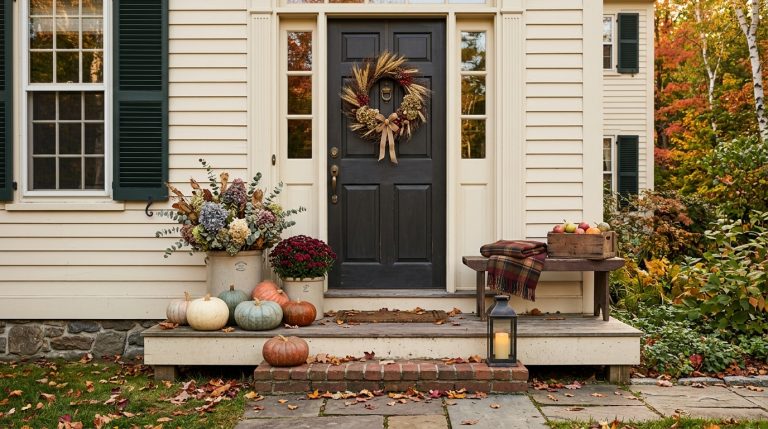
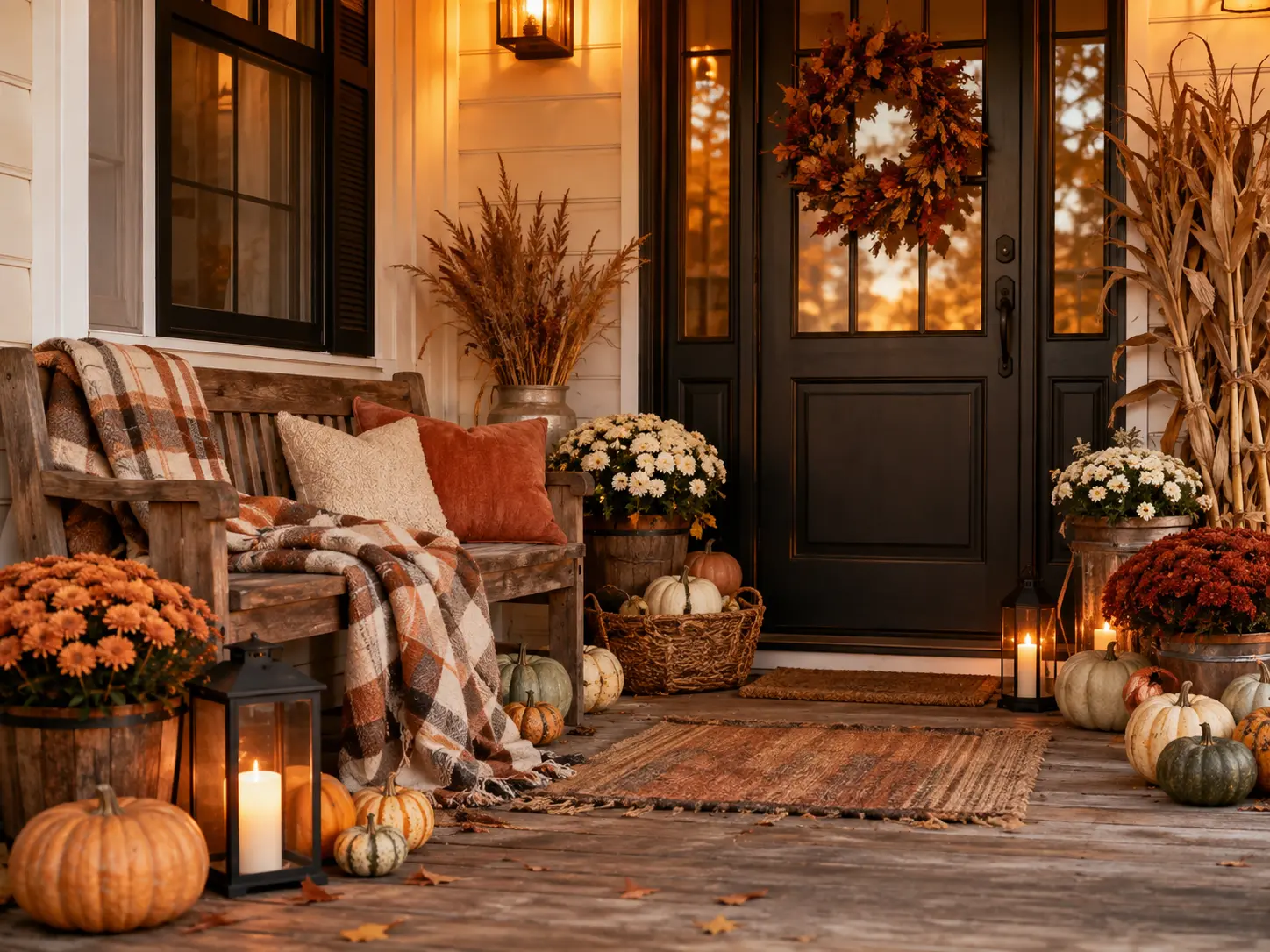
Idea 4: Build one concentrated pumpkin grouping.
This is much more effective than lining individual pumpkins along every step.
Start with one or two larger pumpkins near the door.
Then add medium and smaller sizes around them.
Mix shapes.
Tall pumpkins, squat varieties, irregular heirloom forms, and mini pumpkins create more visual interest than ten identical orange spheres.
Color helps too.
Try combining muted orange with cream, dusty green, pale peach, and deeper rust.
I usually avoid scattering tiny pumpkins everywhere. They look charming for about two days, then somebody kicks one under a chair.
Use an odd number, but don’t obsess over it
Groups of three, five, or seven often feel natural because the arrangement doesn’t become too symmetrical.
But don’t start counting pumpkins like you’re solving an equation.
Work with the space.
A narrow stoop may only need three good ones.
A wider farmhouse porch can comfortably handle a larger grouping.
Here’s the useful trade-off with real pumpkins. They look better because their colors and shapes vary naturally, but they eventually soften and rot.
Faux pumpkins last for years, although inexpensive ones can look shiny.
Mixing a few convincing faux pieces with real pumpkins is often the practical middle ground.

4. Use mums and grasses for height and movement
Idea 5: Bring in plants before adding more decorative objects.
Mums are popular because they provide dense autumn color in a single pot.
But you don’t have to stop there.
Ornamental grasses, asters, heuchera, small evergreen shrubs, and cool-weather foliage can add different shapes and textures.
I particularly like pairing one round mound of mums with something taller and looser.
Perhaps a bronze grass sits behind cream chrysanthemums. Then pumpkins fill the lower level.
That gives you three heights without adding another piece of decor.
Choose plant colors that work with your palette.
Burgundy and muted yellow mums often feel richer than using bright orange everywhere.
And if you’re buying plants late in the season, choose pots with plenty of unopened buds rather than the one already producing the largest display.
Use the planter you already own
Don’t feel obligated to buy seasonal containers.
Terracotta, black metal, aged zinc, dark ceramic, and plain wood planters can all carry fall planting beautifully.
A plastic nursery pot can simply sit inside something more attractive.
This saves money and avoids accumulating another category of objects you need to store for eleven months.
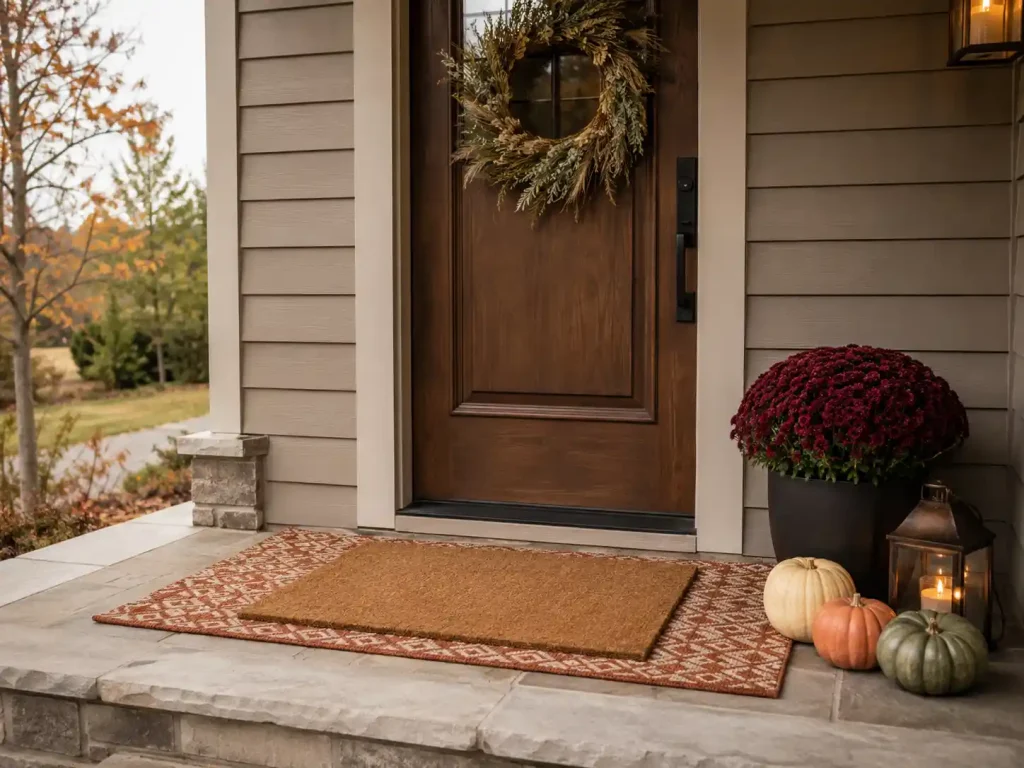
5. Layer the doormat without turning the doorway into a rug display
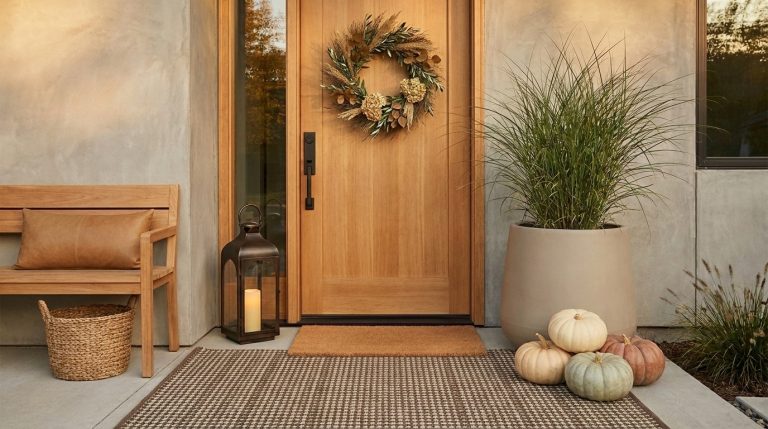
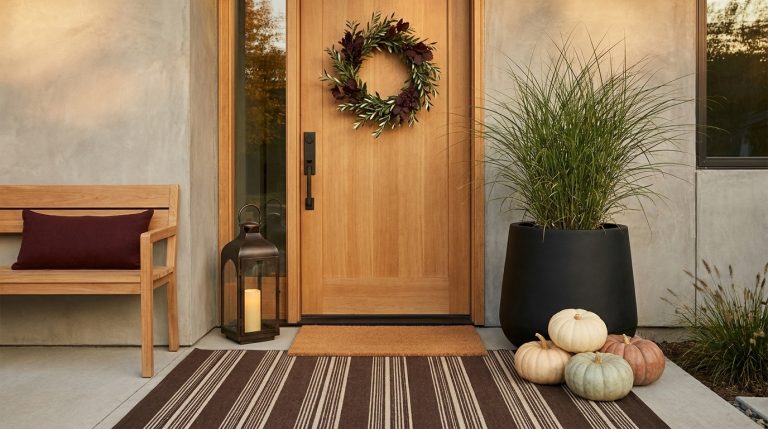
Idea 6: Use one larger outdoor rug beneath a practical doormat.
This is one of the easiest ways to make a front porch feel more finished.
Try a striped, checked, or simple geometric outdoor rug beneath a coir mat.
For a standard single door, something around 2 by 3 feet may work under the doormat, while a larger 3-by-5 can suit a wider porch.
Black and cream checks are a classic choice.
Rust stripes, olive patterns, brown-and-cream geometrics, or muted plaid can feel softer.
The important part is scale.
The lower rug should extend enough beyond the doormat that the layering looks deliberate.
If only one inch is visible, it simply looks like you accidentally put two mats down.
And consider the weather.
A covered porch gives you more freedom with woven fabrics. An exposed entry needs materials that dry quickly and won’t stay soggy after every rain.
My mild pet peeve is decorative doormats with long sayings you can’t read once someone actually stands on them.
A simple pattern or short greeting usually ages better.

6. Make outdoor seating feel autumnal with two small changes
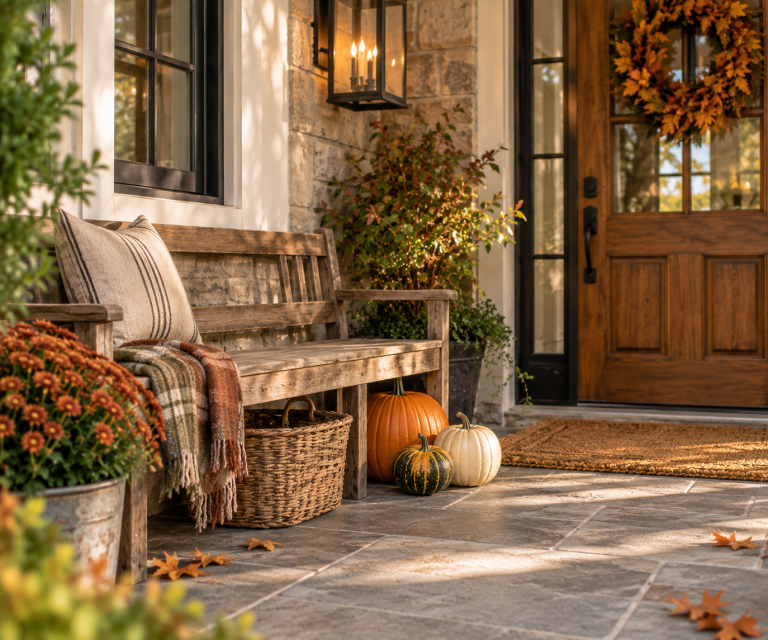
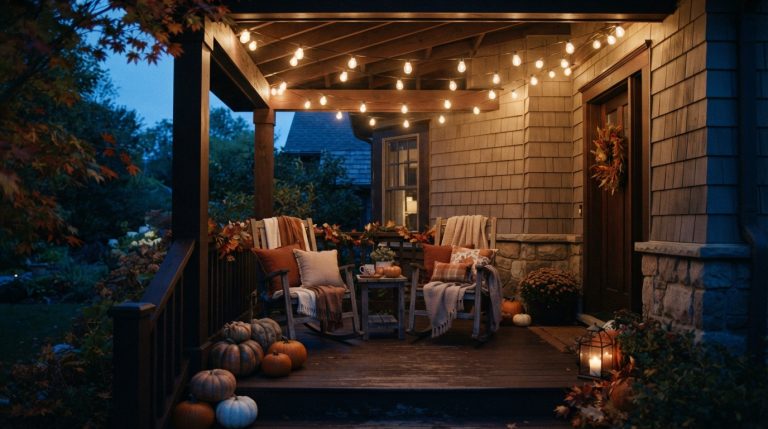
Idea 7: Add washable cushions and one throw where the porch is protected.
You don’t need new furniture for fall.
A black rocking chair, wood bench, or simple outdoor chair can change completely with different textiles.
Try cushions in rust, olive, tobacco brown, burgundy, or a restrained plaid.
Then add one throw if the seating sits well away from rain.
Wool-look fabrics, brushed cotton, and washable woven throws bring useful softness.
But here’s the practical part.
If your porch gets wet, don’t leave indoor textiles outside because they looked lovely for a photograph.
Choose outdoor-rated cushions and bring throws inside when the weather turns.
Idea 8: Add one side surface if people actually sit outside.
A small wood stool or metal table can hold coffee, a lantern, or a small plant.
That’s more useful than filling the corner with another decorative crate.
I’m generally against porch furniture that exists purely to hold seasonal decor.
If a chair can’t be sat in because it’s permanently occupied by pumpkins and blankets, it has stopped being furniture.
Make the porch beautiful, but keep it usable.
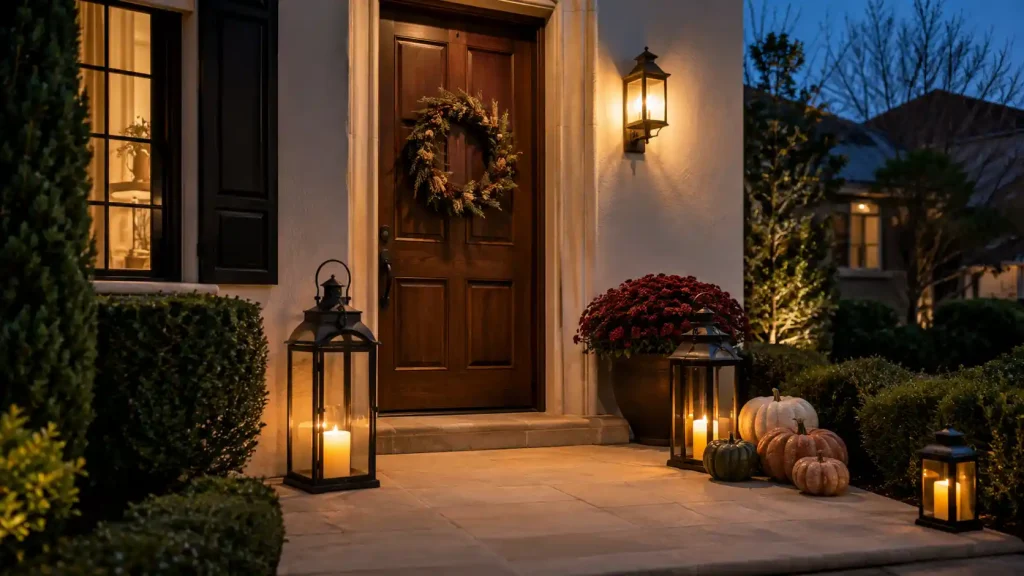
7. Use lanterns for evening warmth, not daytime clutter
Idea 9: Add two or three lanterns at different heights.
Lanterns work particularly well during fall because daylight disappears earlier and the porch starts being seen after dark.
Black metal, aged brass, galvanized finishes, and wood-framed designs can all work depending on the house.
Use battery-operated candles if open flames aren’t safe or practical.
Warm flickering light is enough.
You don’t need a lantern on every step.
Try one larger lantern near the door with a medium one slightly forward. Add a smaller version only if the arrangement needs another level.
Keep the walking path clear
This sounds obvious until someone decorates stairs.
Never narrow steps or create a tripping hazard just because the composition looks balanced.
Keep decorations toward the outer edge and preserve the portion people naturally use.
The same goes for electrical cords.
String lights can look lovely along a porch beam or railing, but route cords neatly and use products rated for the conditions they’ll face.
Seasonal atmosphere isn’t worth turning the entry into an obstacle course.
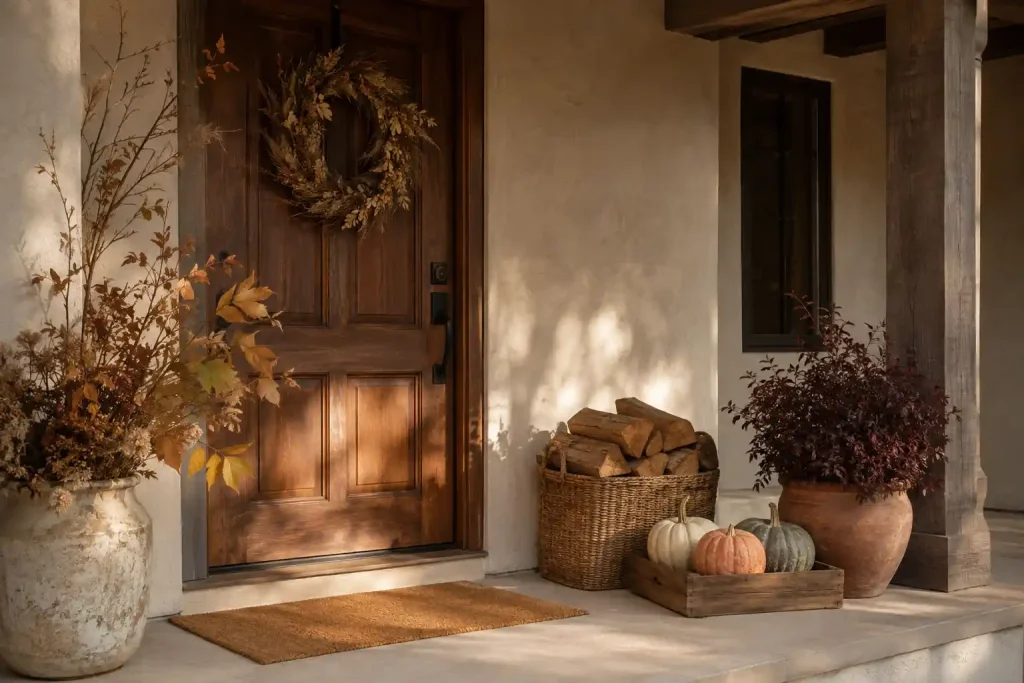
8. Bring in natural materials instead of more themed signs
Idea 10: Finish with branches, baskets, wood, and dried texture.
A woven basket filled with firewood can look great beside a covered entry.
So can a crock filled with branches, a bundle of dried grasses, or a simple wood crate holding pumpkins.
These materials create autumn character without spelling out the season.
And that’s my preferred direction.
You don’t need a sign saying “Hello Fall” beside a doormat that says “Happy Fall” underneath a wreath with another fall message.
The leaves are doing a pretty good job of announcing the season already.
Try dried hydrangeas, wheat, seed heads, branches with colored leaves, or clipped foliage from plants that are safe and legal for you to harvest.
Use one container.
A large stoneware crock or weathered basket often looks stronger than several tiny vessels scattered around the porch.
If the porch is exposed, remember that dried material can deteriorate quickly in wind and rain.
Fresh branches or weather-resistant faux foliage may be more practical.
Again, the best choice depends on your actual porch, not the perfect image online.
What should you skip when decorating a fall porch?
Start with quantity.
A porch doesn’t automatically look better because there are thirty pumpkins on it.
You still need to open the door, carry packages inside, walk up the stairs, and sweep leaves.
I’d also skip buying every seasonal decoration in matching sets.
Identical pumpkins, identical planters, identical lanterns, identical bows. It can make the porch feel more like a store display than a home.
Mix old and new instead.
Use your everyday black planter beside real pumpkins. Bring out the same wood bench you use in summer. Add one seasonal cushion.
Another thing to avoid is adding hay or straw just because it feels autumnal.
Bales can be useful on larger, dry porches where you need height, but they shed, hold moisture, and aren’t necessary.
A crate or sturdy planter is usually cleaner.
And watch the Halloween creep if you’re aiming specifically for fall decor.
There’s nothing wrong with Halloween decorations. But if you want the porch to last from September through Thanksgiving, keep the main layer seasonal and add temporary spooky pieces closer to October 31.
That saves you from completely redecorating twice.
A simple order for decorating the porch
If your front entry tends to get overdone, use this order:
- Clear the porch completely and sweep it.
- Put back your everyday furniture and planters.
- Add the wreath or door decoration.
- Create one pumpkin grouping.
- Bring in one or two seasonal plants.
- Layer the doormat if needed.
- Add textiles to usable seating.
- Finish with lanterns or one natural accent.
- Stop before every empty corner gets filled.
That final step matters.
Stand back from the sidewalk or driveway before deciding the porch needs more.
Seasonal decorations are usually viewed from several feet away.
Tiny accessories that look charming up close can disappear visually while still contributing clutter.
FAQ About Fall Porch Decorating
When should I start decorating my porch for fall?
You can start once the weather begins feeling seasonal in your area, often in late August or September. Begin with flexible pieces such as grasses, muted foliage, and warm textiles, then add pumpkins once they become readily available.
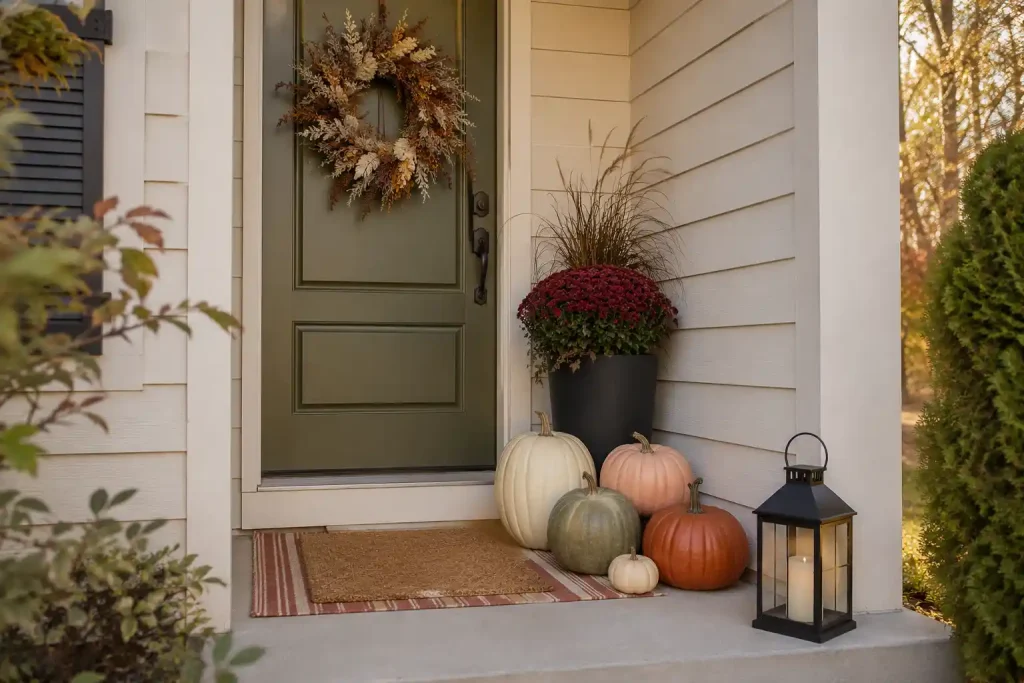
How can I decorate a small porch for fall?
Concentrate the decor around the door instead of spreading it everywhere. One wreath, three to five pumpkins, a seasonal planter, and a good doormat can create plenty of impact on a small stoop.
How do I keep a fall porch from looking cluttered?
Limit the palette and group similar objects together. One cluster of pumpkins looks calmer than the same number spread across every step, chair, and planter.
What fall porch decor lasts the longest?
Outdoor-rated textiles, lanterns, wood accents, weather-resistant faux foliage, and sturdy planters can return year after year. Real pumpkins, mums, and cut branches provide beautiful seasonal variation but naturally have a shorter life.

Make the front door feel welcoming first
That small porch I mentioned at the beginning looked better after we removed half the decorations because the eye finally knew where to go.
The door became visible again.
A few good pumpkins created enough color. The taller planter added height, and the new mat gave the whole arrangement a stronger base.
That’s how I’d approach these 10 fall porch decorating ideas at home.
Start at the door, then decorate outward.
Use what you already own before adding seasonal pieces, and give yourself permission to leave one corner empty.
The goal isn’t to prove how much you love fall.
It’s to make coming home on a cool afternoon feel just a little warmer.